Summary
William Miller was a farmer turned revivalist who predicted that the world would end “about the year 1843.” His movement represents one of the most dramatic instances of American millennial fervor and spawned several new religious movements, the largest of which today is the Seventh-day Adventist Church. From humble beginnings in the hills of Low Hampton, New York, this former Deist became one of the most influential preachers of the nineteenth century, delivering over 3,200 lectures and igniting a spiritual awakening that touched hundreds of thousands of lives across the United States and beyond.
Early Life
William Miller was born on February 15, 1782, in Pittsfield, Massachusetts, to Captain William J. Miller (1756–1812) and Paulina Phelps (1764–1835) Miller. He was the first of their sixteen children. In 1786, his parents relocated to Low Hampton, New York, to homestead from the “wilderness” a claim of about 100 acres. Its location near the bank of the Poultney River, only six miles from Lake Champlain, afforded wider access to sell food and other goods raised on their farm.
Captain William J. Miller had fought in the American Revolution, escaping from New York City when Lord Howe invaded in August 1776. After the war he became a captain in the New York state militia. Paulina Miller’s parents were Ebenezer (1758–1835) and Lucy (1752–1842) Phelps. Her father was a Baptist minister, known for his “plain, scriptural” preaching. On both sides of the family, William Miller’s relatives were known for both their piety and patriotism.
As a young man, William Miller embraced Deism. He married Lucy Smith (1782–1854) in 1803 and relocated to Poultney, Vermont. They would have ten children: William S. (1805–1877), Bellona (1807–1882), Satterlee Ebenezer (1809–1886), Langdon (1812–1886), Robbins (1814–1888), George Will (1816–1874), Electa Maria (1819–1822), an “infant son” (1821), John (1822–1893), and Lucy Ann (1825–1895).
In 1810, Miller organized a unit of the Vermont militia, which elected him a lieutenant. The militia fought in the War of 1812, and Miller rose to the rank of captain by the time the war ended in 1815. After the war, Miller returned to Low Hampton.
Conversion and Approach to Scripture
At the core of Miller’s religious experience was a multi-stage conversion that led him away from his youthful Deism. The first stage happened in the fall of 1812 as he returned from Rutland to Poultney, Vermont, with concerns about Deism’s denial of a future existence. In the midst of war, having lost family members including his father to disease, he experienced an existential crisis. Second, during the battle of Plattsburgh (September 6–11, 1814), he felt that it was only through divine providence both that the American side won the battle and that his own life was spared. Third, in May 1816, he took the Lord’s name in vain, which convicted him of his sinfulness. Fourth, in the summer of 1816, while reading a sermon by Alexander Proudfit, Miller felt powerfully drawn to the person of Christ:
“[S]uddenly the character of a Savior was vividly impressed upon my mind. It seemed that there might be a Being so good and compassionate as to himself atone for our transgressions, and thereby save us from suffering the penalty of sin. I immediately felt how lovely such a Being must be; and imagined that I could cast myself into the arms of, and trust in the mercy of such an One. . . . I felt that to believe in such a Savior without evidence, would be visionary in the extreme. I saw that the Bible did bring to view just such a Savior as I needed; and I was perplexed to find how an uninspired book should develop principles so perfectly adapted to the wants of a fallen world. I was constrained to admit that the Scriptures must be a revelation from God; they became my delight, and in Jesus I found a friend.”
The fifth and last stage came in the fall of 1816 when he conversed with a Deist friend about the prospect of a “glorious eternity.” His friend asked him how he knew for sure that the Bible was true, advancing the very same skeptical arguments Miller himself had formerly advocated. This encounter prompted Miller to return to systematic study of the Bible:
“I replied that if the Bible was the word of God, every thing contained therein might be understood, and all its parts be made to harmonize; and I said to him that if he would give me time, I would harmonize all these apparent contradictions to my own satisfaction, or I would be a Deist still.”
After this five-step conversion process that developed from 1812 to 1816, Miller engaged in two years of intense Bible study. He employed Scottish Common Sense Realism and Baconian deduction not only to find answers to his existential questions, but also to systematically develop a coherent understanding of world history and Bible prophecy that proved completely transformative. He later described his own methodology in detail:
“I determined to lay aside all my prepossessions [presuppositions], to thoroughly compare Scripture with Scripture, and to pursue its study in a regular and methodical manner. I commenced with Genesis, and read verse by verse, proceeding no faster than the meaning of the several passages should be so unfolded, as to leave me free from embarrassment respecting any mysticism or contradictions. Whenever I found any thing obscure, my practice was to compare it with all collateral passages; and by the help of CRUDEN, I examined all the texts of Scripture in which were found any of the prominent words contained in any obscure portion. Then by letting every word have its proper bearing on the subject of the text, if my view of it harmonized with every collateral passage in the Bible, it ceased to be a difficulty. . . . I was thus satisfied that the Bible is a system of revealed truths, so clearly and simply given, that the ‘wayfaring man, though a fool, need not err therein.'”
A key aspect of Miller’s approach to the Bible was that it had to be internally coherent. This was especially true when studying Bible prophecy. He concluded that a day in prophecy is equivalent to a literal year. “I knew,” he wrote, “that if the Bible was what it purports to be, it must in some way all be harmonized.” He deduced that the 2,300 days of Daniel 8:14 specified a period of 2,300 years that began with Artaxerxes’s decree in 457 B.C. to rebuild Jerusalem. He interpreted the phrase “and then shall the sanctuary be cleansed” as a reference to the Second Coming of Christ. By 1818, Miller concluded that Christ would return in about 25 years.
In September 1822, Miller composed a 20-point statement of belief. His beliefs reflected a deep commitment to Calvinist theology, notably a limited atonement and predestination. Articles 12–17 outlined his eschatology: this earth is the eternal abode of the saved; the impenitent will be removed from earth to hell; Jesus’ personal, glorious return; “I believe that the second coming of Jesus Christ is near, even at the door, even within twenty-one years — on or before 1843”; there was no value in affiliation with a particular “sect” but in the Bible alone; and a literal millennium between two resurrections. The last two articles affirmed baptism by immersion and the Lord’s Supper.
Disseminating the Advent (1831–1833)
As Miller formulated his own religious convictions, he was not “fully settled” about what his responsibility was to disseminate what he had discovered with others. He began to share “occasional hints of my views” to friends and neighbors beginning in 1831, but was initially discouraged by what he perceived as little interest in his new understanding. Yet the more he studied the Bible, the “more and more convinced” he became “that I had a personal duty to perform respecting this matter. When I was about my business, it was continually ringing in my ears, ‘Go and tell the world of their danger.'”
Miller began to express his views more forthrightly in 1831 and 1832 through personal letters and accepting speaking invitations. In February 1831 he wrote to an Elder Andrus an eight-page missive on “The Time of the 2nd Coming.” Soon his nephew, Irving Guilford, invited him to speak at their church. According to David L. Rowe, Miller first publicly shared his views on August 14, 1831. One of the most significant developments for Miller was the preparation of a series of articles sharing his beliefs more widely in the abolitionist Baptist newspaper, the Vermont Telegraph, under the initials “W.M.” The handwritten 16 articles appeared in print beginning May 15, 1832. He now “began to be flooded with letters of inquiry respecting my views,” he wrote, “and visitors flocked to converse with me on the subject.”
The times were uncertain as a global cholera pandemic prompted increased interest in end-time events and Bible prophecy. His articles were printed in tract form, and then by November 1833, printed again. Print became a primary means to disseminate his religious convictions.
On September 14, 1833, Miller received a recommendation from area Baptists to further share his views. Later that year, on the night of November 12–13, 1833, a particularly dramatic display of the Leonid meteor shower further prompted interest in the study of the impending eschaton. Through the 1830s Miller would travel with increasing frequency through New York, Vermont, and Lower Canada (Quebec).
Unlike typical revivalists, notably Charles Finney, whom he met one time while in Boston, Miller eschewed the “anxious bench” and instead made very direct and impassioned appeals for conversions. He felt that such efforts should not be contrived, but that the revivalist should let the Scriptures and Holy Spirit do their work. “Depend wholly on the word of God,” he wrote to his pastoral friend Truman Hendryx, “Keep your sword the right side up, the edge to the heart, and your arm well nerved . . . be not afraid of hurting your hearers. . . . Be like a rock in the ocean of life.” According to Sylvester Bliss, Miller’s work as an evangelist led to repeated “revivals of religion” through conversions. Altogether Miller was a very successful revivalist who in his own way mastered the art of making appeals and bringing about revivals as he increasingly traveled in wider forays from his home through the 1830s.
Increased Visibility and Publications (1834–1839)
After a rogue edition of Miller’s Lectures was published in 1835, Miller produced a new and expanded edition of his 16 lectures printed by Elder Isaac Wescott in Troy, New York. This authorized 1836 edition would feature a chapter for each sermon and become the standard and most important work of his life. The lectures were reprinted in 1838 and, with some minor modifications, again in 1840, 1841, and 1842. The 1840 printing was done by the abolitionist printer B. B. Mussey in Boston; all subsequent editions were printed by Joshua V. Himes who provided purchasers the option of having a modest folding chart detailing Miller’s views pasted in for a nominal charge.
A key turning point occurred in April and May 1839 when William Miller spoke in eastern Massachusetts at several small towns (Randolph, East Randolph, Lowell, Groton, and Lynn). This was the first time Miller had traveled so far from his home and the tour would have a profound impact by expanding his circle of supporters. By the time he reached Lynn he reported that he had given 800 lectures since June 9, 1834. Yet, up until this time, his revival preaching remained rather localized. Now, in his 1839 tour, he established connections with ministers who were not only receptive to his message but who would facilitate much wider dissemination of it.
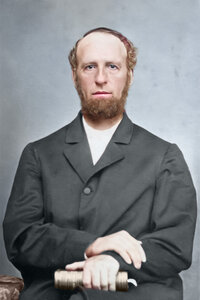
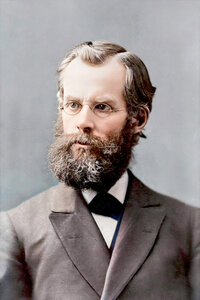
At Lowell, on May 14, 1839, he met with Timothy Cole (1806–1866), who had early on adopted Miller’s views and helped introduce Miller to many of the churches in the Christian Connection. Miller also became acquainted in person with Josiah Litch (1809–1866), another who was already a strong ministerial ally. On this tour he received a letter from Joshua V. Himes (1805–1895), dated October 19, 1839, who invited Miller to speak at his Christian Connection church in Boston. Then, on November 12, 1839, Miller spoke at a Christian Connection gathering in Exeter, New Hampshire, where he met Himes, who again invited him to speak in Boston. From December 8–16, 1839, Miller spoke at Himes’ Chardon Street Chapel, during which time Himes challenged him to take his message to the large cities. As a result of their time together Himes adopted Miller’s views and subsequently became his most trusted friend and supporter.
A Growing National Movement
Himes wasted no time during these three sets of lectures in Boston but began using print to transform what had been a loosely-connected series of revivals into a cohesive movement. After launching the first Adventist periodical, Signs of the Times, on February 28, 1840, he persuaded the reform-minded printers, Dow & Jackson, to buy an interest in the periodical and re-issued the first number under the date March 20, 1840. Himes would rapidly expand the arsenal of publications, which in time earned him the title from his detractors as the “Napoleon of the press.” It was through the medium of print that Miller gained his most significant influence, prompting both ardent admirers and vociferous detractors.
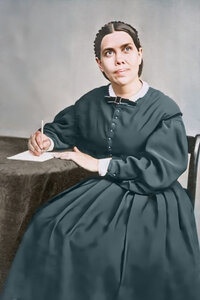
In March 1840 Miller gave his first series of lectures in Portland, Maine, which had a profound impact on 13-year-old Ellen Gould Harmon (later White). As the profile of Adventism increased through print, the growing number of followers necessitated a somewhat loose organizational structure. Himes played a key role by organizing a series of gatherings known as “General Conferences.” The first “General Conference of Second Advent Believers” convened October 15–16, 1840, in the Chardon Street Chapel in Boston. Beginning in 1842, camp meetings became another important means for advancing the movement. Himes was largely responsible for attracting additional ministers who participated in over 125 Millerite camp meetings held between 1842 and 1844.
The movement grew significantly. In early 1842 Himes reported that the readership of Signs of the Times was over 50,000. In June 1842, Miller gave another course of lectures in Portland, Maine, where young Ellen Harmon, now age 15, heard him speak a second time. Miller crisscrossed New England giving numerous lectures. In May 1841 he estimated that within one year, from October 1839 to October 1840, he had given 627 lectures and traveled 4,560 miles.
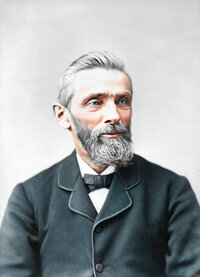
New methods were introduced in 1842 to disseminate the Second Advent message even more widely. One significant development came on July 26, 1842, on the grounds behind the state house at Concord, New Hampshire, where the Millerite “Great Tent” was pitched for the first time. During the heyday of Millerism it was reportedly the largest tent of its time, standing at 120 feet in diameter and reportedly capable of seating 4,000 people. In the fall of 1842, the first “Big Campaign” held in New York City marked the beginning of large evangelistic campaigns in urban centers. In conjunction with the New York City campaign, Himes initiated a daily paper on November 17, 1842, titled the Midnight Cry, published under the editorial supervision of Nathaniel Southard.
Preaching, Opposition, and Anticipation
As the founder of a major religious movement, Miller’s appearance was rather plain and unremarkable. A. A. Sawin, who reported listening to Miller in Boston, noted the “trembling limbs and faltering voice” of Miller that “were a striking testimonial of the sincerity of his heart.” A study of Miller’s handwriting demonstrates that Miller suffered from a debilitating neurological disease, essential tremor. Another listener who heard him preaching on Daniel 11 described his speaking as “very clear and animating.” As he closed, he was “very happy in his illustration, and riveted the attention of a crowded audience, for more than two hours.”
Ellen Harmon (White) recalled how Miller would “raise his hands to heaven and exclaim, ‘I thank Thee, Lord; I praise Thy holy name.'” Afterward “a wave of thanksgiving would go through the congregation,” she wrote. “Every heart was thrilled, and the face of the speaker was illuminated with the glory of God.”
One detailed description of Miller’s effective outreach comes from Clorinda S. Minor (1806–1855) who first met him “at the fireside of a friend.” She later became a well-known Second Advent lecturer in her own right. She offered a pencil sketch and then used words to correct the “numerous misstatements” about him:
“I can truly say that my earnest expectations were more than realized in the interview. There is a kindness of soul, simplicity, and power, peculiarly original, combined in his manner, and he is affable and attentive to all without any affection of superiority. He is of about medium stature, a little corpulent, and in temperament, a mixture of sanguine and nervous. . . . Although about sixty-two years of age [1844], his hair is not grey, but of a light glossy auburn, his voice is full and distinct, and his pronunciation somewhat northern-antique. In his social relations, he is gentle and affectionate, and ensures the esteem of all with whom he mingles.”
As attention to the Millerite message grew, it also generated strong denunciations, particularly from established ministers who feared that it would take away or distract members in their congregations. Millerites who received strong opposition had to meet in their homes or operated their own places of worship. About this same time, on September 2, 1843, Ellen Harmon and her family were dismissed from the Chestnut Street Methodist Church in Portland, Maine.
The Great Disappointment
As the expected eschaton drew near, pressure increased to specify a more exact date. In January 1843, after studying the Jewish calendar, Miller announced that Jesus would return between March 21, 1843 and March 21, 1844. Significant opposition toward Millerites from established denominations led Charles Fitch to call for Millerites to “Come Out of Babylon” in a July 1843 sermon. In the spring of 1844, after March 21 came and went, Miller announced that he erred in his calculation. In August 1844, Samuel Sheffield Snow advocated the “seventh month” teaching that Christ would return on the tenth day of the seventh month, the Jewish Day of Atonement, which according to the Karaite Jews would occur that year on October 22. Miller, initially reluctant, eventually accepted this date. On October 6, 1844, he wrote: “I see a glory in the seventh month I never saw before. . . . I see that the time is correct, when the seventh month comes — that is the typical time. Then will the people and place be sanctified.”
When October 23 dawned and the millennium had failed to arrive the previous day, many, perhaps most disappointed believers left Millerism behind them. Thousands, though, who had left their former denominations, sustained belief in the literal, imminent second advent of Christ, though their differences on other points of faith eventually led them to form separate denominations such as the American Evangelical Adventist Conference, the Advent Christian Association, and the Seventh-day Adventist Church, all organized between 1858 and 1863.
The Baptist church that Miller was a member of in Low Hampton for many years finally dismissed him from its membership in December 1844. In April 1845, he attended and endorsed a conference in Albany, New York, that consolidated the largest sector of the fragmented Adventist movement. For his part, Miller refused to set any more dates. On December 17, 1845, he wrote: “Every possible effort is now put in requisition by Satan, the church, and the world, to bring into disrepute the most glorious point of the revelation of God, — the coming of Christ, the resurrection, and the kingdom, — the very capstone of grace . . . , all dependent on one event,” the “blessed hope” or Second Coming of Christ.
Death and Legacy
Miller lost most of his vision by 1848 as the essential tremor continued to debilitate his health. He died at his home in Low Hampton, New York, on December 20, 1849, and is buried in a nearby cemetery. On his tombstone is inscribed: “But go thou thy way till the end be: for thou shalt rest, and stand in thy lot at the end of the days.”
Numerous newspapers including the abolitionist paper the Liberator provided coverage about the death of “William Miller, the Prophet.” One assessment acknowledged that he was “a man of great mental power” who “was unquestionably an honest and sincere man but his doctrines have been the cause of immense harm to hundreds and thousands who were deluded and deceived by them.” More favorable newspaper editors, in addition to noting his “peculiar ideas on the near approach of the second Advent,” also highlighted that he “was a kind and obliging neighbor — esteemed and beloved by all who knew him.” Another praised his “strictly temperate” habits and devotion to family, noting that he was “proverbial for his integrity.” It added: “His brain was of large volume, and he was capable of great mental efforts.”
The most significant source of information about Miller’s life, Memoirs of William Miller (1853), was initially compiled by Apollos Hale and then edited with significant additions by Sylvester Bliss. Miller’s home was purchased in 1984 as part of Adventist Historic Properties, Inc., a coalition led by James R. Nix. Today his home and the nearby Miller Chapel are preserved as a museum in Low Hampton, New York, with many original documents on display.
Ellen G. White wrote of William Miller in Early Writings, pages 229–230:
“God sent His angel to move upon the heart of a farmer who had not believed the Bible, to lead him to search the prophecies. Angels of God repeatedly visited that chosen one, to guide his mind and open to his understanding prophecies which had ever been dark to God’s people. . . . With trembling, William Miller began to unfold to the people the mysteries of the kingdom of God, carrying his hearers down through the prophecies to the second advent of Christ. With every effort he gained strength. As John the Baptist heralded the first advent of Jesus and prepared the way for His coming, so William Miller and those who joined with him proclaimed the second advent of the Son of God.”
She also wrote: “Moses erred as he was about to enter the Promised Land. So also, I saw that William Miller erred as he was soon to enter the heavenly Canaan, in suffering his influence to go against the truth. Others led him to this; others must account for it. But angels watch the precious dust of this servant of God, and he will come forth at the sound of the last trump.” (Early Writings, p. 258)
Key Quotes
“[S]uddenly the character of a Savior was vividly impressed upon my mind. It seemed that there might be a Being so good and compassionate as to himself atone for our transgressions, and thereby save us from suffering the penalty of sin. I immediately felt how lovely such a Being must be; and imagined that I could cast myself into the arms of, and trust in the mercy of such an One. . . . I was constrained to admit that the Scriptures must be a revelation from God; they became my delight, and in Jesus I found a friend.” — William Miller, on his conversion
“I determined to lay aside all my prepossessions [presuppositions], to thoroughly compare Scripture with Scripture, and to pursue its study in a regular and methodical manner.” — William Miller, on his method of Bible study
“Depend wholly on the word of God. Keep your sword the right side up, the edge to the heart, and your arm well nerved . . . be not afraid of hurting your hearers. . . . Be like a rock in the ocean of life.” — William Miller, to his pastoral friend Truman Hendryx
“Every possible effort is now put in requisition by Satan, the church, and the world, to bring into disrepute the most glorious point of the revelation of God, — the coming of Christ, the resurrection, and the kingdom, — the very capstone of grace . . . , all dependent on one event,” the “blessed hope” or Second Coming of Christ. — William Miller, December 17, 1845