1810–1907
Summary
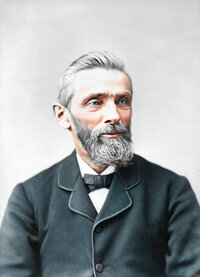
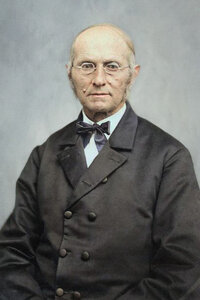
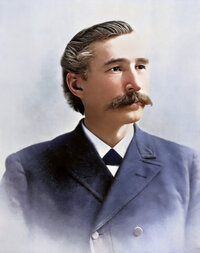
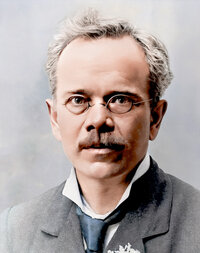
Thomas M. Preble was the first American Adventist preacher to accept the seventh-day Sabbath. His February 13, 1845 essay in the Hope of Israel, “A Tract Showing That the Seventh Day Should Be Observed as the Sabbath,” was the means by which Joseph Bates was convinced of the Sabbath truth — and through Bates the seventh-day Sabbath came to James and Ellen White and to all Sabbatarian Adventism. Born in Anson, Maine, on July 13, 1810, he was a Free Will Baptist minister who embraced Miller’s advent message in 1842 and the seventh-day Sabbath in 1844 under the witness of Rachel Oakes Preston and Frederick Wheeler in Washington, New Hampshire. He later abandoned the seventh-day Sabbath but remained an advent-Christian preacher to his death in 1907.
Early Life and Free Will Baptist Ministry (1810–1841)
Per the Encyclopedia of Seventh-day Adventists (Michael W. Campbell), Preble was born July 13, 1810, in Anson, Maine, to Motherwell and Susannah Preble. He worked as a farm hand in his youth, and at twenty-six entered Parsonsfield Academy where he studied for two years and began preaching. He was ordained as a Calvinist Baptist and later became a Free Will Baptist. He married Helen Mair Eaton on November 14, 1837. They had one daughter, Susan Jennie.
Embracing the Advent Message (1842–1843)
Per ESDA, Preble accepted the Millerite advent message at Nashua, New Hampshire, in early 1842 and was excommunicated by his Free Will Baptist congregation on February 15, 1842 — only six weeks after embracing the doctrine. The Signs of the Times of February 22, 1843 records his Nashua revival: “The Cause in Nashua.—Brother Preble informs us that the cause is going on there gloriously. Within three weeks he has paptized thirty-five, and many others have turned their faces Zion-ward. The number of those who are looking for the blessed hope of the glorious appearing, is quite large, and the work is still progressing” (Signs of the Times, February 22, 1843, page 182.20; refcode HST February 22, 1843, page 182.20).
A few months later, the Signs of the Times of June 7, 1843 records his Maine itinerancy: “Brother Preble has just returned from a long tour in Maine. He has been laboring amid opposition with more success than he could reasonably expect. Many glorious reformations have followed his labors, God has blessed his truth, and many souls have been converted to God. There are also a goodly number living in constant expectation of Christ’s glorious appearing. Brother Preble is now in Lowell, and will attend to calls for lectures on the Second Advent” (Signs of the Times, June 7, 1843, page 106.16; refcode HST June 7, 1843, page 106.16).
Receiving the Sabbath at Washington, New Hampshire (1844)
Dr. Merlin Burt’s Understanding Ellen White (2015) — an Andrews University Press scholarly volume — records the chain by which the Sabbath came to Preble: “A knowledge of the doctrine of the seventh-day Sabbath was first brought to Millerite Adventists during the early 1840s by Seventh Day Baptists. In early 1844 in Washington, New Hampshire, Rachel Oakes (later Preston), a Seventh Day Baptist, introduced the Sabbath to Adventists in her area.” (Understanding Ellen White, p. 110, par. 1; refcode UEGW 110.1). The same paragraph continues: “During 1844 and 1845, two ministers in the Washington, New Hampshire, area, Frederick Wheeler and Thomas Preble, accepted this doctrine and began to propagate their views.” (Understanding Ellen White, p. 110, par. 1; refcode UEGW 110.1). And the same paragraph traces the chain forward: “Thus it came to the attention of Joseph Bates, who, with James and Ellen White, would later become one of the founders of the Seventh-day Adventist Church” (Understanding Ellen White, p. 110, par. 1; refcode UEGW 110.1).
J. N. Andrews’s History of the Sabbath and First Day preserves the importance of Preble’s role: “From this place, several Advent ministers received the Sabbath truth during the year 1844. One of these was Eld. T.M. Preble, who has the honor of first bringing this great truth before the Adventists through the medium of the press. His essay was dated Feb. 13, 1845. He presented briefly the claims of the Bible Sabbath, and showed that it was not changed by the Saviour, but was changed by the great apostasy” (History of the Sabbath and First Day, p. 501, par. 1; refcode HSFD 501.1).
Bates’s Conversion through Preble’s Tract (1845)
Joseph Bates’s reading of Preble’s Hope of Israel article was the moment that brought the Sabbath to the founder of the seventh-day Adventist movement. The Seventh-day Sabbath, a Perpetual Sign preserves Bates’s own first-person testimony: “until about sixteen months since I read an article published in the Hope of Israel, by a worthy brother, T.M. Preble, of Nashua, which when I read and compared with the Bible, convinced me that there never had been any change. Therefore the seventh day was the Sabbath, and God required me as well as him to keep it holy” (The Seventh-day Sabbath, a Perpetual Sign, p. 40, par. 2; refcode SC1 40.2).
Bates’s tract acknowledges the historical sketch he drew from Preble’s essay: “As these two books are not within my reach, I have extracted from T.M. Preble’s tract on the Sabbath” (The Seventh-day Sabbath, a Perpetual Sign, p. 41, par. 2; refcode SC1 41.2).
Later Years and Death (1845–1907)
Per ESDA, Preble eventually abandoned the seventh-day Sabbath and returned to the first-day Adventist position, becoming an Advent Christian minister. He continued to preach the second-coming message but became publicly antagonistic to Seventh-day Adventism. Replies to Elder Canright’s Attacks on Seventh-day Adventists (1895), the joint volume by G. I. Butler and Uriah Smith, records the historical irony of this trajectory: “He sets forth Elds. T.M. Preble and J.B. Cook, who kept the Sabbath a brief period and then gave it up, as the real fathers and founders of the present Seventh-day Adventist movement” (Replies to Elder Canright’s Attacks on Seventh-day Adventists, p. 32, par. 2; refcode RCASDA 32.2).
Per the Encyclopedia of Seventh-day Adventists, Preble died in 1907 at the age of ninety-six.