Summary
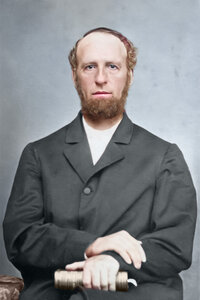
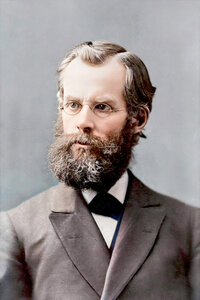
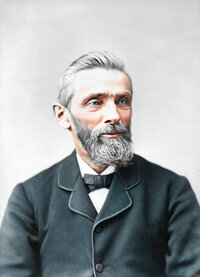
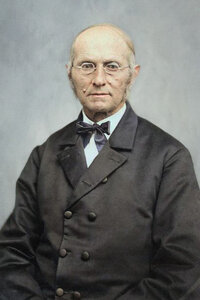
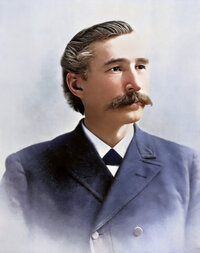
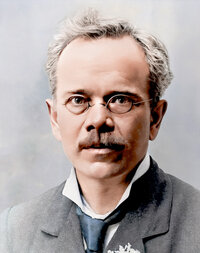
Thomas Motherwell Preble holds a singular place in Adventist history as the first American Adventist preacher to accept the seventh-day Sabbath and the first to advocate it in print. His 1845 tract, Showing that the Seventh Day Should be Observed as the Sabbath, became what historian Merlin D. Burt called “the single most important influence during 1845 in promoting the seventh-day Sabbath to Adventists.” Through that small publication, the sea captain Joseph Bates and the young scholar John Nevins Andrews were both led to embrace the Sabbath — two men who would become foundational pillars of Seventh-day Adventist theology. Yet Preble himself abandoned the Sabbath after keeping it for approximately three years and spent the remainder of his long life as an Advent Christian minister who actively opposed the very doctrine he had helped to establish. His story is one of the most paradoxical in Adventist history: a man whose brief conviction set in motion a chain of events far more significant than he could have imagined.
Early Life and Education
Thomas Motherwell Preble was born on July 13, 1810, in Anson, Maine, to Motherwell Preble (1781-1864) and Susannah Preble (1766-1871). He grew up in rural New England, and by the age of ten, he and his parents were living in Norridgewock, Maine. As a youth, Thomas worked as a farm hand, gaining the practical skills and physical endurance that would serve him well in his later itinerant ministry.
At the age of twenty-six, Preble entered Parsonsfield Academy, where he studied for two years. It was during this time that he began preaching, discovering in himself a gift for public speaking that would define his career. After completing his studies, he entered the ministry, first being ordained as a Calvinist Baptist before later becoming a Free Will Baptist minister. This theological shift — from the rigid predestinarianism of Calvinism to the Free Will Baptist emphasis on human choice — foreshadowed the independent spirit that would characterize his entire ministerial life.
On November 14, 1837, Thomas married Helen Mair Eaton (1812-1864) in Weare, New Hampshire. Together they had one daughter, Susan Jennie Preble George (1838-1908), who was born in West Lebanon, Maine.
The Second Advent Movement
While serving in one of his earliest pastorates at Nashua, New Hampshire, Preble encountered the teachings of William Miller and became convinced that Christ would soon return. He threw himself into the Advent cause with characteristic fervor, becoming a successful revivalist who led many people to conversion. “I bless God,” he wrote with evident gratitude, “that I have been willing to give the ‘midnight cry.'”
The cost of his convictions came swiftly. After only six weeks of preaching the Advent message, his congregation excommunicated him on February 15, 1842. But Preble was undeterred. Just ten days later, he participated in a Second Advent Conference held in Nashua, New Hampshire, from February 25 to 27, 1842. William Miller himself attended Preble’s meetings, but the ministers of the town barred them, forcing the conference to close early. Joshua V. Himes, Miller’s closest associate and the movement’s chief organizer, recognized Preble’s courage and asked his readers to pray for him, calling Preble one “who is in the front of the battle” in his community.
Throughout 1842 and 1843, Preble became an increasingly prominent figure in the Millerite movement. He participated in camp meetings at Atkinson and then Exeter, Maine, in the fall of 1842. At the Exeter camp meeting, Preble baptized nine people before an audience of four to six thousand. “All things considered,” he wrote with satisfaction, “I think it was the best meeting I ever attended.” Those who heard him preach were impressed. J. O. Corliss, who attended one of Preble’s meetings, remembered him as an “eloquent speaker” with a “dignified carriage.”
In June 1843, Preble spoke at a camp meeting at Athol before a congregation of two thousand who were “very attentive to listen to the truth.” He expected “a great amount of good” from these gatherings. As October 1844 approached, Preble accepted the message of the “MIDNIGHT CRY” promulgated by Samuel S. Snow — that Jesus Christ would return “on the tenth day of the seventh month.” Feeling it his “duty,” Preble traveled east through Maine, visiting Portland, Gardiner, Hallowell, Chesterville, Wilton, Farmington, New Sharon, and Norridgewock, proclaiming the news: “Behold he cometh.”
No extant records document his deep sense of disappointment when Jesus did not return on October 22, 1844 — the day that would become known as the Great Disappointment. But Preble persisted in his conviction that Christ would return, continuing to preach the Advent hope.
The Sabbath Discovery
It was around August 1844, even before the Great Disappointment, that Preble came to believe the seventh-day Sabbath was a topic of “great importance” for which he had a “duty” to share his views. The most plausible theory for how Preble arrived at this conviction is that his proximity to Sabbatarian Millerite believers at Washington, New Hampshire, and their minister, Frederick Wheeler, served as a catalyst for his adoption of the seventh-day Sabbath. This connection is supported by the testimony of J. N. Andrews, who in 1862 stated that Preble “was led to embrace the Sabbath from an acquaintance with Sabbath-keepers in N.H., and he faithfully adhered to it for a season.”
In early 1845, Preble set off a new round of debate within the scattered Millerite community when he wrote a letter dated February 13, 1845, to John Pearson, which was published in Joseph Turner’s Hope of Israel on February 28, 1845. This was the first time an Adventist minister had publicly advocated for seventh-day Sabbath observance in print.
The Historic Tract
In March 1845, Preble expanded his article into a tract that would prove to be one of the most consequential publications in Adventist history: A Tract, Showing that the Seventh Day Should be Observed as the Sabbath, Instead of the First Day; “According to the Commandment.”
A close analysis of Preble’s tract reveals that he drew his newfound belief from studying William Miller’s own writings. He quoted from Miller’s “Lecture on the Great Sabbath,” arguing that the Sabbath was “a sign forever, and a perpetual covenant” and therefore remained “binding upon the Christian church as upon the Jewish.” Preble wrote that “All the difficulties on the Sabbath question among Christians have arisen from the foolish, judaizing [sic] notion, that Israel meant only the literal Jew.” Since the Sabbath was part of the Decalogue, he reasoned it could not simply be dismissed. “Only one kind of Sabbath was given to Adam,” he argued, “and only one remains for us.”
In concluding his tract, Preble wrote these memorable lines that would echo through Adventist history:
“Thus we see Dan. Vii. 25 fulfilled, the ‘little horn’ changing ‘times and laws.’ Therefore it appears to me that all who keep the first day of the week for ‘the Sabbath,’ are Pope’s Sunday Keepers!! And GOD’s SABBATH BREAKERS!!!”
And in a passage that revealed the sincerity of his search for truth at that moment:
“TRUTH is what I am after, and if I had but one day on this earth to spend, I would give up error for truth, as soon as I could see it. May the Lord give us wisdom, and help us to keep all ‘his commandments that we may have right to the tree of life.'”
Historian Merlin D. Burt rightly assessed that “Preble’s article and subsequent tract were the single most important influence during 1845 in promoting the seventh-day Sabbath to Adventists.”
Impact on Joseph Bates and J. N. Andrews
The influence of Preble’s tract on two foundational figures of Sabbatarian Adventism cannot be overstated. Joseph Bates, the retired sea captain and prominent Millerite leader, later recollected the moment he encountered Preble’s writings:
“I well remember when I read Eld. T. M. Preble’s short article on the Sabbath of the Lord, (afterward in a small tract,) some twenty-six years ago: how I said, ‘THIS IS TRUTH!’ and decided from henceforth to keep the Sabbath of the fourth commandment.”
Bates went on to become the foremost champion of the seventh-day Sabbath among early Adventists, writing his own influential tracts and personally convincing James and Ellen White to observe the Sabbath. The young John Nevins Andrews likewise attributed his awakening to the Sabbath truth to Preble’s tract. Andrews would become the denomination’s first official missionary and one of its most important theologians.
Thus, through a single short publication, Preble set in motion the chain of conviction that would lead to one of the most distinctive doctrines of the Seventh-day Adventist Church.
Abandonment of the Sabbath
Despite the profound impact of his writings, Preble kept the seventh-day Sabbath for only about three years before abandoning it. He shifted to arguing that the entire Ten Commandments were done away with at the cross, that the observance of Sunday was based upon Christian tradition, and that Christians should focus on the millennium or “seventh thousand year” as the great prophetic jubilee and “great Sabbath” instead. His reasons for this reversal are not entirely clear, but the theological shift was dramatic and complete.
Conflict with Seventh-day Adventists
By 1861, Preble was actively writing articles against the seventh-day Sabbath. In 1864, he wrote a series of articles attacking the Sabbath and the law in The World’s Crisis, the leading Advent Christian periodical. Uriah Smith, then editor of the Review and Herald and brother of the late Annie Smith, responded with a 228-page booklet titled Both Sides on the Sabbath and Law, which presented Preble’s arguments alongside Adventist responses.
Shortly thereafter, in 1867, Preble published his most extensive writings against the seventh-day Sabbath — a 471-page work that represented his magnum opus on the subject. In it, he sought to refute the Seventh-day Adventist writings of Aldrich, Smith, and Andrews. The man who had first introduced the Sabbath to Adventist believers had now become one of their most determined opponents on the very question he had raised.
Later Life
Preble remained an active Advent Christian minister throughout his long life, staying closely aligned with Joshua V. Himes and publishing literature from his print shop in Buchanan, Michigan. He preached in Maine, New Hampshire, New York, and Massachusetts, continuing his itinerant ministry at least until the late 1880s, when he retired from active preaching.
His personal life was marked by loss and new beginnings. His first wife, Helen, died in 1864. On August 24, 1865, Preble married Sophia Rose Smith (1824-1892) in Wilbraham, Massachusetts. Sophia would also precede him in death.
Preble’s longevity was remarkable for his era. As late as 1907, at the astonishing age of ninety-seven, he led out in “an old-fashioned testimony meeting” and rode in an automobile for the first time. Even in his final years, he was “working on a revision of the scriptures,” a project he titled “The God Like Narrative of the Bible” — a testament to his lifelong engagement with Scripture, even if his interpretations had shifted dramatically over the decades.
Death and Legacy
Thomas Motherwell Preble died of heart failure on December 13, 1907, in Somerville, Massachusetts, at the age of ninety-seven. He was buried next to his second wife, Sophia, in Cedar Grove Cemetery in nearby Dorchester.
Preble’s legacy presents one of the great ironies of Adventist history. The man who first championed the seventh-day Sabbath among Adventist believers became one of its most vocal opponents. Yet his 1845 tract proved to be the single most important catalyst in bringing the Sabbath truth to the attention of Joseph Bates and J. N. Andrews — two men who, unlike Preble, would devote their entire lives to the Sabbath cause and become foundational pillars of Seventh-day Adventist theology.
Preble’s story is a reminder that truth can travel further than the messenger intends, and that the seeds of conviction, once planted, may bear fruit in ways their sower never anticipated. His writings, despite his later repudiation of them, served a providential purpose in the development of one of the most distinctive doctrines of the Seventh-day Adventist Church.