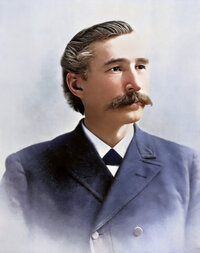
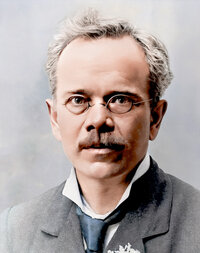
1804–1883
Summary
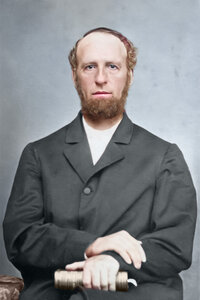
Stephen Pierce was a Vermont Adventist pioneer who, alongside Joseph Bates, James White, and Hiram Edson, helped lay the doctrinal foundations of the Sabbath-keeping Adventist movement in the late 1840s. Ellen White repeatedly named him as one of the “keen, noble, and true” men who searched the Scriptures together after the disappointment of October 1844; he later served as president of the Vermont and Minnesota Conferences. He was widely known among believers as “Father Pierce.”
Vermont Pioneer (1804–1844)
LeRoy Edwin Froom records the basic outline of Pierce’s life: “STEPHEN PIERCE (1804-1883) was born in Vermont, residing later in Minneapolis and Iowa. A man of genuine piety and humility, he was an able Bible expositor and rose to the presidency of the Vermont and Minnesota conferences” (The Prophetic Faith of Our Fathers, vol. 4, p. 1046, par. 4; refcode PFF4 1046.4).
The Sabbath Conferences After the Disappointment
What gave Pierce his place in early-Adventist memory was not a doctrine of his own but his presence at the small post-1844 study meetings where the Sabbath-keeping company hammered out its theology. Ellen White recalled this work years later in a 1903 letter:
My husband, Elder Joseph Bates, Father Pierce, Elder Edson, and many others who were keen, noble, and true were among those who, after the passing of the time in 1844, searched for truth. At our important meetings, these men would meet together and search for the truth as for hidden treasure. I met with them, and we studied and prayed earnestly; for we felt that we must learn God’s truth.
(Letters and Manuscripts — Volume 18, Lt 253, 1903, par. 4; refcode 18LtMs, Lt 253, 1903, par. 4)
She returned to the same scene more than once. In Counsels for the Church and in Testimonies to Ministers and Gospel Workers, she wrote: “My husband, with Elders Joseph Bates, Stephen Pierce, Hiram Edson, and others who were keen, noble, and true, was among those who, after the passing of the time in 1844, searched for the truth as for hidden treasure” (Testimonies to Ministers and Gospel Workers, p. 24, par. 3; refcode TM 24.3). The same sentence appears verbatim in Christian Experience and Teachings of Ellen G. White, p. 192, par. 3 (refcode CET 192.3).
Personal Testimony (1851)
Among the earliest pieces of Pierce-specific testimony is a vision Ellen White received in 1851. Three of its paragraphs counsel Pierce, his wife (Mrs. Pierce), and the Phillips family:
Oh, I saw that this was not all of the requirements of Jesus, and those who pray for the sick are not all who have faith in Jesus. The faith of Jesus takes in the whole life and divine character of Christ. I saw that you are too exclusive; also Brother Pierce. You are leaning too much on Sister Phillips.
(Manuscript Releases, vol. 18, p. 251, par. 1; refcode 18MR 251.1)
Of Pierce’s tendency to lay aside the work when discouraged she wrote:
I saw Brother Pierce would often try to talk the truth; if he did not have that liberty and success, that freedom he anticipated, he settled down, [thinking] that God did not call him to that work. Now, if it had not been for this, Brother Pierce might have been more useful than he has been.
(Manuscript Releases, vol. 18, p. 251, par. 2; refcode 18MR 251.2)
And of his silence:
Brother Pierce, you have been silent too much; too much shut up with yourself. In the paper you could speak to hundreds, but you have a few of you contented yourselves together. Your talent, Brother P, has been almost buried up; it must be brought into use.
(Manuscript Releases, vol. 18, p. 252, par. 3; refcode 18MR 252.3)
Vermont Labor (1864)
Thirteen years later, Ellen White’s first volume of the Testimonies for the Church spoke of Pierce again, this time defending him and others before churches that had discounted them:
Brethren in Vermont have overlooked the moral worth of men like the Brethren Bourdeau, Pierce, and Stone, who have a depth of experience and whose influence has been such as to gain the confidence of the community. Their industrious and consistent lives have made them daily, living preachers, and their labors have removed a great amount of prejudice and have gathered and built up.
(Testimonies for the Church, vol. 1, p. 449, par. 1; refcode 1T 449.1)
Minnesota Years (1871)
By the end of the 1860s Pierce had moved his work west. Ellen White’s second volume of the Testimonies contains an extended description of his ministry there:
The prosperity of the cause of God in Minnesota is due more to the labors of Brother Pierce than to your own efforts. His labors have been a special blessing to that state. He is a man of tender conscience. The fear of God is before him. Infirmities have weighed heavily upon him, and this has led him to question whether he was in the way of his duty and to fear that God was not favoring his efforts.
(Testimonies for the Church, vol. 2, p. 629, par. 3; refcode 2T 629.3)
“Father Pierce” on Wisdom (1868)
Pierce’s own pen reached a wider audience through a long article on Proverbs published in the Review and Herald in October 1868. Lest We Forget preserves its opening: “‘Wisdom is the principal thing, therefore get wisdom.’ If it were anything of an earthly nature, inspiration would not call it the principal thing; nor would the Spirit of the Lord enjoin upon us so imperatively to get it. Hence we conclude rather that it is the pearl of great price, which when a man has found, he goes and sells all that he has, and buys it” (Lest We Forget, ch. 34 (“Elder Pierce on Wisdom”), p. 72, ¶ 2). The bibliographic header to the same chapter records the source as “Excerpts from Review and Herald, Oct. 13, 1868, pp 201-203” (Lest We Forget, ch. 34, p. 72, ¶ 1).
Death (1883)
Froom’s biographical footnote contains his death date: “STEPHEN PIERCE (1804-1883) was born in Vermont, residing later in Minneapolis and Iowa” (The Prophetic Faith of Our Fathers, vol. 4, p. 1046, par. 4; refcode PFF4 1046.4). His widow, Sister Pierce, was praised in the same 1871 testimony Ellen White gave of him: “She is one of the timid, fearing ones, conscientious in the performance of her duty; and she will receive a reward when Jesus comes if she is faithful to the end” (Lest We Forget, ch. 28, p. 64, ¶ 7).