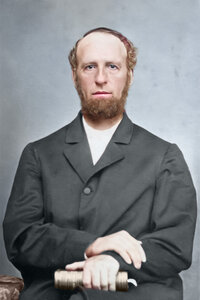
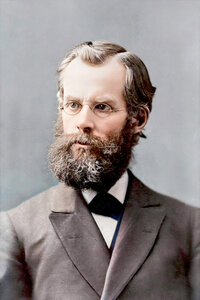
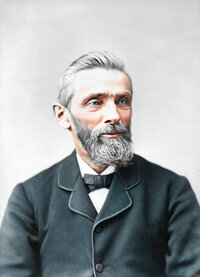
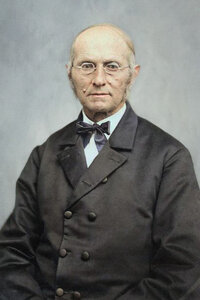
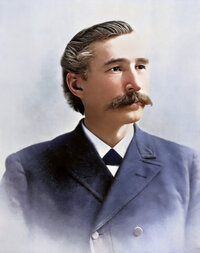
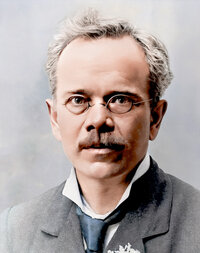
1806–1890
Summary
Samuel S. Snow was a Connecticut-born former skeptic who, after his conversion through reading William Miller’s lectures, became the Millerite preacher who in August 1844 fixed October 22 as the date for Christ’s return. His exposition — sometimes called the “true midnight cry” or the “seventh-month message” — was the spark that turned the cooling Millerite movement of 1844 into a movement of intense and disciplined expectancy in its closing weeks.
Origin of the Seventh-Month Message (1843–1844)
Froom records the chronology of Snow’s developing conviction. Beginning with an article of February 16, 1843, and continuing through 1844, “Samuel S. Snow emphasized the autumnal Jewish seventh month, Tishri, as the true ending of the prophetic 2300-year span, with the beginning dated from the autumn of 457 B.C.” (The Prophetic Faith of Our Fathers, vol. 4, p. 799, par. 1; refcode PFF4 799.1).
Loughborough records the calculation that fixed the day. Snow argued that since the period was 2,300 full years and the decree to restore Jerusalem went forth in the seventh month of 457 B.C., the period would close in the seventh month of 1844: “As the time of the vision was twenty-three hundred full years, it would require all of 457 and all of 1843 to make twenty-three hundred, and if the decree did not go forth until the seventh month of 457 B.C., it was taught that the period would not end until the seventh month of 1844. As the observance of the tenth day of the seventh month seemed to be the event which marked the beginning of the period, so it was shown conclusively that on the tenth day of the seventh month (Jewish time), Oct. 22, 1844, the twenty-three hundred days would end, and the time come for the sanctuary to be cleansed” (The Great Second Advent Movement, p. 160, par. 6; refcode GSAM 160.6).
Exeter Camp Meeting (August 1844)
Froom preserves the moment Snow’s message reached the camp meeting at Exeter, New Hampshire. Bates was preaching when Snow arrived: “Bates was one of the important leaders in the Exeter (New Hampshire) camp meeting in August, 1844, when the “true midnight cry” was first presented. Bates, it happened, was the preacher chosen for that morning’s service at the camp. He was exhorting his hearers to be faithful and calmly assuring them that God was simply testing them, that they were in the tarrying time, and similar sentiments, when Samuel S. Snow rode into the camp on horseback. Taking a seat beside his sister, Mrs. John Couch, Snow reiterated his conviction that Christ would appear at the time appointed” (The Prophetic Faith of Our Fathers, vol. 4, p. 549, par. 1; refcode PFF4 549.1).
Froom records the cool initial reaction of the absent leadership: “Snow’s presentation, wholeheartedly received by the encampment, at first encountered marked reserve on the part of the prominent leaders not present at the camp. (Miller and Himes, it should be stated, were both out in Ohio at this time, and were troubled over this innovation back East.) The same attitude of coolness was true of the leading Adventist periodicals, which they controlled. Nevertheless, the “seventh month” message spread with seemingly irresistible power. One by one the outstanding leaders joined in the swelling chorus” (The Prophetic Faith of Our Fathers, vol. 4, p. 803, par. 2; refcode PFF4 803.2).
James White, who would soon marry Ellen Harmon, recalls the same effect on the believers in Maine: “On returning from the Exeter camp-meeting, I visited the Advent congregation at Poland, Me., and attended camp-meetings at Litchfield and Orrington. At these two camp-meetings ministers and people became imbued with the spirit of the seventh-month message. The evidences upon which it was based seemed conclusive, and a power almost irresistible attended it; and the fruits of this message everywhere were alike excellent” (Life Incidents, p. 166, par. 1; refcode LIFIN 166.1).
Froom adds the response in New Bedford: “Bates returned to New Bedford and soon attended an Adventist meeting where Hutchinson, editor of the Montreal Voice of Elijah, was preaching. But Hutchinson became confused, and said, “I can’t continue.” Macomber also seemed unable to explain the message that had been given at Exeter. So Bates, who had just returned from Exeter, presented the new light with freedom and power. In fact, he was asked to repeat it in the afternoon and in other quickly arranged meetings” (The Prophetic Faith of Our Fathers, vol. 4, p. 814, par. 3; refcode PFF4 814.3).
Setting (the “Tenth Day of the Seventh Month”)
Loughborough records the wider effect through the summer of 1844: “About the middle of July the blessing of God in reclaiming backsliders began to attend the proclamation of the time, and those who embraced either of the views referred to, manifested a marked change in their deportment, and a sudden waking out of sleep, as was predicted. ‘At midnight there was a cry made, Behold, the Bridegroom cometh; go ye out to meet him. Then all those virgins arose and trimmed their lamps.’ From July these movements were in different parts of New England, and distinct from one another; but they were all attended by the blessing of God in reclaiming many whose lamps had” (The Great Second Advent Movement, p. 159, par. 1; refcode GSAM 159.1).
Death (1890)
Snow’s life after October 22, 1844 took a different course from the Sabbatarian Adventist movement that emerged from the disappointment. The Lest We Forget cover-line for chapter 57 gives his life-span as “1806-1870” (Lest We Forget, ch. 57 (“SAMUEL S. SNOW”), p. 111, ¶ 1) — though this date conflicts with most other records, which place his death at Brooklyn in late July 1890. His decisive role in the seventh-month message of August 1844 remains his most lasting contribution to Adventist history.