Summary
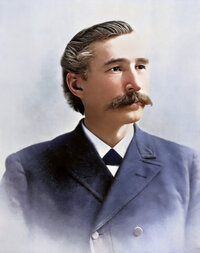
Owen Russell Loomis Crosier was a Millerite preacher and editor from Canandaigua, New York, who authored the first systematic exposition of the sanctuary doctrine that would become central to Seventh-day Adventist theology. Together with Hiram Edson and Dr. Franklin B. Hahn, Crosier studied the sanctuary question after the Great Disappointment of 1844 and wrote the landmark article “The Law of Moses,” published in the Day-Star Extra of February 7, 1846. This article laid the theological foundation for the belief that the sanctuary to be cleansed in Daniel 8:14 was in heaven, not on earth, and that on October 22, 1844, Christ had entered the Most Holy Place to begin a new and final phase of His priestly ministry. Ellen White endorsed the article as containing “the true light, on the cleansing of the Sanctuary” — a weightier endorsement than any other could provide.
Early Life
Owen Russell Loomis Crosier was born in 1820 in Canandaigua, New York. “Orphaned at age two,” he lived “a lonesome boyhood.” During his youth, Dr. Franklin B. Hahn and Hiram Edson befriended the orphan, providing him a home and encouraging him in his studies. He attended Genesee Academy and Wesleyan Seminary at Lima, and afterward taught in Gorham, Rochester, East Avon, and Lima, New York. His educational background gave him a capacity for careful theological reasoning and clear written expression that would prove invaluable.
Conversion and Faith Journey
At sixteen, Crosier was converted at a Methodist revival. He was issued a preaching license by the Wesleyan church after it split from the Methodist church over the issue of slavery. Both the Methodists and the Wesleyans offered to finance his theological studies, but not wanting to feel under obligation to any one group, he declined their offers, demonstrating the independent spirit that would characterize his entire career.
In the fall of 1843, he accepted the Millerite doctrine of the imminent return of Christ and was baptized by E. R. Pinney. He became deeply interested in the chronology, time prophecies, the four prophetic empires, the subsequent division of Rome, and further events climaxing with the coming of the Lord. He also accepted the belief that the second coming of Christ would precede the millennium — a premillennialist position that set him at odds with most Protestant churches of the day.
Contributions to the Advent Movement
Crosier soon began lecturing on the prophecies, obtaining the use of the town hall from Dr. Hahn. He was invited to give a series of lectures in a schoolhouse, during which Dr. Hahn wholeheartedly accepted the advent message. The three men — Crosier, Edson, and Hahn — then decided to devote full time to the advent cause and began publishing the Day-Dawn, an advent newspaper, in Canandaigua.
Crosier was only twenty-four years old when, on October 23, 1844 — the morning after the Great Disappointment — he and Hiram Edson rode out to share news of comfort and encouragement with the scattered believers. While walking through a cornfield very early that morning, Edson had received an impression “concerning the temple in heaven, showing that this had been the object of the prophecies” and that Christ “had a work to perform before coming back to earth.” Regarding that morning, Crosier later related: “I was on horseback going from place to place… to cheer those whom I could reach.”
The Study of the Sanctuary
“Crosier, Edson, and Hahn joined in an intensive study of the Sanctuary in the winter of 1844–1845, after which Crosier wrote out their joint findings on the subject. This became the early standard exposition of the new position held by the sabbatarian Adventists.”
To publish the news, the men issued another number of the Day-Dawn in March 1845. “To finance the project, Mrs. Edson sold a part of her silverware.” About a year later, a “fuller, systematic exposition” of the subject was submitted to the editor of the Day-Star, a Cincinnati second advent paper, and appeared in an Extra edition as an article entitled “The Law of Moses,” on February 7, 1846.
Key Concepts of “The Law of Moses”
The article advanced several theological concepts that would become foundational to Seventh-day Adventist theology:
- A real, literal sanctuary exists in heaven. The earthly tabernacle built by Moses was a copy or shadow of the heavenly original, not the other way around. Paul’s argument in Hebrews centers on this truth: “We have such an High Priest, who is set on the right hand of the throne of the Majesty in the heavens: A MINISTER OF THE SANCTUARY, and of the true tabernacle; which the Lord pitched, and not man.”
- On October 22, 1844, Christ moved from the first apartment of the heavenly sanctuary to the second (the Most Holy Place). This was the event that actually occurred on that date — not Christ’s return to earth, as the Millerites had expected.
- Before He returns to earth, Christ has a work to do in the Most Holy Place that differs from what He had been doing since His ascension. The daily ministry in the Holy Place corresponded to Christ’s intercession from His ascension to 1844; the Day of Atonement ministry in the Most Holy Place corresponded to the newly transpiring period after 1844.
- The Hebrew sanctuary system was a complete visual representation of the plan of salvation, with every type having its antitype.
- The real purpose of the Day of Atonement is to prepare a cleansed people. Christ’s cleansing of the heavenly sanctuary also involves cleansing the hearts of His people.
- The typical “scapegoat” represents not Christ, but Satan. As the “author of sin,” Satan will receive the ultimate guilt for the sins he has caused God’s people to commit.
- Atonement for sin did not begin until Christ entered the heavenly sanctuary following His resurrection and ascension.
Endorsement by Ellen White
The significance of Crosier’s article was confirmed by none other than Ellen Harmon (White), who declared: “The Lord showed me in vision, more than one year ago, that Brother Crosier had the true light, on the cleansing of the Sanctuary… and that it was His will that Brother C. should write out the view which he gave us in the Day Star Extra, February 7, 1846.” (A Word to the Little Flock, 1847, p. 12.)
Joseph Bates, who would become one of the cofounders of the Seventh-day Adventist Church, described Crosier’s article as “in my humble opinion… superior to anything of the kind extant.”
Joseph Marsh, the publisher of the Day-Star, urged his readers: “We earnestly request the reader to make himself acquainted with the general scope and design of this invaluable book. It contains and will direct you to all the light you need on this highly important point.”
Acceptance and Rejection of the Sabbath
Crosier accepted and for a time kept the seventh-day Sabbath after Joseph Bates visited Port Gibson for a conference on the Sanctuary question, probably in the autumn of 1845. He even advocated Sabbath keeping in the December 1846 issue of the Day-Dawn. However, by 1847 he had separated from the group that would eventually become the Seventh-day Adventist Church. The precise reasons for his departure are not fully documented, but he moved away from the Sabbatarian Adventists and ultimately opposed both the seventh-day Sabbath and the sanctuary teachings he had once championed.
Later Life
After the separation, from 1847 through 1853, Crosier was on the staff of Joseph Marsh’s Advent Harbinger and Advocate in Rochester, New York. In 1858, he served as evangelist for the Michigan conference of the Advent Christian church and continued preaching that Christ would soon come.
Despite the decades that passed, Crosier never forgot the momentous events of 1844. In 1904, at the age of 84, he visited a Seventh-day Adventist meeting in Grand Rapids, Michigan. Elder J. W. Hofstar reported that one morning an elderly man, leaning on a cane, walked up the aisle and took a front seat. After the service, Crosier told him:
“I enjoyed your remarks very much this morning. You view the signs of the times as we did in the early advent movement and in 1844…. I passed through it all. I shared its grief and its distress, and I was present in that all-night prayer meeting and Scripture study held after the disappointment.”
He remembered clearly those thrilling events and still longed for Jesus to come. The old man, leaning on his cane, was a living link to the most dramatic chapter in Adventist history — and his eyes still looked upward, even though he had long since parted ways with the movement his writings had helped to establish.
Crosier died on September 15, 1912, in Grand Rapids, Michigan, at the age of 92.
Key Quotes
Ellen Harmon (White), endorsing Crosier’s article: “The Lord showed me in vision, more than one year ago, that Brother Crosier had the true light, on the cleansing of the Sanctuary… and that it was His will that Brother C. should write out the view which he gave us in the Day Star Extra, February 7, 1846.” — A Word to the Little Flock, 1847, p. 12.
Joseph Bates, on Crosier’s article: “In my humble opinion it is superior to anything of the kind extant.”
Crosier, from his article on the Sanctuary: “‘The sum’ of Paul’s argument to the Hebrews is: ‘We have such an High Priest, who is set on the right hand of the throne of the Majesty in the heavens: A MINISTER OF THE SANCTUARY, and of the true tabernacle; which the Lord pitched, and not man.'”
Crosier, recalling October 23, 1844: “I was on horseback going from place to place… to cheer those whom I could reach.”
Crosier, visiting the SDA meeting in 1904: “I enjoyed your remarks very much this morning. You view the signs of the times as we did in the early advent movement and in 1844…. I passed through it all. I shared its grief and its distress, and I was present in that all-night prayer meeting and Scripture study held after the disappointment.”
Legacy
Although Crosier “did not follow on into other truths that came to light in early days, as the Lord led our pioneers, step by step, into the full advent message,” Seventh-day Adventists remember and recognize the significant part he played in establishing the doctrine of the Sanctuary. What he wrote on Christ, the High Priest, and the Sanctuary helped explain the perceived error in Miller’s interpretation of the 2300-day prophecy and laid the foundation for this distinctive doctrine of the Seventh-day Adventist Church.
His article “The Law of Moses” remains one of the most important documents in the history of Adventist theology — the first comprehensive attempt to articulate what would become the church’s most distinctive teaching. Ellen G. White declared that it contained “the true light, on the cleansing of the Sanctuary,” and no weightier endorsement could be asked for.
The truth he articulated endures, and the sanctuary doctrine he first systematized continues to be a defining element of Seventh-day Adventist faith and identity.