Summary
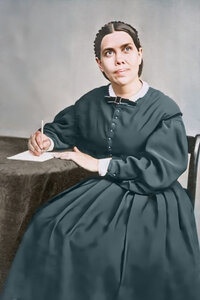
Catharine “Kate” Lindsay was a pioneering Seventh-day Adventist physician, educator, and medical missionary who founded the first Adventist school of nursing at the Battle Creek Sanitarium in 1883, served for over two decades as a physician and professor at that institution, advocated boldly for women’s health education in an era when male physicians adamantly opposed it, pioneered the therapeutic use of electric light in medicine, served at the Claremont Sanitarium in South Africa and visited the Matabele Mission in Southern Rhodesia, and spent her final two decades at the Boulder Colorado Sanitarium. Described as “a Florence Nightingale to this people,” Lindsay devoted nearly fifty years to working in Seventh-day Adventist sanitariums and nearly forty years to teaching nursing students. She was, in the words of one historian, “the dominant female figure in pioneer Adventist medical work.”
Early Life
Catharine Lindsay was born September 11, 1842, in Dane County, Wisconsin, to Thomas and Catherine (McIntyre) Lindsay (September 15, 1818 — May 30, 1890; April 10, 1815 — July 8, 1891), both of Scottish ancestry and born in Scotland. Thomas and Catherine Lindsay married on June 28, 1841, in Glasgow, Scotland, and the next day sailed for the United States, arriving in New York on August 11, 1841. They traveled towards Madison, Wisconsin, arriving in September that same year. After two years of living in a log cabin near Madison, in the spring of 1843 they relocated to the farm in Dane County that would be their home ever afterward.
Catharine, or “Kate,” was the eldest of eight children, three of whom died in early childhood and one as a teenager. She preferred to work outdoors rather than inside the home, yet always helped her mother with the care of the younger children. In the evenings, her mother read books and literature to the children, instilling in them a desire to learn more.
Lindsay was nine years old when she began her eight years of formal elementary school, first from a traveling teacher who spent a week at each home, then later walking four miles to an eight-grade schoolhouse with sawed slab seats. After completing the eighth grade she continued her education at home by reading every book and magazine she could find. Her sister, Mary Lindsay Patton, wrote that after Kate Lindsay completed the eighth grade, “she studied algebra, astronomy, and Latin at home all by herself” although their parents “had been brought up to think it a disgrace for a woman to seek to pursue a profession of any kind. It was not a woman’s sphere. Consequently, she received very little help or sympathy from home.”
Conversion and Early Aspirations
Lindsay’s critical approach in evaluating the reliability of what she read caused her to read her Bible with renewed spiritual interest. She desired a deeper understanding of God’s Word. Although she had enjoyed church attendance with her staunch Scotch Presbyterian parents, her personal studies led her to join the Methodist Church against her parents’ wishes. Later, Isaac Sanborn, a Seventh-day Adventist itinerant preacher, arrived to teach and preach in the little schoolhouse. Lindsay began to attend regularly, along with three other families in the area. In the fall of 1859, Sanborn baptized Kate, her parents, and her brother Thomas, Jr. Eighty-nine years later, Lindsay’s parents, James and Catherine, would be described as “pioneer Adventist parents.”
As a girl of seventeen, Kate Lindsay sacrificed clothes and personal appearance for her books and magazines. One day she received a book containing a biography of Florence Nightingale, the trained English nurse who reformed the nursing profession during the Crimean War. Reading this biography created in Lindsay a desire to become a nurse.
When Lindsay was eighteen, a Mr. Porter arrived to teach school in the neighborhood. They began a friendship and soon became engaged. Shortly after their engagement, he enlisted as a soldier in the Civil War and died weeks later of pneumonia in a Milwaukee, Wisconsin, training camp. After his death, Lindsay was grief stricken and “became even more seclusive and forbidding in her attitude toward those about her.” She never married.
Education for Nurse and Physician (1867—1875)
In 1867, at the age of twenty-five, Lindsay announced to her parents that she was leaving home to work and learn at the new Western Health Reform Institute in Battle Creek, Michigan. Her parents had disparaged her reading as well as her desire for further education and a profession, so Lindsay left for school without their encouragement or financial assistance.
During Lindsay’s initial time at the Western Health Reform Institute (later the Battle Creek Sanitarium), her assigned work of “dusting, scrubbing, and mopping” disappointed her when she observed the standard of patient care and was greatly disappointed to discover there was no qualified nurse on staff.
While reading The Water-Cure Journal, Lindsay learned about Dr. Russell Thatcher Trall — a well-known non-Adventist hydropath who opened a hydropathy facility in Florence Heights, New Jersey, in 1867. Lindsay left Battle Creek for Trall’s school of nursing in New Jersey, where she acquired skills in administering many of the treatments which were later termed physical therapy. Her sister indicated Lindsay paid her tuition by doing “family washings.” For two years she worked faithfully as a nurse, saving her money for that future time when she could perhaps study nursing somewhere on a post graduate level.
Upon her return to the Western Health Reform Institute during the fall of 1869, Lindsay soon found that her knowledge and skills as a trained nurse were not welcomed. Recognizing that having a trained female physician on staff could fill a great need, she decided to study medicine. She discussed her plans with the Institute’s Chairman of the Board, James White, and with the medical superintendent. All encouraged her to study medicine.
After more than a decade of controversy and debate, in January 1870 the University of Michigan School Board of Regents voted to allow admission of women state residents. Their decision was called by many “a dangerous experiment.” In the fall of 1870, Lindsay, along with seventeen other women, was admitted to the medical school at Ann Arbor. Prior to admission, applicants were required to pass rigorous all-oral entrance exams in mathematics, algebra, geometry, Greek, and Latin. Lindsay’s persistent study prior to these exams enabled her to pass them all. She was subjected to intense questioning by the Greek professor who greatly opposed admitting women to the university. “He would have kept on indefinitely had the room not darkened so that it was difficult to see.”
While at Ann Arbor, Lindsay remained current on national events. She supported Susan B. Anthony’s crusade for women’s suffrage, and on one occasion actively participated in an on-campus debate. Her eloquent half-hour speech resulted in many of the male students supporting Anthony’s crusade despite their previous prejudices.
Lindsay’s medical education was self-financed. Following graduation from the University of Michigan Medical School, she returned to the Institute late in 1876.
Battle Creek Sanitarium and Hospital (1875—1896)
During 1876, Kellogg became Medical Superintendent and Head of Surgery of the Institute; Lindsay became Head of Obstetrics, Women’s Health, and Pediatrics. In 1877, the Institute was renamed the Battle Creek Medical and Surgical Sanitarium.
Lindsay remained at Battle Creek through 1896, maintaining her private practice, working with the staff at Battle Creek Sanitarium, teaching both nursing and medical students, and writing articles for publication, while keeping current on medical information and news. In 1889, she presented a paper to the Michigan State Medical Society in which “she insisted upon [female physiology] education of mothers that they might pass on instruction to daughters.” Numerous male physicians disagreed adamantly with her belief that women needed such information. “This is the reason why I prepared this paper,” she said.
Lindsay was a creative physician. During an asthma attack, she had experienced much relief when she placed a light bulb over her chest. Later, with the assistance of a tinsmith, she created for her use an appliance that confined the light and heat. Kellogg later wrote that Lindsay “was as far as we know the first one who conceived the idea of electric light as a cure in the treatment of disease.” Her idea inspired Kellogg to design an electric-light bath cabinet in 1891.
During 1896, Lindsay took a five-month leave of absence to assist the medical staff at Boulder Sanitarium in Colorado to establish both a sanitarium and a school of nursing.
First Seventh-day Adventist School of Nursing (1883)
Upon Lindsay’s return to Battle Creek Sanitarium in 1875, and until the School of Nursing was opened in 1883, she “never ceased to urge Dr. J. H. Kellogg and his associates of the great need for the professional service of the well-trained nurse in the prevention of disease and in the treatment and care of the sick.”
In 1880, Lindsay returned to Bellevue Hospital Medical School in New York City for a postgraduate course in medicine. While there, she also observed nurses and interviewed administrators of the Bellevue Hospital School of Nursing, which had been reorganized in 1873 on the principles of nursing established by Florence Nightingale. When Lindsay returned to Battle Creek Sanitarium, she tenaciously promoted her vision for a school of nursing at that institution.
With Kellogg’s support, Lindsay’s vision was realized in the spring of 1883 when a nursing training program, called the Sanitarium Medical Missionary and Training School, opened. Two women completed the three-month course. A second class, lengthened to six months, was offered in November. In 1884, the third class was expanded into a two-year program, the format which the program would retain for approximately the next twenty years.
The textbooks provided to the first nursing class in 1883 were pamphlets compiled from Lindsay’s handwritten notes. She later supplemented her pamphlets and lectures with A Text-Book of Nursing for the Use of Training Schools, Families, and Private Students authored by Clara S. Weeks. Published in 1885, this was the first textbook for nurses written by an American nurse. Lindsay’s lectures for nursing students were published as a book, entitled Lectures: The Sanitarium Medical Missionary School for Nursing Students, around 1894.
Lindsay, although not director of the school of nursing, maintained oversight of the policies and training from 1883 until 1896. She was unafraid as she zealously opposed management when a proposed policy was not consistent with sound educational principles. It was unusual for people to confront Kellogg, but Lindsay was not intimidated. Dr. M. E. Olson noted, “‘It was a little comical sometimes, when others were inclined to draw back, to see Dr. Lindsay look the medical superintendent [Kellogg] squarely in the eye and tell him what had to be done. She assumed that he knew what he ought to do.”
South Africa (1896—1899)
Lindsay received a call in December 1895 from the Seventh-day Adventist Medical Missionary and Benevolent Association Board to assist the medical and nursing staff in South Africa. During a brief stopover in London she joined a Seventh-day Adventist family also traveling to Cape Town. They arrived early 1897.
As soon as Lindsay ascertained that the training school for nurses at Claremont Sanitarium, started in November 1896, was following the same regulations and course of study as the Battle Creek School of Nursing, she turned her attention to the Matabele Mission, later known as Solusi Mission, an interior mission station among the Matabele tribe, near Bulawayo, in Southern Rhodesia (now Zimbabwe). On December 20, 1897, she left Kimberly for Matabele Mission, traveling approximately 1,430 miles by train to Bulawayo, and from Bulawayo another 30 miles by a wagon drawn by a team of mules. This was the rainy season and the road was almost impassable. When the wagon broke down she completed her journey by riding a mule and arrived at the mission one week prior to the arrival of Ole Andres Olsen, former General Conference president, on January 1, 1898.
Within a month of Lindsay’s arrival, six residents of the Matabele Mission became ill and died of either pneumonia or malaria during late February through March. Lindsay’s observations from her visits resulted in numerous letters with timely instruction to the Medical Missionary Board about the need for better preparing missionaries, both prior to and after their arrival, for foreign service.
From her personal funds she provided Matabele Mission with a well and windmill for raising water and grinding corn. On the plains near Matabele Mission were bleached bones of natives from the recent famine, which Lindsay collected to create a skeleton for educational use at the School of Nursing in Cape Town.
Due to the Boer War, Lindsay was forced to leave South Africa earlier than planned. She traveled to America via Europe. On October 31, 1899, a few hours prior to the start of her voyage, Lindsay with her party witnessed the arrival of the vessel carrying Sir Redvers Buller and his 20,000 English troops.
Boulder Colorado Sanitarium (1901—1923)
During mid-1901, upon the encouragement of Kellogg, Lindsay moved to Boulder, Colorado, and again joined the medical staff at Boulder Colorado Sanitarium. During 1902 she served as medical superintendent. Her focus of work continued to center on nursing education and the medical practice of obstetrics, gynecology, and pediatrics.
In early 1912, Francis M. Wilcox wrote concerning the sanitarium and noted that “We are pleased to find still in active service Dr. Kate Lindsay, who for the last twelve years has done hard, faithful, and competent service in this sanitarium at times carrying a heavy load of medical work when changes have been made in the medical staff, and at all times carrying the chief burden of teaching in the nurses’ training-school. Although past seventy years of age, her optimistic view of life keeps her hard at work, and the scores of excellent young men and women who have gone out as nurses from this institution can bear witness to the faithfulness and efficiency of her instruction.”
About 1905, Lindsay wrote a nurses’ pledge which for numerous decades was familiar to all nurses in Seventh-day Adventist schools of nursing as The Kate Lindsay Pledge:
“Realizing the serious nature of the duties and the grave character of the responsibilities of the professional nurse, and especially appreciating the solemn obligations of the missionary nurse, I hereby solemnly pledge myself, by the help of God, faithfully to perform the duties of my calling, sacredly to regard its obligations and responsibilities, conscientiously to teach and practice the principles taught me by my instructors, to keep inviolate the professional confidences which may be reposed in me by those under my care, and to labor earnestly and truly for the relief of human suffering and the amelioration of human woe, and especially for the fellow mortals who may be in need of my assistance, wherever duty may call me to labor.”
While in her seventies Lindsay continued to teach nurses’ classes now from a wheelchair because of her arthritis. The students met in her home. During her final years she remained mentally alert and continued to live in her little cottage on the grounds of the Boulder Colorado Sanitarium. Due to frailness, rheumatism, and arthritis-related reduced mobility, during her last few years a nurse became her constant companion. Lindsay was eighty years old when she died in her home on March 31, 1923. She was buried in Dane County, Wisconsin, among other members of her family.
Legacy
Lindsay devoted nearly fifty years to working in Seventh-day Adventist sanitariums (Battle Creek, Claremont, Boulder) and nearly forty years teaching nursing students at these institutions. In addition to her time and service to others, she also generously donated financially towards various needs. At the Battle Creek Sanitarium, Lindsay donated several endowed beds that allowed patients to receive care at no cost. In Chicago, she was one of the first five contributors, each of whom donated at least $1,000, to the development of the Medical Missionary College. She provided her services without cost to the Haskell Home for Orphans (Haskell Memorial Home), in Battle Creek, Michigan — the first Seventh-day Adventist orphanage. Lindsay also contributed funds to build the Life Boat Rescue Home (later known as Suburban Home for Girls) in Hinsdale, Illinois, and bequeathed $2,000 for the nurses’ dorm in Boulder.
Lindsay’s influence went far beyond what she envisioned. In 1904 Drs. David and Mary Paulson, encouraged by Lindsay, established the Hinsdale Sanitarium and Hospital (now Adventist Hinsdale Hospital). About fifty years later, Mr. and Mrs. Eugene Kettering, impressed by care provided by Hinsdale Sanitarium during the polio epidemic in the 1950s, led efforts to build a local hospital in memory of his father: Kettering Medical Center founded in 1964, Kettering, Ohio.
During 1936, the College of Medical Evangelists (now Loma Linda University) Board of Trustees, upon recommendation by their School of Nursing faculty, named the original “girls’ dormitory” built in Loma Linda in 1910 Kate Lindsay Hall.
Lindsay was described as “a nurse as well as a physician [who] brought to this first school a richness of fundamental principles relative to both theory and the practical work needed by a nurse, so that as we view those early years we can but look upon Dr. Lindsay as a Florence Nightingale to this people. Indeed, she was inspired by the dynamic spirit of Florence Nightingale to devote her life to this work, and until the day of her death her heart was in the work of training medical missionary nurses.”
Catharine “Dr. Kate” Lindsay was an important figure of first generation Seventh-day Adventism. She “is the dominant female figure in pioneer Adventist medical work.” She founded the first Seventh-day Adventist school of nursing, and was integral in establishing sanitariums and schools of nursing at both Boulder Sanitarium, Colorado, and Claremont Sanitarium, South Africa. She exemplified her belief in these words from her address to Battle Creek’s graduating class of November 9, 1891: “That your mission is to do good to your fellows, to heal the sick and alleviate suffering.”