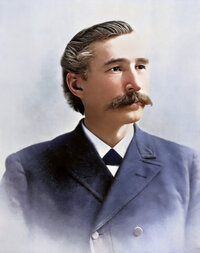
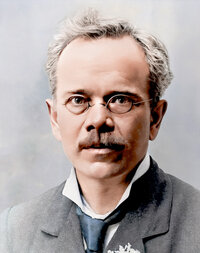
1796–1879
Summary
George Storrs was a Methodist preacher from New Hampshire who became, in turn, a leading anti-slavery lecturer, a Millerite Adventist, and the most influential voice in early-Adventist circles for the doctrine of conditional immortality. His Six Sermons against the “endless-torture” view of hell circulated by the tens of thousands in the early 1840s and shaped the position eventually adopted by the Seventh-day Adventist Church. He preached the Advent alongside Miller and Himes, wrote the famous “Flat Rock” allegory of October 1844, and after the Great Disappointment continued to publish the Bible Examiner until his death in 1879.
Early Life and Conversion (1796–1815)
The opening lines of Storrs’ own Six Sermons state plainly: “GEORGE STORRS, the subject of the following remarks, was born in Lebanon, N. H., December 13th, 1796. He was the youngest of eight children. His father, Col. Constant Storrs, was originally from Mansfield, Conn.; and was an industrious mechanic, serving, for a time, in the American Revolution as a wheelright. After the war of the Revolution he was married to Lucinda Howe, who was half-sister to the late Richard Salter Storrs, for many years minister of Longmeadow, Mass.” (Six Sermons, p. 5, par. 2; refcode SSII 5.2). The same paragraph adds that the parents “removed to New Hampshire – the country being then a wilderness – and located in Lebanon, on Connecticut River; and by industry and economy became, what, in those days, was called a wealthy farmer” (Six Sermons, p. 5, par. 2; refcode SSII 5.2).
Storrs’ mother set the spiritual tone of his childhood. The Adventist Pioneer Library compilation Lest We Forget records: “Unceasingly, she would impress upon her children that if they would seek the Lord, He would be found of them. Such pious labor was not lost on George” (Lest We Forget, ch. 19, p. 42, ¶ 2). LWF chapter 22 traces the boy’s slow turn to faith: “As a child he was afraid of God and felt alienated from Christianity because of the sermons he heard about the eternal torment of the wicked in hell. At the age of 17 he began deliberately to seek to know the goodness of God” (Lest We Forget, ch. 22, p. 47, ¶ 3).
Methodist Minister and Abolitionist (1818–1840)
Storrs married, was widowed, and remarried within the space of seven years. Six Sermons records: “During the time of his wife’s sickness, he was induced to hear a Methodist minister preach for the first time since he was interested in the things of religion. That minister he invited to his house, and also another of the same denomination. Their visits became a source of comfort to himself and wife. Ever after an intimacy existed between him and the Methodists; and about the time of his wife’s death he united with that Church, and soon after commenced his labors as a minister of the gospel. He joined the Methodist Traveling Connection in 1825, being then twenty-nine years old” (Six Sermons, p. 8, par. 5; refcode SSII 8.5). The same paragraph notes the second marriage: “The same year his second marriage occurred with a daughter of Col. Thomas Waterman, of Lebanon, N. H. His father-in-law was the first child ever born in Lebanon” (Six Sermons, p. 8, par. 5; refcode SSII 8.5).
The slavery question came to dominate his preaching. Lest We Forget records the costly turn: “Slavery was the main burden of Storrs’ preaching. This was not a doctrine approved by the local bishop who did everything in his power to suppress all discussion of the subject” (Lest We Forget, ch. 22, p. 47, ¶ 4). The crisis came in 1835: “George Storrs, the Methodist minister who was arrested during the act of prayer, having invoked a blessing on the slaves in church in New Hampshire. The year was 1835” (Lest We Forget, ch. 22, p. 47, ¶ 2). LWF places the eventual break in 1840: “He left the Methodist church in 1840” (Lest We Forget, ch. 22, p. 47, ¶ 5).
Conditional Immortality (1837–1842)
The most consequential reading of Storrs’ life happened on a slow train. Six Sermons records: “In 1837 – three years prior to his withdrawal from the M. E. Church – his mind was first called to a consideration of the subject of the final destiny of wicked men as being, possibly, an entire extinction of being and not endless preservation in sin and suffering. – This was by a small anonymous pamphlet put forth, as he learned, by Henry Grew, of Philadelphia. He read it to pass away a leisure hour while passing from Boston to New York” (Six Sermons, p. 9, par. 2; refcode SSII 9.2). Storrs adds: “It was strange to him that so plausible and scriptural an argument could be made in defence of a doctrine, which he had always regarded as unworthy of a serious consideration; for he had never doubted that man possessed an immortal soul” (Six Sermons, p. 9, par. 2; refcode SSII 9.2).
After several years of further study he published the work that would carry his name across the English-speaking world. Loughborough summarizes its claims: “Soon after this coming out we note that the light came to the advent bands on the subject of future punishment, as set forth in the pamphlet, Six Sermons, by George Storrs, taking the position that man by nature is mortal; that the dead are unconscious between death and the resurrection; that the final punishment of the ungodly will be total extinction; and that immortality is a gift of God, to be received only by faith in our Lord Jesus Christ” (The Great Second Advent Movement, p. 179, par. 1; refcode GSAM 179.1). Froom’s Conditionalist Faith records that early Seventh-day Adventists and first-day Adventists “received their Conditionalist views chiefly from George Storrs’s clear and logical writings on this subject” (Conditionalist Faith, vol. 2, p. 308, par. 1; refcode CFF2 308.1).
Adventist Years (1842–1844)
Storrs moved his family to Albany, New York, in August 1841 and gathered a small congregation on a single-sentence creed. He himself recalls: “Contrary to this expectation, he shortly after had an invitation to visit Albany, N. Y., which he did; and after preaching in that city three Sabbaths concluded to remove his family to that place in August, 1841. There he ministered to a small congregation, who came together on the principle of “Receiving one another as Christ had received them.”” (Six Sermons, p. 11, par. 2; refcode SSII 11.2). LWF reports the working motto: “He accepted this call, taking for his guiding principle: “The Bible as the only creed – Christian character the only test”” (Lest We Forget, ch. 22, p. 48, ¶ 7).
It was at Albany that Storrs met the Millerite message. Six Sermons records: “A few weeks after the “Six Sermons” were first published, at Albany, Mr. Storrs was visited by a man who was preaching the views of Wm. Miller on the second advent. He gave him the use of the “House of Prayer” in which to present those views. As the attention was deep, and the subject one of so much importance, if true, it was consented that he might repeat his course of Lectures in their place of worship, and Mr. Storrs became partially convinced of the correctness of the views advocated; so much so that he solicited the services of the late Charles Fitch, formerly a Congregational minister” (Six Sermons, p. 13, par. 1; refcode SSII 13.1). Loughborough’s later summary placed Storrs squarely in the front rank of the movement: “His writings exerted a mighty influence in moving the people to a greater consecration of self and substance to the work; especially was this the case in the closing weeks of the twenty-three hundred days” (The Great Second Advent Movement, p. 125, par. 2; refcode GSAM 125.2).
When the Signs of the Times “came out strong” against a fellow conditionalist preacher, Storrs felt obliged to act. He recorded: “Accordingly, in Dec., 1842, under a deep conviction that God called him thereto, he revised the Six Sermons, and published an edition of five thousand in newspaper form” (Six Sermons, p. 13, par. 2; refcode SSII 13.2). The following spring he carried the press north and west: “In the spring of 1843, he was invited to Philadelphia to preach on the advent, and thousands came out to hear” and “had the Six Sermons stereotyped in the quarto form, and printed two thousand copies” (Six Sermons, p. 14, par. 1; refcode SSII 14.1). In the autumn of 1843 he traveled west: “In the fall of 1843, he went to Cincinnati, Ohio, and spent several months. There also and in Indiana, some five or six thousands of the Sermons were scattered” (Six Sermons, p. 14, par. 2; refcode SSII 14.2).
The pamphlet provoked the leading Millerites. Froom records that “Litch was so agitated by the issue that he went to the length of issuing a little paper against it, called the Anti-Annihilationist” (The Prophetic Faith of Our Fathers, vol. 4, p. 807, par. 4; refcode PFF4 807.4). LWF adds Miller’s own published disclaimer: “William Miller opposed this doctrine and wrote in the Midnight Cry of May 23, 1844: “I disdain any connection, fellowship, or sympathy with Bro. Storrs’ views of the intermediate state, and end of the wicked”” (Lest We Forget, ch. 22, p. 49, ¶ 11).
In the fevered weeks before October 22, 1844, Storrs published in the Midnight Cry the parable that would become his most famous piece of writing. Loughborough preserves its setting: “In the Midnight Cry of Oct. 10, 1844, there appeared, from the pen of George Storrs, the following, under the heading, “The Finale,” but called by the Adventists, “Storrs’ Flat Rock”” (The Great Second Advent Movement, p. 163, par. 1; refcode GSAM 163.1). The allegory itself opened: “I cannot better illustrate what I mean than to suppose a large flat rock in the midst of the ocean. A promise is made by a glorious and mighty prince that at a given time he will send a splendid steamer to carry all persons whom he shall find there with the evidence that they fully credited his word, to a glorious country” (The Great Second Advent Movement, p. 163, par. 3; refcode GSAM 163.3). The same Philadelphia weeks also produced a costlier episode: a Millerite enthusiast named Dr. C. R. Gorgas convinced Storrs that Christ would return at three in the morning of October 22 — a conviction Storrs allowed into print as a Midnight Cry Extra, leading the established editors to step in and stop the press the next morning. Froom alludes to the lasting effect: “The fanaticism of John Stark weather and the episode of Dr. C. R. Gorgas led to the adverse attitude and action toward all “special illumination,” taken by the Mutual Conference of Adventists at Albany, New York, in May, 1845″ (The Prophetic Faith of Our Fathers, vol. 4, p. 984, par. 2; refcode PFF4 984.2).
After the Disappointment (1844–1879)
Storrs survived October 22 with his confidence in the Advent intact and his journalism resumed. Loughborough records the founding of the paper that would carry his views for the rest of his life: “Geo. Storrs started a monthly journal, entitled, The Bible Examiner” (The Great Second Advent Movement, p. 556, par. 1; refcode GSAM 556.1). LWF summarizes Storrs’s distance from the rest of the Sabbatarian Adventist movement that emerged in the next decade: “Storrs published a paper called The Bible Examiner from 1843 until he died in 1879. Storrs was disappointed when Jesus did not return October 22, 1844. Storrs did not accept the sanctuary message or the seventh-day Sabbath message but continued to believe the Bible truth about the state of the dead” (Lest We Forget, ch. 22, p. 49, ¶ 12).
The first-day Adventist groups that splintered out of the post-1844 movement did organize, in spite of Storrs’ opposition to “creeds” in any form. Damsteegt sets the scene of the 1845 Albany Conference that began that long process: “The Albany Conference was not very successful in uniting the believers” (Foundations of the SDA Message and Mission, p. 114, par. 1; refcode FSDA 114.1). Eventually Storrs became the founding president of the Life and Advent Union (organized 1863).
Death and Legacy (1879)
Storrs died at the age of 83 on December 28, 1879, and was buried at Woodlawn Cemetery in the Bronx — facts drawn from the biographical sketch in the Encyclopedia of Seventh-day Adventists (Jonathan Gomide, “Storrs, George (1796–1879),” archived at tools/ew_canonical/sources/esda/da8l-george-storrs.html).
Loughborough’s verdict on Storrs’s place in Adventist history is generous and theological at once. Storrs, “previous to his conversion to the advent doctrine was a prominent revivalist,” and “after the disappointment, brought to the consideration of the Adventist the state of the dead, and future punishment” (The Great Second Advent Movement, p. 125, par. 2; refcode GSAM 125.2). The doctrinal position he carried into print at his own expense — that the dead are unconscious, that immortality is a gift, that the wicked will not endure endless torment — became one of the doctrines that distinguished Seventh-day Adventism when it formally organized in 1863.