1874–1950
Summary
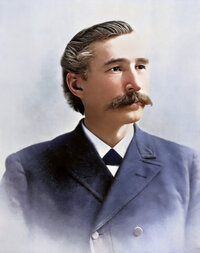
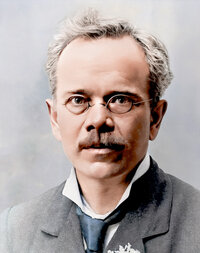
Ferdinand Anthony Stahl, called Fernando in Latin America, was the pioneer Seventh-day Adventist missionary to the indigenous peoples of the Andes and the Upper Amazon. With his wife Ana Christina Carlson Stahl (1870–1968), he served three uninterrupted decades of mission work — Bolivia (1909–1911), the Aymara and Quechua of the Lake Titicaca highlands of Peru (1911–1918), the Peruvian capital and Lake Titicaca again (1920–1921), the Asháninka and Yánesha of the Brow Forest of central Peru (1921–1927), and the Iquitos Amazon basin (1927–1939). Born in Pentwater, Michigan, on January 3, 1874, Stahl was a German-American who lost his father in infancy, fled an abusive stepfather at ten, met his Swedish-born wife at a Milwaukee restaurant, was baptized in 1901, and trained at Battle Creek Sanitarium. He died at Oroville, California, on November 30, 1950, in his seventy-seventh year.
From Pentwater to Battle Creek (1874–1909)
Per Gluder Quispe’s article in the Encyclopedia of Seventh-day Adventists, Ferdinand Stahl was born in Pentwater, Michigan, on January 3, 1874, of German extraction. His father died when he was eight months old; his stepfather mistreated him so severely that he ran away at the age of ten. He met Ana Christina Carlson — born November 22, 1870, in Vexiar, Sweden, and emigrated to Minneapolis in 1886 — at a Milwaukee restaurant where she was working as a waitress. They were married on August 5, 1894. About 1900 they began Bible studies with Emma Thompson Anderson (then under appointment to China), continued with James Campbell of the Milwaukee Adventist church, and were baptized by O. C. Godsmark in March 1901. Ferdinand pursued the nursing course at Madison, Wisconsin, then completed missionary nursing training at the Battle Creek Sanitarium; the couple subsequently managed a Battle Creek branch sanitarium clinic in Cleveland, Ohio, where Ana completed her training and their second child, Wallace, was born.
Volunteering for “the Most Difficult Place” (1909)
Per ESDA, Stahl wrote to Ellen White asking to be sent to “the most difficult place in the world” — naming Madagascar as a first option and “the Inca Indians of South America” as a second. Ellen White directed him to attend the 1909 General Conference Session in Washington, D.C. (May 13 – June 6, 1909). At that session the Stahls accepted the proposal of South American Division president J. W. Westphal to enter Bolivia, paid their own passage, and on June 26, 1909, sailed from New York with their two children for the port of Mollendo, Peru. From Mollendo they proceeded by rail and steamer to Arequipa, Puno, and La Paz — a journey of twenty days.
Bolivia and the Aymara of Lake Titicaca (1909–1918)
The 1913 General Conference Bulletin records the moment when his work crossed from Bolivia to Peru: “One of the interesting features of our union is the work among the Indians on the shores of Lake Titicaca. On my way to the last General Conference, I was permitted to converse with several Indians who had begun to keep the Sabbath” (General Conference Bulletin, May 29, 1913, p. 184, par. 2; refcode GCB May 29, 1913, page 184.2).
The same paragraph records the rapid growth: “At that time, Brother F. A. Stahl was sent to labor in Bolivia. But the interest among the Indians, and the demand for help, were such that he soon found it advisable to dedicate most of his time to this work, and it has rapidly grown, until now we have a church of over sixty members, and many others are keeping the Sabbath or are deeply interested. This is the more interesting from the fact that it is practically the first fruit from Protestant effort among the descendants of the Indians of the famous Inca empire” (General Conference Bulletin, May 29, 1913, p. 184, par. 2; refcode GCB May 29, 1913, page 184.2).
Stahl’s own greeting from the field, sent to the same 1913 session: “Dear brethren at the Conference, greetings from us workers in Bolivia, and blessings from the Lord to you” (General Conference Bulletin, May 27, 1913, p. 160, par. 6; refcode GCB May 27, 1913, page 160.6).
Persecution and Resistance
The 1913 General Conference Bulletin records the violent opposition the work encountered: “The brethren in this place are of good courage. There are several churches in Peru, and some very earnest believers. The work among the Indians of the interior is prospering, and the ecclesiastical authorities are becoming stirred. Just a few days before I came to Lima, on my journey here, the bishop had come with two hundred Indians to assault our mission on Lake Titicaca. They entered our chapel, took down the verse cards from the wall, and stamped on some of our Indians brethren, and cast other into jail for eight days” (General Conference Bulletin, June 1, 1913, p. 211, par. 22; refcode GCB June 1, 1913, page 211.22).
James R. Nix’s Passion, Purpose & Power records both the cost of the work and Stahl’s own self-deprecating humor: “Elder Fernando Stahl is by far the best-known Adventist missionary to Peru. Religious liberty was then unknown in Peru. People who accepted the Adventist message were persecuted, as was Elder Stahl himself” (Passion, Purpose & Power, p. 149, par. 2; refcode PPP 149.2).
The Bulletin’s account of the toll the high altitude took on Stahl’s body: “Brother Stahl has worked in so high an altitude that his lungs seem to have enlarged until they impede seriously the free action of the heart. It is clear that some one else must take his place for a while to give him a change” (General Conference Bulletin, June 1, 1913, p. 212, par. 1; refcode GCB June 1, 1913, page 212.1).
“I Am Not Afraid to Die” — Marie of Lake Titicaca
The 1913 Bulletin’s most famous passage from the Stahl mission, recounted from a visit J. W. Westphal made to the Lake Titicaca station the previous winter, in the same paragraph: “Brother Stahl told us of a young Indian girl, Marie, who had been constant in attendance at the meetings, a bright, sweet-faced girl. Sister Stahl had hoped to train her as a nurse and fellow worker. Suddenly Marie stopped coming. One Sabbath passed, another. Neither on Sabbath nor on week-day did she come to the mission, over that journey of nine miles from her village home. Then Brother and Sister Stahl went to the village to find out what had kept Marie; for her friends had all along been trying to persuade her not to come. They found her in a little hut, dying with the smallpox. She was able to recognize them. She wanted them to sing one of the hymns sung at the mission. And so in the little hut they sang one of the hymns of the kingdom, Marie with her parched and swollen lips trying to join in it” (General Conference Bulletin, June 2, 1913, p. 226, par. 4; refcode GCB June 2, 1913, page 226.4).
Marie’s last testimony, in the same paragraph: “I am so glad you came to Peru. I know I am going to die, but I am not afraid to die. Before you came I would have been afraid; now I am not afraid; for I know that Jesus will take me when he comes” (General Conference Bulletin, June 2, 1913, p. 226, par. 4; refcode GCB June 2, 1913, page 226.4).
The Brow Forest, Iquitos, and the Asháninka (1921–1939)
Per ESDA, after a 1918 furlough and brief Lima service in 1920–1921, the Stahls turned in July 1921 to the Brow Forest of central Peru, founding the Metraro mission station among the Asháninka and Yánesha. From 1927 onward they pioneered Adventist work in the Upper Amazon basin, settling at Iquitos, where Ana opened a small maternity home that became the present Clínica Adventista Ana Stahl. They were joined by William Schaeffler, Henry and Barbara Westphal, Ricardo and Georgiana Hayde, and national workers Bernabé and Carmen Chávez, Juan Ramos, Rufino Pacho, and the steamboat Auxiliadora. Failing health forced their retirement to Paradise, California, in 1939.
James R. Nix’s Story of Brother Condori
Per Nix’s Passion, Purpose & Power, the work on the north shore of Lake Titicaca produced a witness whose patience embodied the Adventist hope: “About 1923, Elder Stahl preached on the north side of Lake Titicaca in Peru. Brother Condori, who had previously allowed a small Catholic church to be built on his property, accepted Elder Stahl’s message of righteousness by faith and the second coming of Christ. After accepting the Adventist faith, he converted his church into a Seventh-day Adventist church. Shortly thereafter the stone church was destroyed, and Brother Condori had to flee to the other side of the lake. Fifteen years later he still was unable to return home—it simply wasn’t safe for him to do so” (Passion, Purpose & Power, p. 150, par. 2; refcode PPP 150.2).
Death (1950) and Legacy
Per ESDA, after a brief work among the Klamath Indians of northern California in 1939–1940, Stahl pastored a small church near his home at Oroville, California. He died on November 30, 1950, at age seventy-six. Ana survived him by eighteen years, dying at Paradise, California, on October 5, 1968, at the age of ninety-seven.
Today the Clínica Adventista Ana Stahl in Iquitos and the Stahl Center for World Mission at La Sierra University (opened 1992) carry the family name; the Asháninka knew him in life as él nos amaba — “he loved us” — the title later given to Alejandro Bullón’s biography of his work among the Campa.