1855–1916
Summary
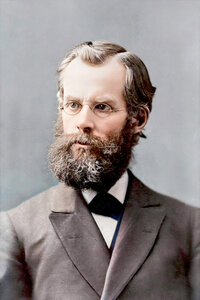
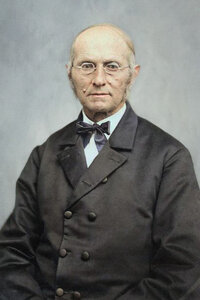
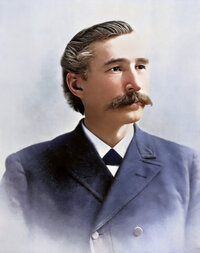
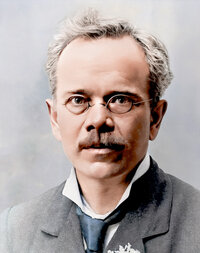
Ellet Joseph Waggoner — son of pioneer Adventist editor Joseph Harvey Waggoner — was the physician-turned-preacher who, with A. T. Jones, brought the message of righteousness by faith to the 1888 Minneapolis General Conference. From his October 1882 conversion experience at the Healdsburg, California, camp meeting until the close of the decade, Waggoner labored as Bible teacher, Signs of the Times editor, and chief expositor of the message Ellen White repeatedly identified as “the very message the Lord has sent to the people of this time” and “the message that God commanded to be given to the world.” He was sent to England in 1892 as editor of The Present Truth, served as a delegate to the 1897 General Conference, and continued to preach and write until his death in 1916.
Education and the Healdsburg Conversion (1855–1882)
Steinweg’s Lest We Forget records Waggoner’s birth: “Ellet Joseph Waggoner (EJW) was born in Wisconsin, January 12, 1855” (Lest We Forget, ch. 163, p. 351, ¶ 3). He was the sixth of ten children of Joseph Harvey and Maryetta Hall Waggoner. Steinweg traces his early years and education: “He resided in Burlington, Michigan for a while. He attended Battle Creek College and studied medicine at Bellevue Medical College in New York City. He married a college friend, Jessie Fremont Moser, and they had two daughters, Bessie and Pearl. After spending some time at Battle Creek, the family moved to California about 1880” (Lest We Forget, ch. 163, p. 351, ¶ 5).
In October 1882, at the Healdsburg camp meeting, Waggoner had the experience that defined the rest of his ministry. Steinweg quotes his own published account: “Suddenly a light shone about me, and the tent seemed illumined, as though the sun were shining; I saw Christ crucified for me, and to me was revealed for the first time in my life the fact that God loved me, and that Christ gave Himself for me personally. It was all for me.” (Lest We Forget, ch. 163, p. 351, ¶ 8).
He continued in the same testimony: “I knew that this light that came to me was a revelation direct from heaven; therefore I knew that in the Bible I should find the message of God’s love for individual sinners, and I resolved that the rest of my life should be devoted to finding it there, and making it plain to others. The light that shone upon me that day from the cross of Christ, has been my guide in all my Bible study” (Lest We Forget, ch. 163, p. 351, ¶ 9).
Editor of Signs of the Times (1883–1888)
Steinweg records: “In 1883, EJW was called to assist his father in editing Signs of the Times. In 1884 he met A. T. Jones. The two became lifelong friends, sharing a passionate interest in justification by faith” (Lest We Forget, ch. 163, p. 351, ¶ 10). The same paragraph adds: “It is well to remember that Adventist beliefs were still being studied and clarified.”
In a series of articles in Signs of the Times, Waggoner expounded justification and sanctification through Christ. Steinweg preserves the clearest summary of his teaching: “He believed that justification through Christ’s sufferings was real, and that Christ’s perfect life, as well, was lived for us. When the sinner believes this, he is transformed and obeys from the heart” (Lest We Forget, ch. 163, p. 352, ¶ 12). And in Waggoner’s own words from a Signs of the Times article of September 18, 1884: “Christ also had to keep the law in His life so that His perfect obedience could be counted as ours” (Lest We Forget, ch. 163, p. 352, ¶ 13).
Waggoner’s view that the law in Galatians was the moral law brought him into open disagreement with G. I. Butler and Uriah Smith. Steinweg records the building friction: “Sensing the increasing friction of opposing positions, the then General Conference Theological Committee voted a resolution that there should be no publication made of views contrary to those” held by the majority (Lest We Forget, ch. 163, p. 352, ¶ 14). Despite the resolution, Waggoner continued to publish and study. By February 10, 1887, he had completed a 71-page response to Butler and Smith entitled The Gospel in the Book of Galatians: A Review.
The 1888 Minneapolis Conference
At the 1888 Minneapolis General Conference, Waggoner — together with A. T. Jones — presented his series of studies on righteousness by faith. Ellen White’s testimony to the source of his message is preserved in many statements, beginning with her recognition of the moment at Minneapolis: “When Brother Waggoner brought out these ideas in Minneapolis, it was the first clear teaching on this subject from any human lips I had heard, excepting the conversations between myself and my husband. I have said to myself, It is because God has presented it to me in vision that I see it so clearly, and they cannot see it because they have never had it presented to them as I have. And when another presented it, every fiber of my heart said, Amen” (Lest We Forget, ch. 168, p. 376, ¶ 6).
Steinweg’s Lest We Forget records Waggoner’s bearing during the meetings: “As near as we can determine, E. J. Waggoner took the high road, and did not descend into the regrettable lapse by some via rhetoric, caustic barbs, and bristling retaliation.” (Lest We Forget, ch. 165, p. 359, ¶ 7). The same paragraph adds: “Certainly this was true during the 1888 meetings in Minneapolis” (Lest We Forget, ch. 165, p. 359, ¶ 7).
Steinweg summarizes Ellen White’s repeated affirmation of the message: “Her repeated endorsements over the following ten years included declarations” of various kinds, naming the message in turn “the very message the Lord has sent to the people of this time,” “the message that God commanded to be given to the world,” and “the light that is to lighten the whole earth with its glory” (Lest We Forget, ch. 165, p. 360, ¶ 9).
Ellen White’s Defense of the Two Messengers (1892–1895)
Ellen White’s repeated defense of Waggoner and Jones is preserved in a body of statements gathered in Lest We Forget ch. 168 from her 1888 Materials. She confronted those who, citing personal failings, would dismiss the message itself: “It is quite possible that Elder Jones or Waggoner may be overthrown by the temptations of the enemy; but if they should be, this would not prove that they had had no message from God, or that the work that they had done was all a mistake” (Lest We Forget, ch. 168, p. 377, ¶ 10).
She named the message in unmistakable terms: “The message given us by A. T. Jones, and E. J. Waggoner is the message of God to the Laodicean church, and woe be unto anyone who professes to believe the truth and yet does not reflect to others the God-given rays” (Lest We Forget, ch. 168, p. 377, ¶ 11).
Writing to J. H. Kellogg in April 1892, she warned: “Be careful how you take a position against Elder Waggoner. Have you not the best of evidence that the Lord has been communicating light through him? I have, and the people where he has labored have been greatly blessed under his labors” (Lest We Forget, ch. 168, p. 377, ¶ 8).
In her September 19, 1892 letter to Uriah Smith she wrote of the new converts to the message and the older leaders’ resistance: “they knew not that God had sent these young men, Elders Jones and Waggoner, to bear a special message to them” (Lest We Forget, ch. 168, p. 377, ¶ 9).
Writing to Frank and Hattie Belden on November 5, 1892, she pleaded: “You had all the evidence that you needed that the Lord was working through Brethren Jones and Waggoner; but you did not receive the light” (Lest We Forget, ch. 168, p. 377, ¶ 12).
In May 1895 she summarized to O. A. Olsen: “The Lord in His great mercy sent a most precious message to His people through Elders Waggoner and Jones.” (Lest We Forget, ch. 168, p. 378, ¶ 15). And in the same letter: “It is the third angel’s message, which is to be proclaimed with a loud voice, and attended with the outpouring of His Spirit in a large measure” (Lest We Forget, ch. 168, p. 378, ¶ 15).
Religious Liberty (1888–1891)
In 1889 Waggoner shared A. T. Jones’s zeal in opposing the Blair Sunday Bill. Steinweg records his striking sentence: “Truth has a natural, irreconcilable repugnance for error and falsehood, but wickedness can be fostered only by deceit” (Lest We Forget, ch. 165, p. 360, ¶ 10).
Steinweg connects the religious-liberty work to the message of righteousness by faith: “It is not insignificant that the messengers of righteousness by faith saw so clearly the application of the gospel principles to the issue of religious freedom in a secular sphere, and were powerfully used by God to help to thwart the attempt to pass a national Sunday law. They realized that the gospel touches all of one’s life” (Lest We Forget, ch. 165, p. 360, ¶ 10).
England, The Present Truth, and Later Years (1891–1916)
Steinweg records his English appointment: “Following the 1891 General Conference, Elder Waggoner was appointed editor of our publication in England, The Present Truth. In 1897 he represented England as a delegate to the General Conference” (Lest We Forget, ch. 165, p. 362, ¶ 14).
Waggoner spent the last twenty-five years of his life as editor of The Present Truth in England and as a frequent visitor to General Conference sessions, where he continued to preach justification through Christ.
Per the Encyclopedia of Seventh-day Adventists (Douglas Morgan), Waggoner died in 1916.