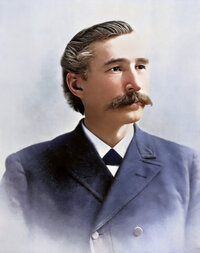
1855–1951
Summary
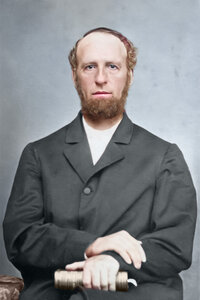
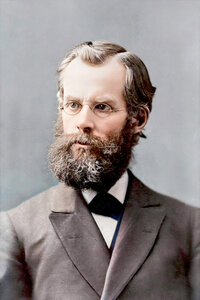
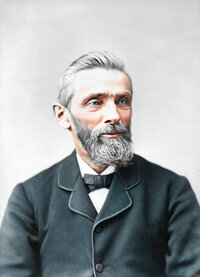
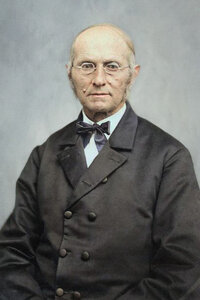
Charles Marshall Kinny was the first African American to be ordained a Seventh-day Adventist minister after the organization of the General Conference in 1863. Born in Richmond, Virginia, on April 1, 1855, he was converted in Reno, Nevada, in 1878 under the preaching of J. N. Loughborough — and at the same series heard Ellen White’s June 30, 1878 sermon on “the Love of God.” After two years at Healdsburg College (1883–1885) he became the church’s first dedicated evangelist to African Americans in the South, founding congregations in Topeka and Emporia, Kansas; Louisville, Kentucky (1890 — the second formally organized black SDA church); Bowling Green, Kentucky (1891); New Orleans (1892); Nashville (1894); and Birmingham (1896). His March 1891 appeal to the General Conference for white minister-evangelists to support the work among black Americans drew Ellen White’s historic March 21, 1891 testimony “Our Duty to the Colored People.” Historian Ronald Graybill called him the “Founder of Black Adventism.” He died at Riverside Sanitarium and Hospital in Nashville on August 2, 1951, at the age of ninety-six.
Early Life and Conversion (1855–1878)
Per the Encyclopedia of Seventh-day Adventists (Trevor O’Reggio), Kinny was born April 1, 1855, in Richmond, Virginia, to Andrew and Lucy Ann Kinny. He spent his first ten years in what would become the capital of the Confederacy, then traveled west with his father and two siblings, ending up in Reno, Nevada. He earned his living as a barber.
In the summer of 1878, when J. N. Loughborough conducted a series of evangelistic lectures in Reno, the twenty-three-year-old Kinny attended. Ellen White visited the meetings while the series was in progress and spoke on Tuesday evening, June 30, 1878, to about four hundred listeners on “the Love of God” — and Kinny would never forget that sermon. He kept his first Sabbath on the last Saturday of September 1878.
Tract and Missionary Society Work (1878–1885)
Kinny was one of the seven charter members and the only black member of the Reno Seventh-day Adventist church. By 1882 he was state secretary of the Nevada Tract and Missionary Society. His Review and Herald reports for those years record his correspondence with seekers across the country — he gave special attention to friends and acquaintances back in his native Virginia.
The Reno church and the California Conference (which then included Nevada) supported him through two years of study at Healdsburg College from 1883 to 1885.
Mission to Kansas and the Color Line (1885–1889)
In the summer of 1885 the California Conference sent Kinny to Kansas. He began work in Topeka in June, and by mid-October had canvassed a third of the city and held Bible studies that produced three converts. He continued in Topeka through 1887, then in Emporia, leaving a group of twelve colored Sabbath-keepers when he closed his Emporia work in November 1887. From there he canvassed in Missouri, working in St. Louis through the first half of 1889.
In St. Louis, Kinny encountered for the first time serious conflict over racial prejudice within the church. Less than a year after he left, Ellen White herself encountered the same difficulties first-hand at St. Louis — and the experience drove her March 21, 1891 testimony at the General Conference.
Ordination at Nashville (October 1889)
Under assignment from the General Conference Committee, Kinny arrived in Louisville, Kentucky, in June 1889 to shepherd the small company of black believers there. While serving in Louisville, Kinny attended the Tennessee camp meeting and Nashville Institute in late September 1889. At the council that followed, with R. M. Kilgore and J. O. Corliss leading the service, Kinny became the first African American since the organization of the General Conference to be ordained as a Seventh-day Adventist minister of the gospel.
On October 2, 1889, Kinny addressed the council and set forth twelve propositions for organizing the church’s work among black Americans within the harsh sociological reality of the post-Reconstruction South. Per the Encyclopedia of Seventh-day Adventists, his preliminary statement affirmed that “the Third Angel’s message has the power in it to eliminate or remove this race prejudice upon the part of those who get hold of the truth.” He proposed an eventual structure of black conferences within the unified Adventist body, and urged that the General Conference invest in “educating worthy colored laborers.”
Building the Black Adventist Work (1890–1896)
Returning to Louisville from Nashville, Kinny saw his proposal for a separate black congregation realized: a company of ten believers organized on February 16, 1890 — the second formally organized black Seventh-day Adventist church.
In March 1891 Kinny went to Battle Creek, Michigan, as a delegate to the General Conference session. The General Conference Daily Bulletin of March 11, 1891, records his address: “The special demands of the work among the colored people were presented by Brother Kinny, who said that there were between eight and nine millions of his people in the United States, waiting to hear the third angel’s message. Owing to the prejudices which existed, it was evident that the work for the colored people would have to be carried on separate from that for the white population of the South” (General Conference Daily Bulletin, March 11, 1891, page 71.14; refcode GCDB March 11, 1891, page 71.14).
His appeal at that session moved Ellen White to deliver, ten days later on March 21, 1891, the testimony to thirty leaders of the church now known as “Our Duty to the Colored People.” She opened with the moment in St. Louis a year earlier when, kneeling in prayer, the words “All ye are brethren” came to her with a vividness she could not forget. She continued, in the same paragraph: “Among those in St. Louis who believe the truth there are colored people who are true and faithful, precious in the sight of the God of heaven, and they should have just as much respect as any of God’s children” (The Southern Work, p. 11, par. 1; refcode SWk 11.1). And, also in the same paragraph: “The color of the skin does not determine character in the heavenly courts” (The Southern Work, p. 11, par. 1; refcode SWk 11.1).
In an earlier paragraph of the same address, Ellen White had spoken of her own resolve in delivering this counsel: “I know that that which I now speak will bring me into conflict. This I do not covet, for the conflict has seemed to be continuous of late years; but I do not mean to live a coward or die a coward, leaving my work undone. I must follow in my Master’s footsteps. It has become fashionable to look down upon the poor, and upon the colored race in particular. But Jesus, the Master, was poor, and He sympathizes with the poor, the discarded, the oppressed, and declares that every insult shown to them is as if shown to Himself” (The Southern Work, p. 10, par. 4; refcode SWk 10.4).
By 1896 Kinny had organized six black Adventist congregations: Edgefield Junction, Tennessee (already extant from 1883); Louisville, Kentucky (1890); Bowling Green, Kentucky (June 13, 1891); New Orleans, Louisiana (June 4, 1892); Nashville, Tennessee (September 15–16, 1894); and Birmingham, Alabama (June 19, 1896).
Later Ministry and Death (1898–1951)
In March 1898, after paying Kinny’s salary for nearly nine years, the General Conference Committee voted that he engage in self-supporting missionary work. For the next nine years he canvassed in Nebraska, Missouri, Texas, Tennessee, and Alabama. He returned to denominational service in 1907 as a minister in the Tennessee River Conference.
On October 19, 1902, Kinny married Viola E. Kinny in Nashville. Viola taught church school there for a time. By 1911 her health required Charles to scale back to part-time ministry. He continued in part-time work until her death in 1939 — based in Nashville except for three years in Virginia (1912–1915). Soon after Viola’s death, Kinny became a resident at Riverside Sanitarium and Hospital in Nashville, where he received care until his death on August 2, 1951, at the age of ninety-six.
Legacy
Per the Encyclopedia of Seventh-day Adventists, historian Ronald Graybill in 1977 called Kinny the “Founder of Black Adventism.” Louis B. Reynolds, in his history of African American Adventism, described Kinny’s legacy as a foundation upon which others would build. By the time of his death in 1951 the black Adventist membership in America had reached 26,500 — and the black conferences he had envisioned in 1889 had just been established.