1874–1972
Summary
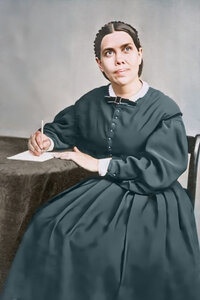
Rachel “Anna” Knight was an African-American Adventist missionary nurse, teacher, colporteur, Bible worker, and conference official whose ninety-eight years of life — from her March 4, 1874 birth in Jasper County, Mississippi, to her death on June 3, 1972 — bridged Reconstruction and the Civil Rights era. She was the first Black Seventh-day Adventist female missionary to India (1901–1907), a pioneer educator at Oakwood and the Yazoo (Mississippi) school, secretary of education for the South Atlantic and Southern Union conferences, and a fearless witness to the third angel’s message in the Jim Crow South. Per the Encyclopedia of Seventh-day Adventists (Dorothy Knight Marsh) — a great-niece who knew her — her own autobiography was published as Mississippi Girl by the Southern Publishing Association in 1952, twenty years before her death.
Early Life and Conversion (1874–1898)
Per the Encyclopedia of Seventh-day Adventists, Anna was born March 4, 1874, in Jasper County, Mississippi, to Newton Knight, a white Mississippi farmer and ex-Confederate soldier, and Georgeanne, a woman of mixed-race heritage who had been emancipated from slavery. With her sisters Lessie and Grace and brother Howard she lived with her mother and extended family in the Knight community on the southwestern border of Jasper County, about ten miles north of Laurel.
Per ESDA, Anna learned to read by means of correspondence with northern Adventists who sent her literature. She was baptized as a Seventh-day Adventist, and from a young age took up the cause of the third angel’s message in her community.
Her own first-person account, recorded in her autobiography Mississippi Girl, describes how she kept the Sabbath alone, against threats of violence: “I decided to spend the day out in the woods, since there was no home I could go to and keep the Sabbath. When I had prepared breakfast for the family, which was my daily task, and had done my housework, I took my Bible, Sabbath School Worker, Quarterly, Review and Herald, Instructor, and my revolver, and went to the woods where I spent the day” (Pioneer Pictorial Profiles, p. 133, par. 2; refcode PPP 133.2).
She continues, also from Mississippi Girl: “During the day I memorized the Sabbath school lesson and read the papers from cover to cover. My faithful dog in the meanwhile watched near by, never allowing a hog or cow to come near me. He did not bark, but quietly got up and drove them away should any come near. If it rained, I would go to the barn and spend the time in the hayloft” (Pioneer Pictorial Profiles, p. 133, par. 3; refcode PPP 133.3).
Her own description of the threats and her response: “Many hard things were said and even threats were made, but I let all know my mind was made up. When I went to the woods, I took my revolver; and I could shoot straight. The Lord did not permit any harm to befall me” (Pioneer Pictorial Profiles, p. 133, par. 4; refcode PPP 133.4).
Mission to India (1901–1907)
Per the Encyclopedia of Seventh-day Adventists, Anna Knight became the first Black Seventh-day Adventist female missionary to India. She trained at Battle Creek and at the American Medical Missionary College, then sailed for Calcutta in 1901. She served at the Calcutta orphanage and engaged in nursing and teaching work for six years, returning to the United States in 1907 because of failing health.
Oakwood and Education in the South (1907–1958)
Per ESDA, on returning from India, Anna joined the founding faculty of the Oakwood Industrial School (later Oakwood College, now Oakwood University) in Huntsville, Alabama, the church’s flagship school for African-American students. Mississippi Girl preserves her recollection of the search for a site that became Oakwood: “I had been in Chattanooga when Elders O. A. Olsen and G. A. Irwin spent the night with Brother [L. Dyo] Chambers on their way to Huntsville, Alabama, looking for a suitable place to locate a training school for the colored people” (Pioneer Pictorial Profiles, p. 248, par. 2; refcode PPP 248.2).
She also records — again from Mississippi Girl — the closing of the fundraising for the Oakwood property: “In due time the money was raised and the purchase was made” (Pioneer Pictorial Profiles, p. 249, par. 3; refcode PPP 249.3).
For more than fifty years Anna Knight served as a teacher, conference education secretary (South Atlantic Conference, Southern Union), and traveling Bible worker in the segregated South. She was widely recognized in the Adventist church for her advocacy of equal education and health-care opportunities for African-American believers. As the Counsels on Social Issues compilation summarizes: “Anna Knight advocated for racial equality, focusing on education and healthcare” (Counsels on Social Issues, p. 64, par. 2; refcode CSI 64.2).
Death (1972)
Per the Encyclopedia of Seventh-day Adventists, Anna Knight died on June 3, 1972, at the age of ninety-eight, having seen the segregated era she had labored under begin to give way to the Civil Rights advances of the 1960s and 1970s. She is buried in the Knight family cemetery in Jasper County, Mississippi.