1850–1923
Summary
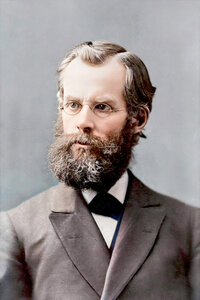
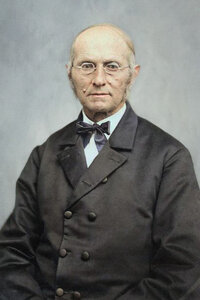
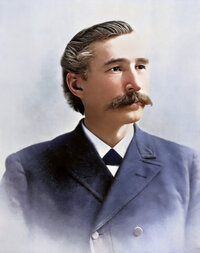
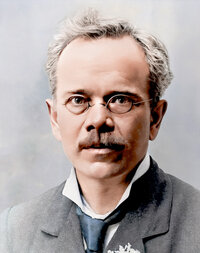
Alonzo Trévier Jones was, with Ellet J. Waggoner, one of the two messengers whom God raised up to bring the message of righteousness by faith to the Seventh-day Adventist Church at the 1888 Minneapolis General Conference. A converted United States Army sergeant baptized at Walla Walla, Washington, in 1874, Jones became an evangelist, editor of the American Sentinel, editor of the Review and Herald (1897–1901), pioneer Adventist religious-liberty advocate, and one of the most influential preachers of the Adventist Church in the late nineteenth century. Ellen White repeatedly defended him as bearing a “heaven-sent message” and a “most precious message” of the third angel. He died in 1923 at the age of seventy-three.
From the Army to the Sabbath (1850–1875)
Steinweg’s Lest We Forget records Jones’s birth and military years: “Jones was born in Ohio on April 21, 1850 (some authors say April 26.)” (Lest We Forget, ch. 159, p. 326, ¶ 3). The same paragraph adds: “His early childhood and youth are practically unknown. This biography begins with an anecdote that occurred when Jones was in the United States Army, stationed at Fort Walla Walla, Washington” (Lest We Forget, ch. 159, p. 326, ¶ 3). Steinweg adds: “Alonzo T. Jones served for five years in the United States Army. He spent much of his free time studying religious books and his Bible. He obtained Seventh-day Adventist publications and came out from the Fort to attend evangelistic meetings held by Elder Isaac Van Horn, who had recently begun working in Oregon” (Lest We Forget, ch. 159, p. 326, ¶ 5).
Steinweg records Jones’s baptism: “On August 8, 1874, in Walla Walla, Washington, the largest town in the Territory, he surrendered to his Lord in baptism” (Lest We Forget, ch. 159, p. 326, ¶ 6). Mrs. Adelia Van Horn’s account, preserved in the same paragraph, recorded the new convert’s exclamation: “Dead to the world, and alive to thee, O my God!” (Lest We Forget, ch. 159, p. 326, ¶ 6).
Marriage, Ministry, and Editorship (1877–1887)
Steinweg records the next stage: “Jones met Elder Van Horn’s sister-in-law, Miss Frances E. Patton and formed a special friendship. On April 15, 1877 he and Frances were married.” (Lest We Forget, ch. 159, p. 327, ¶ 8).
In October 1877, the North Pacific Conference was formed. Jones served as treasurer; he was ordained to the ministry in Oregon the following year. By 1880 he was secretary of the newly formed Upper Columbia Conference. In 1885, J. H. Waggoner brought him to the Pacific Press in Oakland, California, as assistant editor of the Signs of the Times.
The 1888 Minneapolis Conference and the Message of Righteousness by Faith
In October 1888 the Minneapolis General Conference convened. There Jones — together with E. J. Waggoner — presented the message of righteousness by faith. Ellen White’s testimony to the meaning and source of that message is preserved across her 1888 Materials and her later Manuscript Releases. From the 1888 Materials (as Steinweg selects them in Lest We Forget): “Elders Jones and Waggoner presented precious light to the people, but prejudice and unbelief, jealousy and evil-surmising barred the door of their hearts that nothing from this source should find entrance to their hearts” (Lest We Forget, ch. 168, p. 376, ¶ 5).
She continues, in her own first-person testimony to the source of the message: “When Brother Waggoner brought out these ideas in Minneapolis, it was the first clear teaching on this subject from any human lips I had heard, excepting the conversations between myself and my husband. I have said to myself, It is because God has presented it to me in vision that I see it so clearly, and they cannot see it because they have never had it presented to them as I have. And when another presented it, every fiber of my heart said, Amen” (Lest We Forget, ch. 168, p. 376, ¶ 6).
Steinweg records Jones’s own labors immediately after Minneapolis. From the same selection of Ellen White materials: “Eld. Jones came from Boston, and labored most earnestly for the people, speaking twice and sometimes three times a day. The flock of God were fed with soul-nourishing food. The very message the Lord has sent to the people of this time was presented in the discourses” (Lest We Forget, ch. 168, p. 376, ¶ 3).
Ellen White’s specific call for Jones to extend his work follows: “Elder A. T. Jones should attend our large camp meetings, and give to our people and to outsiders as well the precious subject of faith and the righteousness of Christ. There is a flood of light in this subject” (Lest We Forget, ch. 168, p. 376, ¶ 4).
Ellen White’s Defense of Jones and Waggoner (1892–1895)
In a September 19, 1892 letter to Uriah Smith, Ellen White stated explicitly: “they knew not that God had sent these young men, Elders Jones and Waggoner, to bear a special message to them” (Lest We Forget, ch. 168, p. 377, ¶ 9).
In the same letter she anticipated and rebuked the future fallacy of dismissing the message because of any failing in the messengers: “It is quite possible that Elder Jones or Waggoner may be overthrown by the temptations of the enemy; but if they should be, this would not prove that they had had no message from God, or that the work that they had done was all a mistake” (Lest We Forget, ch. 168, p. 377, ¶ 10).
Her judgment on the message itself is unambiguous: “The message given us by A. T. Jones, and E. J. Waggoner is the message of God to the Laodicean church, and woe be unto anyone who professes to believe the truth and yet does not reflect to others the God-given rays” (Lest We Forget, ch. 168, p. 377, ¶ 11).
In a circa-1893 letter to the Review and Herald Office, she said: “The Lord has raised up Brother Jones and Brother Waggoner to proclaim a message to the world to prepare a people to stand in the day of God.” (Lest We Forget, ch. 168, p. 378, ¶ 13).
In a January 9, 1893 letter to W. Ings, she summarized the impact of Jones’s labors: “We know that Brother Jones has been giving the message for this time—meat in due season for the starving flock of God. Those who do not allow prejudice to bar the heart against the heaven-sent message, cannot but feel the spirit and force of the truth. Brother Jones has borne the message from church to church and from State to State; and light and freedom and the outpouring of the Spirit of God have attended the word” (Lest We Forget, ch. 168, p. 378, ¶ 14).
In a May 1, 1895 letter to O. A. Olsen, she summarized again: “The Lord in His great mercy sent a most precious message to His people through Elders Waggoner and Jones.” (Lest We Forget, ch. 168, p. 378, ¶ 15). She added, in the same paragraph: “This is the message that God commanded to be given to the world. It is the third angel’s message, which is to be proclaimed with a loud voice, and attended with the outpouring of His Spirit in a large measure” (Lest We Forget, ch. 168, p. 378, ¶ 15).
Religious Liberty and the American Sentinel
In 1887 Jones and Waggoner began editing the American Sentinel, the church’s flagship journal of religious liberty. Steinweg records: “In 1889 Jones traveled with Ellen White, speaking at camp meetings and ministerial institutes. He was the first Seventh-day Adventist who, with J. O. Corliss, spoke before legislators in Washington, D.C., for the cause of separation of church and state” (Lest We Forget, ch. 159, p. 328, ¶ 16).
The Lest We Forget chapter on Jones’s preaching of “the faith of Jesus” preserves his characteristic argument from his 1888 pamphlet The Abiding Sabbath and the “Lord’s Day”: “God is now calling out a people who will keep the commandments of God, and the faith of Jesus. Nothing but that will answer.” (Lest We Forget, ch. 161, p. 335, ¶ 3). And his characteristic urging on the relationship between faith and obedience: “Will you obey God? Will you keep the commandments of God and the faith of Jesus?” (Lest We Forget, ch. 161, p. 335, ¶ 3).
His 1891 Two Republics preserves a long meditation on the morality of God: “It is by the morality of Christ alone that men can be made moral. And this morality of Christ is the morality of God, which is imputed to us for Christ’s sake; and we receive it by faith in him who is both the author and finisher of faith” (Lest We Forget, ch. 161, p. 335, ¶ 6).
Editor of the Review and Herald (1897–1901)
Steinweg records: “In 1897 Jones was elected as a member of the General Conference Committee. He was also appointed as editor of the Review and Herald” (Lest We Forget, ch. 159, p. 329, ¶ 19). He held that position until 1901, when, by his own choice and at the church’s release, he returned to evangelistic work in the field.
Later Years and Death (1901–1923)
Jones supported the organizational changes of the 1901 General Conference, accepted the presidency of the California Conference, and continued his religious-liberty work. The message Ellen White preserved as God’s word through him — the gospel of righteousness by faith — remained the burden of his preaching to the end of his life.
Per the Encyclopedia of Seventh-day Adventists (Jeffrey Rosario), Jones died in 1923 at the age of seventy-three.