Summary
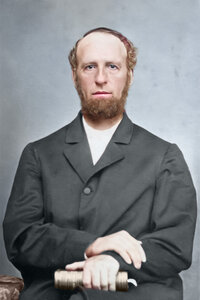
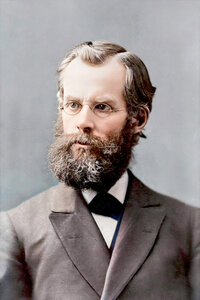
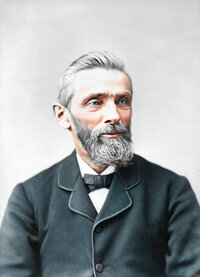
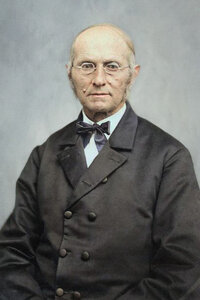
Apollos Hale was a Methodist Episcopal minister turned Millerite preacher who became one of the most versatile and influential figures in the Second Advent movement of the 1840s. A gifted organizer, prolific author, and sharp-minded editor, Hale left the security of denominational ministry to devote himself entirely to proclaiming the imminent return of Christ. He is best remembered for co-designing with Charles Fitch the iconic “1843 Chart” — a prophetic diagram of the visions of Daniel and Revelation that became one of the most powerful visual tools in the history of the Advent movement. After the Great Disappointment of October 22, 1844, Hale co-authored a landmark article proposing that prophecy had indeed been fulfilled on that date — not by Christ’s return to earth, but by His entrance into a heavenly ministry. This interpretation proved to be a milestone in the development of Seventh-day Adventist sanctuary theology. Described by contemporaries as a pious man, “a deep thinker,” and a writer with few equals for “logic and pointedness,” Hale’s contributions to Millerite literature, organization, and theology left a lasting imprint on the Advent movement.
Early Life
Apollos Hale was born in Rockport, in northeast Massachusetts, about 1807. In 1833 he began his career as a Methodist Episcopal preacher in Charlestown and Medford, suburban communities near Boston, Massachusetts. By 1836 he had transferred to Tolland, Connecticut.
He returned to Ipswich, near his birthplace, to marry Rebecca Appleton Waite on December 1, 1836. The following year the young couple relocated to Bradford, Massachusetts, where their first child, Martha, was born on September 13, 1837. The rest of their children were born in Charlestown: Mary (born 1839), Joseph (born 1841), Rebecca (born 1843), Caroline (born 1847), Alice (born 1849), and Charles (born 1853). Tragically, they lost their son Joseph to scrofula in 1851.
Conversion to the Advent Message
In 1842, Hale made the momentous decision to leave the Methodist Episcopal Church and devote himself to preaching the Second Advent message. It was a costly step — abandoning the institutional support and stability of an established denomination for a movement that many regarded with suspicion or outright hostility. But Hale was convinced that the biblical prophecies pointed unmistakably to the imminent return of Christ, and he threw himself into the cause with characteristic energy and intellect.
His name first appears in the Millerite periodical Signs of the Times in June 1842, listed as a member of the Committee on Business at the Boston Second Advent Conference. From that point forward, Hale became one of the movement’s most active organizers and preachers, connected with many of the early conferences and camp meetings that gave the Millerite movement its momentum.
Preacher and Organizer
The year 1842 found Hale crisscrossing New England as a tireless organizer and evangelist. In July he was a member of a committee of five in charge of the conference and camp meeting at Concord, New Hampshire. In September he served on a committee of seven overseeing a camp meeting on the farm of Charles Perkins at Castine, Maine. While in Maine, Hale preached at Bangor and at Upper Gilmanton, where it was reported that “a number of ministers became convicted of the Second Advent message.” In November he traveled south to preach in Philadelphia, Pennsylvania.
That same September, Hale was at Taunton, Massachusetts, helping to organize a camp meeting held in a grove. He then traveled north to Salem in October to assist with the organization of meetings held in the “Great Tent,” widely noted for its exceptionally large size. At the Boston Advent Conference in late May and early June of 1843, Hale served as chairman of the meetings — a mark of the esteem in which his colleagues held him. He followed up by assisting with the planning of camp meetings at Groton, Massachusetts, and Tuftonborough, New Hampshire.
The year 1843 found Hale preaching more often and ranging farther afield. He toured towns at the foothills of the Appalachians in Pennsylvania, preaching in the Bethel and Methodist churches at Harrisburg, the Lutheran church at Middletown, and in a public venue at Shiremanstown. Later he traveled north along the coast, preaching at Portsmouth, New Hampshire, and Portland, Maine. He returned to Massachusetts in November to preach in the extreme south at New Bedford and Mattapoisett. In April 1844, he preached at Lynn, just north of Boston. He remained in the area to help organize another major conference in Boston that ran, as in the two previous years, from late May to early June. Following the conference he journeyed north to Portsmouth “to get a little sea air for his health.”
The sheer scope of Hale’s itinerary — spanning from Pennsylvania to Maine, from city churches to open-air groves — testifies to the remarkable energy he brought to the Advent cause. He was not merely a preacher who showed up to deliver sermons; he was an organizer, a committee chairman, a logistics man who helped plan and execute the great camp meetings and conferences that were the lifeblood of the Millerite movement.
The 1843 Prophetic Chart
Among Hale’s many contributions, none proved more enduring than his role in creating the famous “1843 Chart.” In his history of the Second Advent movement, Isaac Wellcome wrote that Hale was reputed to have “designed several of the symbolic charts which have been published and used in the public ministrations of our lecturers.” The best known of these was the “1843 Chart” that he assisted Charles Fitch in creating. This chart was endorsed at the 1842 General Conference in Boston and widely used as an easily portable visual aid that could enhance presentation of the Advent message in any setting.
The chart depicted the great metallic image of Daniel 2, the beasts from Daniel 7 and 8, and other prophetic symbols from the books of Daniel and Revelation, all arranged to demonstrate the flow of prophetic history toward the climactic event of Christ’s return. In an age before modern presentation technology, the chart was a masterpiece of visual communication — a single sheet that could be unrolled in a farmhouse kitchen, a church sanctuary, or a canvas tent and used to guide listeners through the complex prophetic arguments that undergirded the Millerite message.
Author and Editor
Wellcome described Hale as a pious man, “a deep thinker” and a writer with few equals for “logic and pointedness.” These qualities earned him a prominent place in the literary output of the Millerite movement. He served on the committee for the publication of the Advent Herald from March 1844 through February 1846, functioning as associate editor alongside Joshua V. Himes and Sylvester Bliss. He also worked with Himes and Bliss in editing the Advent Shield and Review, a quarterly journal that featured lengthy articles covering the history of the Millerite movement and its chief teachings.
Hale was also a prolific pamphleteer. His works included Review of Dr. Pond (1843), Second Advent Manual, The Herald of the Bridegroom, Breakers Ahead! A Warning From the Faithful Pilot, Review of Professor Chase, Sealed Book of Daniel Opened, and Review of Thurman’s Chronology. The latter was typical of the academic style and logic Hale used to answer Millerite critics — careful, methodical, and devastating in its command of the evidence.
The October 22 Crisis
Hale initially opposed the interpretation that specified October 22, 1844, as the date of Christ’s second advent — a belief that gained increasing momentum as the date drew near. He was cautious by temperament and intellect, preferring to let the evidence speak rather than be swept along by popular enthusiasm. However, on October 9, just thirteen days before the expected date, there appeared a retraction of his stand, an eleventh-hour acceptance of the date, and a chagrined confession. He feared missing out on salvation if he showed skepticism at this critical hour.
The Advent Mirror and Sanctuary Theology
When Christ did not return to earth on October 22, 1844, the Millerite movement was plunged into crisis. In the aftermath of this Great Disappointment, Hale, along with Joseph Turner, proposed an interpretation that would prove to be of lasting theological significance. In an article published in the Advent Mirror in January 1845, Hale and Turner argued that prophecy had indeed been fulfilled on October 22. As depicted in the parable of the ten virgins (Matthew 25), the bridegroom (Christ) had returned — but rather than coming to earth, He had entered the wedding banquet in heaven and received the kingdom from the “Ancient of Days” as prophesied in Daniel 7.
This interpretation proved to be a milestone in the development of Seventh-day Adventist teachings concerning the pre-advent judgment and the final ministry of Christ in the heavenly sanctuary. While the specific “shut door” theology was eventually abandoned, the core insight — that something of prophetic significance had indeed occurred on October 22, 1844, involving Christ’s heavenly ministry rather than His earthly return — became foundational to the Seventh-day Adventist understanding of the sanctuary.
The Albany Conference and Later Years
Hale quickly abandoned his “shut door” interpretation. Just four months later, at the landmark Albany Conference of April 1845, he was among the majority of Second Advent preachers who, under the leadership of William Miller and Joshua V. Himes, repudiated the claim that scriptural prophecy pointed to October 22, 1844. They also reaffirmed the mission of preaching the near second advent of Christ without setting any date.
Though Hale persevered in his convictions about the soon return of Christ, his health did not permit him to preach on a regular basis after 1846. He settled in Charlestown, Massachusetts, and earned a living selling footwear. His wife, Rebecca, died of tuberculosis at Charlestown on August 13, 1862, leaving him with their six surviving children.
Death and Legacy
Hale lived to be approximately ninety years of age. He passed away at the home of his widowed daughter Rebecca in Washington, D.C., on February 13, 1898, and was laid to rest in the local Rock Creek Cemetery to await the Second Advent he had spent his life proclaiming.
The 1843 prophetic chart that Hale co-designed with Charles Fitch remains one of the most recognizable artifacts of the Millerite movement. Reproductions of the chart continue to be studied and displayed in Adventist heritage collections around the world. Beyond the chart, Hale’s contribution to early sanctuary theology through the Advent Mirror helped lay the groundwork for one of the distinctive doctrines of the Seventh-day Adventist Church.
In a movement that was sometimes characterized by its critics as driven by ignorance and fanaticism, Hale stood as a model of intellectual rigor, careful scholarship, and measured judgment. He was a “deep thinker” who brought the tools of logic and clear prose to the service of a message he believed with all his heart. In an age of religious ferment, Apollos Hale brought both fire and light.
Source: Encyclopedia of Seventh-day Adventists, encyclopedia.adventist.org. Article: “Hale, Apollos (1807–1898),” by Milton Hook.