Skip to content

The Unofficial Apostle to Europe (1818-1876)

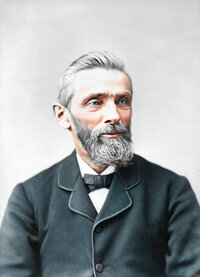
Michael Belina Czechowski was the first person to carry Seventh-day Adventist beliefs to Europe, even though the church never officially sent him. A former Franciscan monk from Poland who became a passionate Adventist evangelist, Czechowski traveled to Europe in 1864 under the sponsorship of a rival Advent denomination and proceeded to preach distinctly Seventh-day Adventist doctrines across Italy, Switzerland, France, Germany, Hungary, and Romania. He founded the first Adventist congregation outside North America in Tramelan, Switzerland, published the first Adventist periodical circulated in Europe, and planted seeds of faith that would eventually compel the denomination to send its first official missionary, J. N. Andrews, to the continent. Though his life was marked by chronic financial difficulties, personal tragedy, and an uneasy relationship with church leadership, Czechowski’s impact was so profound that he has rightly been called both the father of the Seventh-day Adventist Church in Europe and the father of Adventist missions.

From Franciscan Monastery to Protestant Faith

Michael Belina Czechowski was born on September 25, 1818, in Sieciechowice, a small village near Krakow, Poland. Raised in a devoutly Catholic family, the young Czechowski entered religious life at the age of seventeen, joining the Franciscan monastery at Stopnica and taking the religious name “Brother Cyprian.” On June 25, 1843, he took his sacred vows as a Franciscan monk in Warsaw, becoming a Catholic priest at the age of twenty-five.

From the very beginning of his religious vocation, Czechowski was troubled by what he perceived as widespread spiritual apathy and moral corruption among his fellow clergy. He was not content to simply observe these shortcomings; he attempted to reform the monasteries from within. His reforming zeal, combined with a fiery temperament, quickly put him at odds with religious authorities. At the same time, Czechowski became involved in the Polish independence movement, joining the cause of patriots who sought to liberate their homeland from foreign domination. This political involvement repeatedly forced him to flee from one place to another, as the authorities pursued those who had participated in liberation activities.

In October 1844, Czechowski traveled to Rome and sought an audience with Pope Gregory XVI, petitioning for monastic reform. His concerns about the discrepancies between biblical teachings and the lifestyle of priests were not well received, and his petition was effectively ignored. After a failed liberation attempt at Miroslaw in present-day Slovakia, Czechowski took refuge near Geneva, where he encountered Protestant Christianity for the first time through Jean Jacques Caton Cheneviere, a pastor of the Reformed National Church.

After years of upheaval — arrest by Prussian police in August 1846, flight to Paris via Hamburg and London, participation in a Polish volunteer force fighting for liberation, and eventual defeat — Czechowski finally left the Catholic Church. In 1850, he married Marie Virginie Delevoet in Solothurn, Switzerland. Working as a bookbinder in Brussels and then London, he encountered Baptist missionaries who helped him emigrate, first to Montreal, Canada, and eventually to New York around 1851.

Conversion to Adventism

In 1856, while living in the northeastern United States, Czechowski attended a camp meeting at Perry Mills, New York, where he first encountered the Advent message. He was deeply convicted by what he heard. By 1857, he had accepted the seventh-day Sabbath and was baptized into the Seventh-day Adventist Church. He immediately threw himself into evangelistic work, partnering with Daniel T. Bourdeau to minister among French-speaking communities in northern New York, Vermont, and Quebec. In 1860, he moved to New York City, where he established a church in Brooklyn and worked among the French, Poles, Italians, Germans, and Swedish Americans — demonstrating the multilingual gifts that would later serve him across the European continent.

As early as 1858, Czechowski expressed his burning desire to carry the Adventist message to Europe. He wrote to James and Ellen White, urging the church to send him as a missionary to the continent. He envisioned working among the descendants of the Waldensians in northern Italy and eventually spreading his new faith to his native Poland. However, the Seventh-day Adventist Church, newly organized in 1863, was not yet ready to embark on foreign missions. When Czechowski formally requested in 1863 to become the first official Adventist missionary to Europe, church leaders declined. They considered him too new in the faith, questioned his financial management, found him unwilling to submit to authority, and viewed him as generally unstable.

The Unconventional Path to Europe

Undeterred by the church’s refusal, Czechowski took matters into his own hands. He traveled to Boston and met with the leaders of the Advent Christian Church, a first-day Adventist denomination. He persuaded them to sponsor him as a missionary to Europe, carefully concealing the fact that his theological convictions were distinctly Seventh-day Adventist rather than Advent Christian.

On June 6, 1864, Czechowski arrived in London with a party that included his wife Marie Virginie, their four children, and Annie E. Butler, the sister of George I. Butler, who would later serve as president of the General Conference. From London, the group made their way to the Piedmont region of northern Italy, where Czechowski established his first European base of operations.

The Italian Waldensian Valleys

For approximately fourteen months, from 1864 to 1865, Czechowski worked in and around Torre Pellice in the Waldensian Valleys of northern Italy. He threw himself into the work with characteristic energy, preaching thirty-six sermons in August 1864 alone, followed by eighteen lectures in September.

His efforts bore fruit. Several individuals accepted the seventh-day Sabbath, most notably J. D. Geymet, Francis Besson, and Catherine Revel, who holds the distinction of being the first person baptized into Sabbatarian Adventism in Europe. However, growing local opposition eventually made it clear that Czechowski needed to relocate his mission to more receptive territory.

The First Adventist Church in Europe

In 1865, seeking financial stability and aiming to establish a printing operation, Czechowski moved his mission to Switzerland. He established himself in the French-speaking region near Neuchatel, where his message found eager listeners. In the summer of 1866, Albert Vuilleumier met Czechowski through his brother-in-law, Jules-Etienne Dietschy, and became one of his most important converts.

In 1867, Czechowski organized the first Seventh-day Adventist congregation outside North America in Tramelan, Switzerland. This historic church had nearly sixty members — a remarkable achievement for a self-funded missionary working without any official denominational support.

Publishing the Everlasting Gospel

One of Czechowski’s most enduring contributions was his publishing work. In September 1865, from the town of Grandson, he launched L’Evangile Eternel (The Everlasting Gospel), a periodical that became the first Adventist publication circulated in Europe. The paper was distributed to readers in Switzerland, Italy, France, England, Holland, Germany, Poland, and Hungary.

In October 1866, Czechowski established the “Mission Evangelique Europeenne et Universelle de la Seconde Venue du Sauveur” at Cornaux near Neuchatel. He set up a printing press and produced pamphlets in both French and German. However, financial difficulties plagued the operation, and his publishing house in Cornaux burned in the spring of 1867.

Loss of Sponsorship and Eastern European Mission

The delicate arrangement with the Advent Christians unraveled in early 1868 when his American sponsors discovered that he had been teaching seventh-day Sabbath observance. The Advent Christian Church ceased all financial support, leaving Czechowski without resources but undaunted in his mission.

Rather than returning to America, Czechowski continued his itinerant preaching. He embarked on extensive missionary journeys to Freiburg, Baden-Baden, Karlsruhe, and Stuttgart in Germany, as well as to France, Hungary, Romania, and Ukraine. His work in eastern Europe proved particularly fruitful. In Hungary and Romania, he baptized converts and gathered groups of believers. He remained in Pitesti, Romania, until 1875. The founding of many Seventh-day Adventist congregations in eastern Europe can be traced directly to Czechowski’s tireless missionary labors.

Personal Tragedy and Final Years

Czechowski’s wife, Marie Virginie, died on July 22, 1870, and was buried in St. Blaise. Left alone with his children and without financial support from any denomination, Czechowski continued his work through sheer determination and faith.

On February 2, 1876, while walking on a street in Vienna, Czechowski collapsed. He was admitted to the Poor and Invalid House, a division of what is today the General Hospital of Vienna. There, on February 25, 1876, at the age of fifty-seven, Michael Belina Czechowski died. The official cause of death was recorded as “exhaustion.”

The Swiss Connection

Perhaps the most consequential development arising from Czechowski’s work occurred without his knowledge. The Swiss believers he had converted eventually learned of the organized Seventh-day Adventist denomination in America through copies of the Review and Herald. They made direct contact with the General Conference in Battle Creek, Michigan. This communication electrified the Adventist leadership and became the primary catalyst for the formation of the Adventist missionary society and the historic decision to send J. N. Andrews to Europe in October 1874 as the denomination’s first official foreign missionary.

Legacy

Czechowski’s work forced the Adventist movement to become an international one. Before his departure for Europe in 1864, the denomination was entirely North American in scope. His establishment of Sabbath-keeping congregations across the continent demonstrated that the three angels’ messages could resonate with people of every nation and tongue. In recognition of his contribution, a square in Krakow, Poland, was named in his honor — Michal Belina-Czechowski Square. He might rightly be called the father of the Seventh-day Adventist Church in Europe, as well as the father of Adventist missions.

← Back to Adventist Pioneers