Summary
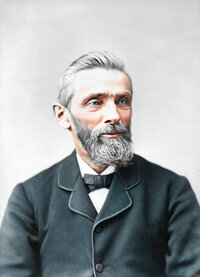
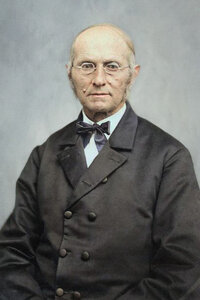
Henry Dana Ward, a Harvard-educated Episcopalian clergyman, authored numerous works on biblical prophecy and became a leading figure in the Millerite movement. He chaired the first general conference on the Second Coming of Christ in 1840, contributing scholarly depth to the Second Advent movement and helping make it cohesive. A descendant of one of the most distinguished military and political families of the American Revolution, Ward brought social standing, intellectual credibility, and pastoral gravitas to a movement often dismissed by the religious establishment.
Early Life and Distinguished Ancestry
Henry was born in Shrewsbury, Massachusetts on January 13, 1797, to Thomas and Elizabeth Ward (1758-1835; 1760-1846), the seventh of their nine children. The Ward family was part of the rural elite of Massachusetts, living in “very respectable” homes and farming hundreds of acres. Their prominence extended far beyond the local community.
In the American Revolution, Henry’s grandfather, Artemas Ward (1727-1800), was appointed major general in the Continental Army, second only to General George Washington, and placed in command of the siege of Boston in July 1775. When Washington assumed command of the Continental forces at Cambridge, Artemas Ward served as his second-in-command during the formative months of the war. Following independence, Artemas Ward was elected speaker of the Massachusetts House of Representatives in 1786 and served two terms in the United States Congress (1791-1795). This distinguished military and political heritage gave the Ward family a social standing that few in Massachusetts could rival.
Henry’s father, Thomas Ward, carried forward the family’s tradition of public service. He was appointed Sheriff of Worcester County in 1805, a post he held until 1824. Growing up in this environment of civic responsibility and Revolutionary-era idealism, young Henry Dana Ward developed both the confidence to engage with public affairs and a deep conviction that the liberties won by his grandfather’s generation demanded constant vigilance to preserve.
Education and Early Ministry
By seventeen, Henry Dana Ward was off for Harvard where he studied to become a clergyman, graduating with a B.A. in 1816 and an M.A. three years later. His Harvard education placed him among the intellectual elite of New England and equipped him with the scholarly tools that would later distinguish his contributions to the Advent movement. He did some teaching, and then became a minister of the Episcopal Church.
Ward’s early career took an unexpected turn in the 1820s when he had a brief stint in Freemasonry. He joined the fraternity but left soon after initiating and published a book renouncing the organization in 1828. Titled Free Masonry: Its Pretentions Exposed in Faithful Extracts of its Standard Authors, the work coupled with other publications made him an influential figure in the Anti-Masonic movement then gaining traction across the northeastern United States. The Anti-Masonic movement, which briefly became a significant third party in American politics, reflected broader anxieties about secret societies and hidden power in the young republic. Ward’s willingness to break with Freemasonry and publicly critique it demonstrated a characteristic that would define his career: the courage to take unpopular positions based on conviction, even when those positions put him at odds with powerful interests.
In 1833, Ward married Abigail Porter in New York City, but her death just four years later brought their union to a premature end. The loss of his young wife was a personal tragedy that may have deepened the spiritual earnestness that characterized his subsequent work.
The Falling Stars and the Study of Prophecy
On November 15, 1833, Ward published an article in the Journal of Commerce entitled “The Falling Stars,” in which he maintained that the meteor storm that had astonished the nation two days before was a sign of the soon return of Christ (see Matthew 24:29). The Leonid meteor shower of November 13, 1833, was one of the most spectacular astronomical events of the nineteenth century. Across the eastern United States, observers reported seeing tens of thousands of meteors per hour streaking across the night sky. For many Americans, the event was terrifying; for Ward, it was prophetically significant.
Following its publication, Ward embarked on a deep study of the biblical prophecies. Over the next several years, he immersed himself in the books of Daniel and Revelation, studying the prophetic time periods and their relationship to contemporary events. He came to conclusions concerning the soon return of Christ — published in an 1838 essay entitled Glad Tidings: “For the Kingdom of Heaven is at Hand” — that bore a striking similarity to what William Miller was preaching in upstate New York, even though the two had not been in contact. This independent convergence of conclusions from two scholars working from the same scriptural data provided powerful confirmation, in the eyes of many, that the prophetic message they proclaimed was genuine.
Leadership in the Millerite Movement
The Second Advent movement gained momentum as Ward and other clerics such as Henry Jones, Josiah Litch, Charles Fitch, and Joshua V. Himes joined Miller in devoting their voices and pens to advancing the message. The involvement of established, educated clergymen like Ward lent an air of respectability to a movement that its critics attempted to dismiss as the delusion of uneducated enthusiasts.
A series of general conferences were of central importance in energizing and coordinating the movement. Ward was called upon to chair the first of these, convened October 14, 1840, at the Chardon Street Chapel in Boston. The choice of Ward as chairman reflected both his scholarly standing and his organizational abilities. During the conference, Ward delivered an address, published under the title History and Doctrine of the Millennium, that garnered strong approval from the conference and was widely disseminated.
In this work, Ward presented a rationale for the Millerite belief in an imminent premillennial second advent in contrast to the widespread consensus among American Protestants on postmillennialism, which relegated the advent to a distant future, after the millennium. The dominant view in American Protestantism at the time — influenced by the optimism of the Second Great Awakening and the nation’s expanding prosperity — was that the world would gradually improve through the spread of the gospel until a golden age of peace and righteousness (the millennium) was achieved, after which Christ would return. Ward directly challenged this comfortable assumption.
He characterized the Second Advent movement as the culmination of a faithful lineage that extended back to Adam, Abraham, David, Daniel, and Paul and down to reformers such as Luther and Melanchthon. Ward thus gave Millerites an identity that transcended American national boundaries, and indeed, all the boundaries of nation, race, culture, language, and religion. He believed that the purpose of the movement was “to revive this apostolic doctrine, and to review the faith of the gospel after the image of primitive Christianity.”
Ward held that the kingdom of God was not the church; it was the “world to come.” As early as 1838 he argued that the prophetic messages of Daniel clearly showed that “the kingdom of heaven” would come “from heaven with its king,” and would rule “over all the earth for ever and ever,” and it was “yet to come.” This was a direct challenge to the dominant Protestant view that identified the kingdom of God with the progressive Christianization of society.
The Question of Date-Setting
While the general conferences accomplished much toward harmony and concerted action in the Second Advent movement, there was disagreement regarding date-setting. Ward, along with others such as Henry Jones, opposed attempts to reckon a specific date for the return of Christ. In December 1841, Ward argued in the Signs of the Times that God “did not intend” that the time be made known, “and for this cause He ‘hath put’ them ‘in His own power,’ that men may be constantly on the watch, and never at liberty to say, ‘The Lord will not come this day, this year, these thousand years, but He will come at such a time.'”
Yet, Ward’s position on date-setting was more nuanced than a simple rejection of chronological study. He contended that both postmillennialists and premillennialists had succumbed to the same error: “Those who limit the times to two years, are no more transgressors for this, than those who extend them to a thousand or more.” Both were “dealers in prophetic times, but the larger class on much the larger scale.” Thus, Ward declared that although he disagreed with any kind of date-setting, in the name of “fair play” he would still “defend a small minority for taking the liberty which the great majority freely use, to discuss and predetermine the times.”
This remarkably balanced position — disagreeing with the practice while defending the right to engage in it — demonstrated the intellectual generosity and Christian charity that characterized Ward’s leadership. It allowed him to maintain his convictions without breaking fellowship with those who held different views on this contentious question.
At first, Ward’s irenic outlook enabled him to take leadership roles in the movement despite the disagreement. But the Boston general conference of May 1842 marked a turning point after which the “time element” became an increasing point of focus. The conference passed a resolution declaring that “God has revealed the time for the end of the world and that time is 1843” and this claim needed greater emphasis than ever in view of “the shortness of the time we have to work.” After the conference, Ward’s involvement with Millerism gradually faded as the movement’s increasingly definite time-setting claims conflicted with his deeply held conviction that the specific date should not be predicted.
Later Life
The same month that the Boston general conference took place, Ward married Charlotte Galbriath (1808-1887), an Irish woman from Dublin. From 1843 to 1851 four children were born to the couple. In 1845, Ward became minister of the Episcopal Church in Charleston, Virginia (later West Virginia). Here he remained for four years until accepting the rectorship of St. Jude’s Free Church in New York in 1849. The New York Tribune welcomed the changes he made, adding that “the discourses of the learned and pious Rector are instructive and improving.”
Ward evidently kept up the study of prophecy to some extent even after his withdrawal from the active Millerite movement. In 1878, for example, Ward, by then residing in Philadelphia, joined the many prominent clergy assembled at the Church of the Holy Trinity in New York for a “Prophetic Conference.” This gathering was part of a broader movement of prophetic study that was gaining momentum in American Protestantism in the post-Civil War era and would eventually contribute to the rise of dispensational premillennialism. Josiah Litch also attended but neither he nor Ward had a part in the public discussions. Their presence, however, testified to the enduring hold that prophetic study had upon the hearts and minds of those who had once burned with the conviction that Christ’s return was imminent.
Death
On February 28, 1884, 87-year-old Henry Dana Ward was walking the streets of Philadelphia when he was stricken with paralysis and fell to the ground. He was taken to his home where he died the next day. Interment occurred on March 4 in his native town of Shrewsbury, Massachusetts, in the soil of the community where his grandfather Artemas Ward had once led the fight for American independence.
Selected Works
Ward’s published works reflect his scholarly interests in prophecy, history, and social reform:
- Free Masonry: Its Pretentions Exposed in Faithful Extracts of its Standard Authors. New York, NY: 1828.
- “The Falling Stars.” Journal of Commerce, November 15, 1833.
- Glad Tidings: “For the Kingdom of Heaven is at Hand.” New York, NY: Daniel Appleton, 1838.
- History and Doctrine of the Millennium. Cambridge, MA: Harvard College Library, 1840.
- History of the Cross: The Pagan Origin, and Idolatrous Adoption and Worship of the Image. London: James Nisbet & Company, 1871.
- Israel’s Catechism. Philadelphia, PA: 1876.
Legacy
Henry Dana Ward contributed scholarly depth to the Second Advent movement and, as chair of its first general conference, helped make it cohesive at a critical stage of its development. His address History and Doctrine of the Millennium provided the Millerites with a theological and historical framework that placed their movement within the grand sweep of biblical history, from the patriarchs to the Reformation. His insistence that the kingdom of God was the “world to come” rather than a gradual improvement of the present order articulated a premillennial eschatology that remains foundational to Seventh-day Adventist belief.
As M. E. Olsen observed in his history of Seventh-day Adventism, the fact that Ward and others prominent in the movement “co-operated so heartily with Mr. Miller” despite their opposition to preaching a specific year for the return of Christ “is eloquent testimony to the Christian charity and broad-mindedness of both parties, as well as to the unifying and consolidating influence of the belief in Christ’s soon coming.”
Ward’s ability to disagree without dividing, to hold firm convictions while extending charity to those who differed, represents a model of Christian discourse that the Advent movement — and the broader Christian church — has struggled to replicate in the years since. His distinguished ancestry, his Harvard education, and his pastoral ministry gave the Second Advent movement a credibility that helped it withstand the withering criticism of its opponents. In the grand narrative of Adventist origins, Henry Dana Ward stands as a reminder that the Millerite message attracted not only common farmers and artisans, but some of the most educated and socially prominent minds of antebellum America.