Skip to content

Summary

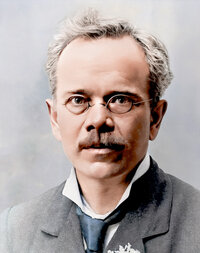
Best known for his leading role in the “righteousness by faith” revival stemming from the 1888 General Conference session, E. J. Waggoner’s work as a lecturer, author, and editor has exerted a deep, lasting, and at times controversial influence on Adventist theology. A physician by training who became a minister by conviction, Waggoner brought a fresh emphasis on the all-sufficiency of Christ and His righteousness that Ellen White endorsed as “the very message the Lord has sent to the people of this time.” His writings, particularly Christ and His Righteousness (1890) and The Everlasting Covenant (1900), remain influential in Adventist theological discussion.

From Medicine to Ministry (1855-1882)

Ellet was born on January 12, 1855, in Waukau, Winnebago County, Wisconsin, to pioneer Adventist minister and editor Joseph H. Waggoner (1821-1889) and his wife Maryetta Hall Waggoner (1823-1908). He was the sixth of their ten children. During Ellet’s childhood the family’s home was in Burlington, Michigan. Though it is not clear exactly when, at some point no later than early adolescence Ellet was sent to western New York where he lived in the home of an Adventist farmer, Charles Lindsay, working on the family’s large farm and attending school in nearby Lockport.

Waggoner was part of the first class of students to enter Battle Creek College, the first Seventh-day Adventist institution of higher learning, when it opened in 1874. He chose medicine as his field of service to the church’s mission and took a year of medical training at the University of Michigan at Ann Arbor (1875-1876) before returning for a second year in the “classical course” at Battle Creek College (1876-1877). Waggoner went on to complete his medical degree from Long Island College Hospital of Brooklyn, New York.

Waggoner began his career in 1878 as a physician on the staff of the Battle Creek Sanitarium. In March of 1879 he married Jessie Fremont Moser (1860-1944). Ellet and Jessie would have two daughters: Bessie Isadore Harrower (1882-1941) and Winnie Pearl Howard (1885-1969). A son, Ernest Eugene, born in 1889, died in infancy.

Not long after their marriage the couple spent several months in evangelistic ministry, assisting Ira J. Hankins with tent meetings in southeastern Iowa. They moved to northern California in the Spring of 1880 where Ellet joined the medical staff of the Rural Health Retreat (later St. Helena Sanitarium). Yet he remained uncertain as to whether he should continue practicing medicine or if he was called to preach.

The Turning Point

A dramatic experience at a camp meeting in Healdsburg, California in October 1882 both transformed Waggoner spiritually and resolved the question of his life’s direction. He described sitting in a tent meeting on a “dismal, rainy afternoon” as the speaker presented “the Gospel of [God’s] grace.” The “turning point” of his life, Waggoner wrote, came about half way through the message:

“Suddenly a light shone about me, and the tent seemed illumined, as though the sun were shining; I saw Christ crucified for me, and to me was revealed for the first time in my life the fact that God loved me, and that Christ gave Himself for me personally. It was all for me. . . .”

As the son of a prominent Adventist leader, he had been immersed in the Bible all his life. But this experience prompted him to look for a theme in its pages:

“. . . I knew that this light that came to me was a revelation direct from heaven; therefore I knew that in the Bible I should find the message of God’s love for individual sinners, and I resolved that the rest of my life should be devoted to finding it there, and making it plain to others. The light that shone upon me that day from the cross of Christ, has been my guide in all my Bible study; wherever I have turned in the Sacred Book, I have found Christ set forth as the power of God, to the salvation of individuals, and I have never found anything else.”

This conversion experience has been compared to that of John Wesley, who in 1738 felt “his heart strangely warmed” at Aldersgate Chapel.

Editor, Teacher, Evangelist (1882-1888)

As he pursued his vocation of making the message of God’s love plain for others, E. J. Waggoner rapidly became an influential voice in California, which had become a second center of Adventism, replicating the institutional pattern originated at the church’s headquarters town of Battle Creek, Michigan. In 1883 he began teaching intermittently at the new Healdsburg College and assisting his father, J. H. Waggoner, in editing the Signs of the Times, the major periodical issued by the Pacific Seventh-day Adventist Publishing Association in Oakland.

Waggoner became closely associated with Alonzo T. Jones (1850-1923), another young preacher skilled at forceful speaking and writing, called to California in 1884 from the Northwest. Jones joined Waggoner in lecturing at Healdsburg in 1885 and, in mid-1886, when J. H. Waggoner left for mission work in Europe, the duo became co-editors of the Signs of the Times. They also co-edited two other periodicals: the Pacific Health Journal and Temperance Advocate (with J. N. Loughborough) from 1886 to 1888, and the American Sentinel, the denomination’s first periodical dedicated to religious liberty, launched by the senior Waggoner in 1886.

Both Waggoner and Jones, a convert as a young man, sought to rethink the Adventist faith for themselves and establish its foundations based on their own intensive study of Scripture, rather than simply accept what the pioneers of the movement handed on to them. Both were also inclined toward idealistic, ideologically pure positions rather than pragmatism or moderation.

The 1888 Controversy: Buildup

As they developed convictions that differed on some points from positions that had become standard in Adventism during the previous 25-30 years, Waggoner and Jones expressed them through their channels of influence as editors and college teachers without seeking the approval of the church’s older, Battle Creek based leadership. While Jones’s innovations were mainly in the areas of history and prophecy interpretation, Waggoner’s distinctive contributions centered on biblical exegesis and biblical theology, including the topic of the righteousness of Christ and the faith of Jesus, which had become an important area of study since his 1882 experience.

But it was Waggoner’s interpretation of the “law in Galatians,” in particular, that troubled General Conference president George I. Butler (1834-1918) and long-time Review and Herald editor Uriah Smith (1832-1903). Waggoner maintained that the law discussed in Galatians 3, which leads to Christ, refers primarily to the moral law (the Ten Commandments) rather than to the ceremonial law. Waggoner believed the moral law was in focus because only that could bring profound conviction of sin, explain the necessity of Christ’s becoming a “curse for us” (Gal. 3:13), lead sinners to Christ, and be justified by faith (Gal. 3:24).

For Butler and Smith, Waggoner’s position conjured up memories of what his father, J. H. Waggoner, had argued some thirty years before. The “ceremonial law” position had prevailed and James White had withdrawn J. H. Waggoner’s book from the market. Butler and Smith believed that the matter had been long settled and that the repudiation of the “moral law” interpretation had the authoritative backing of Ellen White.

Waggoner countered that clinging to a faulty interpretation would ultimately be more damaging than making a change. As they approached the end of time, Adventists must be prepared to have their teachings “subjected to the most rigid criticism.” To Butler he declared that “you will say that it will be a humiliating thing to modify our position on so vital a point . . . in the face of the enemy. But if a general has a faulty position, I submit that it is better to correct it . . . than to run the risk of defeat because of his faulty position.” Seventh-day Adventists, of all people, Waggoner contended, should not be bound by the views of influential commentators or leaders but “should be Protestants indeed, testing everything by the Bible alone.”

The 1888 General Conference

E. J. Waggoner gave a series of nine theological presentations in Minneapolis, and preached the concluding sermon on Sabbath, November 3. Ironically, given the status of the 1888 conference as both an enduring landmark and touchstone of controversy in Adventist history, the stenographic transcriptions or summaries of speeches and discussion from the floor such as were typically published at General Conference sessions either were never made for these historic talks or were not preserved.

Chester C. McReynolds (1853-1937), a delegate from the Kansas Conference, wrote in 1931 of his experience at Minneapolis. McReynolds arrived anticipating conflict over “the law in Galatians” and very much a partisan who regarded Butler as “a father in the faith” and “held as Gospel” anything he said. By the end of the second lecture, Waggoner’s manner of presentation had begun to work a change in McReynolds’ attitude: “I was ready to concede that he was going to be fair and his manner did not show any spirit of controversy.” By the end of the fourth or fifth lecture, McReynolds recalled, “the pure Gospel that he was setting forth had materially changed my mind and attitude and I was an earnest listener for Truth.” He went outdoors to pray alone and review Bible promises about the forgiveness of sins, which became real to him as never before: “There I saw [Christ] as my own personal Saviour and there I was converted anew. All doubts that my sins were really forgiven were taken away, and from then till now, I have never doubted my acceptance as a pardoned child of God.”

Ellen White, who attended and spoke several times at the conference, observed that Waggoner had “presented his views in a plain, straightforward manner, as a Christian should,” and rebuked those who manifested an opposite spirit in resisting his views with harsh criticism and ridicule. “I see the beauty of truth in the presentation of the righteousness of Christ in relation to the law as the doctor has placed it before us,” she stated. Rather than use her prophetic authority to denounce Waggoner’s interpretation, as Butler had urged her to do, Ellen White declared her willingness “to be instructed as a child” and affirmed that every believer “should feel that he has the privilege of searching the Scriptures for himself.”

It was along similar lines that Ellen White, seven years later, summarized the “most precious message” that the Lord sent through “Elders Waggoner and Jones” in 1888: “This message was to bring more prominently before the world the uplifted Saviour, the sacrifice for the sins of the whole world. It presented justification through faith in the Surety; it invited the people to receive the righteousness of Christ, which is made manifest in obedience to all the commandments of God. Many had lost sight of Jesus. They needed to have their eyes directed to His divine person, His merits, and His changeless love for the human family.”

The 1888 Message: Resistance and Revival (1888-1892)

From the close of the 1888 General Conference through early 1892, Waggoner shuttled between his editorial and ministerial responsibilities in California and speaking at camp meetings, Bible institutes, and other church gatherings throughout the nation. Ellen White and A. T. Jones likewise took every opportunity to advance the 1888 message centered on Christ and His righteousness. They met with considerable resistance, yet, on the whole, the revival spirit generated through their preaching gained prevailing momentum.

He left California on May 17, 1889, to join A. T. Jones and Ellen White in preaching at camp meetings in the East. While en route three days later, he received tragic news of the death of his son, Ernest Eugene, only nine months old. The blow came only a month after Ellet had received a cable informing him that his father, Joseph Harvey Waggoner, had died suddenly in Europe at age 67.

Waggoner departed in late 1889, assigned to teach Hebrew and theology at Battle Creek College, and teach at a ministerial institute (1889-1890) or “ministers’ Bible school.” This teaching appointment put Waggoner in a position of central influence even though he still faced formidable opposition led by Uriah Smith. At a second ministers’ institute (October 31, 1890 through February 27, 1891), with enrollment sharply increased from 50 to 130, Waggoner taught courses on Galatians and Romans.

At the General Conference session that followed in March 1891, Waggoner had reached “one of the genuinely high points of his public career,” states Waggoner biographer Woodrow Whidden. The conflict had been intense and at times bitter in the aftermath of 1888, but Ellen White had given Waggoner and Jones outspoken, sustained support, and in December 1890, Uriah Smith had at least partially surrendered. Waggoner was asked to be the major speaker for the “Bible study hour” at the 1891 session where he delivered another series on Romans. The interest in hearing him was so great among area Adventists, including students at Battle Creek College and workers at the Review and Herald and the sanitarium, that the study hour was changed from 9:00 a.m. to 7:00 p.m. to accommodate them.

In his landmark book Christ Our Righteousness (1890), Waggoner wrote: “At last the sinner, weary of the vain struggle to get righteousness from the law, listens to the voice of Christ and flees to His outstretched arms. Hiding in Christ, he is covered with His righteousness, and now behold! he has obtained, through faith in Christ, that for which he has been vainly striving. He has the righteousness which the law requires, and it is the genuine article, because he obtained it from the Source of Righteousness, from the very place whence the law came.”

New Directions in England (1892-1903)

E. J. Waggoner’s 11 years in England would be marked by intensive labor and considerable achievement as an editor, teacher, evangelist and church leader. He also continued serious, probing study, developing his theology in ways that would contribute to a diminishment of influence and finally loss of position in the denomination.

At the time of Waggoner’s arrival in London in May 1892, Seventh-day Adventists counted only 257 adherents in Great Britain. Present Truth, begun in 1884, was published twice monthly with an average circulation of 1,500 in 1892. Waggoner moved swiftly to increase publication frequency to weekly, beginning in July 1893. The growth in circulation to an average of 20,000 per issue by the end of Waggoner’s tenure in 1903 represented not just improved sales but increased involvement of believers in personal evangelism.

Waggoner did not return to the United States for the General Conference sessions of 1893 and 1895, but he did for the 1897 session held at College View, near Lincoln, Nebraska. As at the 1891 session, he was the main speaker for the daily Bible study hour at which he gave 18 presentations on the book of Hebrews. This, however, would be the last time he was given central prominence in this way at a General Conference.

Waggoner’s involvement with the founding of Duncombe Hall Missionary College (later renamed Duncombe Hall Training College) in January 1902 and his teaching there until 1903 was another highlight of his service in England. The school would later develop into Newbold College, a major center of Adventist education.

The Struggle Against Creedal Constitutions (1903-1904)

At the 1903 General Conference held in Oakland, California, Waggoner allied with A. T. Jones, Dr. John Harvey Kellogg and others in opposing constitutional changes sought by General Conference leader A. G. Daniells to solidify the major reorganization initiated at the 1901 session. Waggoner and Jones argued that the further changes Daniells wanted went contrary to the decentralization agreed upon in 1901. In contrast to hierarchical structures of ownership and authority, Waggoner upheld the ideal of individual believers indwelt by Christ, the Lord of the church, and unerringly guided and directed by Him. He contended that doing away with “creedal” constitutions would not lead to disorganization. Rather, church order would result from the individual believers comprising the body of Christ acting “just as the Spirit of God shall move.” But the majority was not persuaded. The minority report was resoundingly defeated on the floor by an 85-20 vote.

Disaffections and Downfall (1904-1916)

In 1904, against the counsel of Ellen White, Waggoner made a fateful move to Battle Creek, at the behest of Dr. Kellogg, who by then was on the brink of a final break with the Adventist denomination. It was in Battle Creek during 1904 and 1905 that the circumstances behind Ellen White’s sharp warnings about the dangerous direction Waggoner was taking, and his failure to take the corrective action she urged, came to light with devastating consequences.

Edith Eliza Adams (1869-1945), an unmarried British woman who had been an editorial assistant to Waggoner during his latter years in England, also came to Battle Creek in 1904. The renewal of the close relationship they had formed in England eventuated in Ellet’s wife, Jessie, suing for divorce, citing adultery as the grounds, in 1905. After the Waggoners’ divorce was finalized at the end of 1905, Ellet and Edith united in earthly marriage in April of 1907.

Soon after their marriage, they moved to Denmark where Ellet found employment teaching English to university students. In 1909, they returned to Battle Creek where, according to his daughter Pearl’s later account, Waggoner took employment at the Sanitarium mainly doing laboratory work but also teaching “as chaplain, and in Sabbath school, etc.”

After graduating from Washington Missionary College in 1916, Pearl married Ellis Howard and the newlyweds, on their way to mission service in Peru, stopped in Battle Creek for a farewell visit with her father. During that visit, on May 28, 1916, Ellet J. Waggoner died suddenly from a heart attack at the age of 61.

Legacy

Alonzo T. Jones, though likewise alienated from the organized denominational work, delivered the funeral homily at the service held at the Battle Creek Tabernacle for his “blood brother in the blood of the everlasting covenant.” In his eloquent tribute, Jones declared:

“Only those who knew Dr. Waggoner intimately were prepared to properly estimate his real worth. He was so unassuming, so gentle as not to attract attention to himself. His knowledge of the Scriptures was broad and profound, and he carefully put all that knowledge to practical use in his own life. As a preacher and expositor of the Bible he was excelled by very few. As a comrade and a brother he was most obliging and kindly — this I know personally from the relationship of a friend and brother of thirty-two years. Never a word of criticism or unkindness concerning others escaped his lips or were permitted to dwell in his heart.”

While the Edith Adams affair tarnished Waggoner’s legacy, the theological debates over exactly what Waggoner taught and when and why it was important continue to the present. Yet such debates should not be permitted to obscure Waggoner’s achievement, with Jones, in connection with the 1888 episode. They established two markers identifying Seventh-day Adventism with core tenets of Protestant Christianity. Affirmed by the church’s prophet, this two-fold legacy has endured, even though the church has often struggled to live up to it in practice:

1. Righteousness by faith in Christ alone. The “message of the gospel of [God’s] grace” uplifted by Jones and Waggoner, “was to be given to the church in clear and distinct lines, that the world should no longer say, Seventh-day Adventists talk the law, the law, but do not preach or believe Christ,” Ellen White wrote in 1895.

2. The authority of Scripture, understood through continuously renewed study, over all other forms of church authority. As Ellen White declared: “But from this meeting [in 1888] there will be a different mold ever after upon the work. Our brethren will feel the need of investigating the evidences of our faith far more critically for themselves.”

Selected Writings

Books (selected): The Gospel in the Book of Galatians (Oakland, CA, 1888); Fathers of the Catholic Church (Pacific Press, 1888); Prophetic Lights (Pacific Press 1889); Christ and His Righteousness (Pacific Press, 1890); Sunday: The Origin of Its Observance in Christian Church (Pacific Press, 1891); The Gospel in Creation (Review and Herald, 1894); The Glad Tidings (Pacific Press, 1900); The Everlasting Covenant (International Tract Society, 1900).

← Back to Adventist Pioneers