Summary
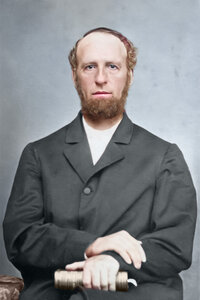
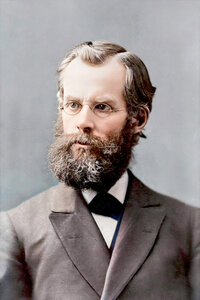
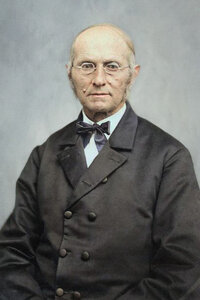
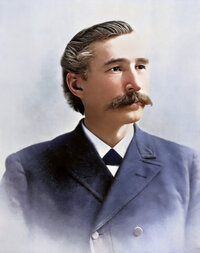
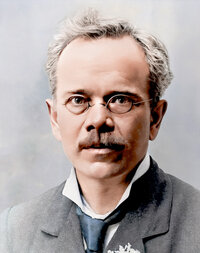
Joshua Vaughan Himes was a minister and radical reformer who became “the principal promoter, manager, and financier” of the Second Advent or Millerite movement of the 1840s. Second only to William Miller himself, Himes was the most dedicated champion of the advent message. A born organizer, editor, and publicity agent, he launched the first Adventist newspaper, organized general conferences and camp meetings, oversaw the construction of the famous “Great Tent,” and orchestrated what one scholar has called “an unprecedented media blitz.” By October 22, 1844, millions of copies of advent publications had been scattered to the ends of the earth. “Action, and on a large scale and without delay — that was the spirit of Joshua V. Himes.”
Early Life and Ministry (1805–1830)
The eldest of seven children, Joshua Vaughan Himes was born May 19, 1805 to Stukely Himes and Elizabeth Vaughan Himes in Wickford, Rhode Island, a village on the west end of the Narragansett Bay. Joshua’s parents groomed him for study at Brown University to prepare for ministry in the Episcopal church. However, his formal education came to an end at age 13 when his father, defrauded by a partner, saw his prosperous business in the West Indies trade collapse. Joshua was apprenticed to a cabinet maker in New Bedford, Massachusetts for eight years.
Unsatisfied by the Unitarian church that he initially attended in New Bedford with his master, William Knights, Joshua joined the city’s First Christian church in 1823. This church was in the Christian Connection, one of several restorationist movements in nineteenth-century America dedicated to restoring the New Testament church, sweeping away all claims to authority other than the Bible. “Here I found the open Bible and liberty of thought, and made good use of them,” Himes later wrote. While still serving as an apprentice he showed promise as a public speaker and was granted a license as an exhorter, or lay preacher. After his apprenticeship concluded Himes was commissioned in 1825 as a missionary by the Conference of Christian Churches. In November 1826, he married Mary Thompson Hardy (c. 1807–1876).
After he was ordained to ministry in 1827, Himes went to Plymouth, then Fall River (both towns in Massachusetts), raising up a sizable new congregation and housing it in a new church building in both locales. The First Christian church of Boston, in crisis due to rapidly declining membership, took note of the dynamic young minister and called him to be their pastor in 1830. When Himes arrived the congregation had dwindled to seven families. Within two years attendance at weekly services was filling the church to capacity.
Radical of Radicals (1830–1839)
In Boston, a hub for the multitude of social movements that thrived in antebellum America, Himes became an advocate and organizer for a wide range of reform causes including temperance, women’s rights, peace, and, at the forefront, abolition of slavery. He was “a radical and an enthusiast by temperament” and regarded as “among the most radical of radicals.”
Himes became one of the earliest supporters of William Lloyd Garrison’s advocacy for immediate abolition of slavery in the Liberator, published from Boston beginning in 1831. Garrison attested that Himes, “at a very early period avowed himself an abolitionist, and has been a faithful supporter of the anti-slavery movement, never ashamed to show his colors, never faltering in the darkest hour of its history.”
True to the Garrisonian spirit, Himes’ commitment to reform was both universal — encompassing all reforms based on right principle, and radical — demanding ideal change, rather than negotiating compromises with evil. One account described him as “facing mobs, defying them to do their worst and pouring hot shot into their ranks in his peculiar and emphatic denunciation of the nation’s disgrace and burning shame.”
Many of Himes’ church members objected to his extensive involvement in reform movements, charging that he was neglecting traditional pastoral duties and the quality of his sermons was suffering. He was dismissed as pastor of First Christian Church in 1836, but many of the younger and more progressive members joined him in forming the Second Christian church. They built a new house of worship the following year called Chardon Street Chapel, and the congregation quickly grew to fill its 500-seat capacity. It became a meeting place, or conference site, for many radical reform causes.
During the years 1830 to 1844, Mary Thompson Himes bore five sons who lived to adulthood: Joshua, Jr. (1831–1888), John (1834–1864), William (1839–1917), Edwin (1842–1872), and Walter (1844–?). The third son, William Lloyd Garrison Himes, was the only one to follow his father in becoming a gospel minister. Mary was active in the Boston Female Anti-Slavery Society and served for a time as a director.
Himes also supported Garrison in forming the New England Non-Resistance Society in a meeting at Marlborough Chapel in Boston on September 18, 1838, and was selected to be on the new organization’s board of directors. The society’s constitution declared opposition to the taking of human life for any reason, either by individuals or governments.
The Second Advent Cause (1839–1842)
Himes’ first met William Miller at a conference of Christian Connection ministers in Exeter, New Hampshire, in November 1839, where he repeated in person an invitation to speak in Boston that he had previously mailed to Miller in October. Miller agreed to deliver a series of lectures there beginning December 8, 1839.
As Miller preached his series, Himes became more seriously impressed with the possibility that Miller’s message was true. “Do you really believe this doctrine?,” he bluntly asked the preacher. Thus far, Miller’s preaching had been confined to small towns and villages of upstate New York and northern New England. Himes saw the urgency of getting the message out to the wider world, especially if only three to four years remained for doing so, and he had the vision and skills needed to lead the effort. Assured by Miller’s response not only of his sincerity but his readiness for a drastic expansion of his work, Himes told him to “prepare for the campaign; for doors should be opened in every city in the Union, and the warning should go to the ends of the earth!” In the weeks following their meeting, Himes pondered his readiness to make Miller’s cause his own. Then, on January 17, 1840, sensing that he was headed toward full commitment, he wrote Miller, “I am coming on — and when I come — look out — all my soul will be in it.”
When Himes came on board with the motto “what we do must be done quickly,” the regional revival stirred in New England by William Miller’s message about the “Advent near” became a national movement. Himes became Miller’s publicist and booking agent, arranging for him to lecture in the large cities of the East — Boston (again), New York, Philadelphia, Baltimore, and Washington, D.C. Himes became the movement’s chief promoter, utilizing the latest developments in communications technology and marketing to orchestrate “an unprecedented media blitz,” in the words of Nathan O. Hatch, a leading scholar of American religious history. He organized conferences that gave the movement coherence and momentum. With “Father Miller” as the spiritual and theological head of the Second Advent movement, Himes became its de facto organizational leader.
Just two months after his pledge to Miller, Himes launched the Signs of the Times, published twice monthly beginning March 20, 1840. Dow and Jackson, printers who cultivated an antislavery clientele, agreed to invest in publishing Signs for a year while Himes edited the paper without salary and took responsibility for raising subscriptions. By January 15, 1842, Signs of the Times had 5,000 subscribers which meant, according to Himes’ estimate, 50,000 readers.
In New York City, a daily run of 24 issues of the Midnight Cry, edited by Himes and Nathanial Southard, began November 17, 1842, with 10,000 copies of each printed. Most of these were given out free of charge with the endeavor focused on sending copies to every minister in the state. Himes also published Miller’s memoir, the Second Advent Library (a series of treatises — eventually almost 50 — that ranged in length from pamphlets to books of up to 200 pages), a 36-tract series called Words of Warning, and a songbook, The Millennial Harp, in 1842.
Beyond use of agents, Himes aggressively promoted circulation of the publications through a variety of innovations. He mobilized supporters to set up Second Advent Libraries in towns and villages throughout the northern states making literature available free of charge on a borrow and return basis. Literature was sent in bundles to postmasters with a request to give copies to individuals when they came to collect their mail. Similarly, ships’ officers were requested to take bundles of literature with them for drop off at ports of call throughout the world, and thereby reach Protestant missionary outposts.
Sounding the Midnight Cry (1842–1844)
Not long after launching the Signs of the Times, Himes initiated his most important contribution as movement organizer — a series of “general conferences.” Neither he nor Miller sought to form a new religious organization, a point Himes made explicit as he opened the first general conference, held in Boston, October 14–15, 1840. He also expressed the intention that the conference entail a genuine interchange of views rather than attempt to impose a narrow uniformity.
With the year of expectation nearing, the general conference held in Boston in May 1842 set forth resolutions that marked a new phase in the Millerite movement. First, the conference affirmed that the time had come to “distinctly avow” that God has revealed “the time of Christ’s Second Advent” and to “urge it with double diligence upon all men.” Second, publication of a chart developed by Apollos Hale and Charles Fitch demonstrating in graphic form the prophetic time periods culminating in 1843 received endorsement. Third, the conference called for a series of camp meetings to sound “the midnight cry” more widely.
In an agenda-setting editorial, “The Crisis Has Come!,” published August 3, 1842, Himes declared, “I am confirmed in the doctrine of Christ’s personal descent to this earth, to destroy the wicked, and glorify the righteous, some time in the year 1843.” For him this unequivocal avowal of conviction did not mean absolute certitude. In view of human fallibility, Himes could contemplate the possibility of error, but for him, the practical impact of Second Advent teaching took the sting out of that consideration: “Can we ever regret that souls were converted . . . and prepared to meet the Lord? If then we are mistaken about the time, what harm can result to the church or world?”
To maximize the impact of camp meetings, Millerite leaders had already endorsed construction of a “great tent” that they claimed was large enough to accommodate crowds of 3,000 to 5,000. Though he did not originate the idea, Himes took charge of the project and raised funds for it. A month later, the “Great Tent” was ready for use. Purported to be the largest the nation had ever seen, the tent became an attraction in itself, and with overflow crowds drawn to the meetings as it traveled from place to place, its estimated capacity was expanded to 6,000.
During “the last year of time,” Himes extended the reach of the movement’s preaching and publishing operations in every direction — Canada to the north; Rochester, Buffalo, Cleveland, Cincinnati, and St. Louis to the west; and Baltimore, Washington, D.C., and Louisville to the south. Arrangements for an eastward voyage across the Atlantic to England and Europe were in place and confirmed, but cancelled only a few days before the scheduled departure.
The Disappointment and After
Meanwhile, while Miller and Himes were in Ohio, the “seventh-month” message originated in New England by the previously unknown Samuel S. Snow gained a powerful momentum that demanded their attention. Building on Miller’s prophetic chronology, Snow contended that Christ would return on the Day of Atonement (Yom Kippur) — the “tenth day of the seventh month” in the Hebrew calendar, which fell on October 22, 1844. Although Snow had picked up on points Miller had suggested but never fully developed, both Himes and Miller initially resisted the seventh-month message. Neither had ever been inclined to settle expectations on a specific date, and the disappointment of March 1844 made them resistant to doing so again.
As late as September 20, 1844, after returning to Boston, Himes remained determined to embark in October on a twice-deferred mission to London. But his plans changed sometime during the next several days as he became impressed by the compelling power that seemed to attend the “seventh-month” movement. “This thing has gone over the country like lightning,” he reported to Miller in a letter of September 30. On October 6, Himes announced his belief that the Lord would return on the “tenth day of the seventh-month” (October 22) and that same day Miller wrote a letter to Himes stating that he now saw a convincing “glory in the seventh-month” and looked to October 22 with glad expectation.
The disappointment of October 22 dealt the Millerite movement a far more shattering blow than that experienced the previous Spring. Charges of venality reemerged with wild rumors about the extent of the fortune he raked in and where he had fled with his stash — Texas, or Canada, or England. Himes felt compelled to respond. Along with detailed refutations, Himes called for a public investigation, opening his records to unrestricted scrutiny and pledging fourfold restitution if he had defrauded anyone. Himes and Bliss made their case effectively, and the press coverage turned more favorable with other newspapers reprinting it and editors who knew him vouching for his integrity.
In a statement dated November 5, published in the Midnight Cry, Himes wrote:
“We are disappointed. We are now satisfied that the authorities on which we based our calculations cannot be depended upon for definite time. We now take the ground that we are near the end, and still hold to our published views relating to the personal reign and kingdom of Christ — that the next event in historical prophecy will be the coming of Christ in the elements of heaven. . . . With our present light, we have no knowledge of a fixed day or definite time, but do most fully believe that we should watch and wait for the coming of Christ, as an event that may take place at any time.”
Yet, in rejecting the time calculations set by the seventh-month message, Himes did not repudiate the movement’s spiritual power or deny God’s leading in it. In the October 30, 1844 issue of the Advent Herald, he and his fellow editors Sylvester Bliss and Apollos Hale affirmed:
“It swept over the land with the velocity of a tornado, and it reached hearts in different and distant places almost simultaneously, and in a manner which can be accounted for only on the supposition that God was [in] it. . . . It caused a weaning of affections from the things of this world, a healing of controversies and animosities, a confession of wrongs, a breaking down before God and penitent broken-hearted supplications to him for pardon and acceptance.”
Diverging Adventisms and Later Years
In the aftermath of the Disappointment, Himes worked to hold together a viable Adventist movement, uniting around the continued expectation of an imminent literal return of Christ but without setting dates. He organized a conference in Albany, New York, in April 1845, which consolidated the largest faction of the former Millerites and essentially disowned Shut-Door dissenters such as Joseph Bates. In 1858, Himes helped form the American Millennial Association. He joined the Advent Christian Church in 1863.
At age 70, in 1875, after a period of declining health and the death of his wife Mary in 1876, Himes joined the Episcopal Church, where he had originally been raised. He was ordained an Episcopal minister and served parishes in the western United States, including South Dakota, until his retirement in 1893. He died on July 27, 1895, at the age of 90.
Legacy
Throughout his long life, Joshua V. Himes continued watching for the advent. Late in life, he told Dr. Kress at the Battle Creek Sanitarium that “The Seventh-day Adventists were raised up to carry the work forward to completion — in calling the people in all the world to move forward into the eternal land of promise.” He mentioned to J. N. Loughborough while traveling on the train in 1894 that “he was thankful he had never opposed the work of Mrs. E. G. White.”
From the flourishing publishing roots which began with such a vision as Joshua Himes had, a new work sprang up, directed and nurtured by God. The Adventist publishing work that Seventh-day Adventists carry forward today can be traced to that December meeting between Joshua V. Himes and William Miller in 1839.
Key Quotes
“Do you really believe this doctrine? . . . Well then, what are you doing to spread it throughout the world?” — Joshua V. Himes, to William Miller, December 1839
“Prepare for the campaign; for doors should be opened in every city in the Union, and the warning should go to the ends of the earth!” — Joshua V. Himes, pledge to William Miller
“I am coming on — and when I come — look out — all my soul will be in it.” — Joshua V. Himes, letter to William Miller, January 17, 1840
“Can we ever regret that souls were converted . . . and prepared to meet the Lord? If then we are mistaken about the time, what harm can result to the church or world?” — Joshua V. Himes, editorial, August 3, 1842
“We are disappointed. . . . With our present light, we have no knowledge of a fixed day or definite time, but do most fully believe that we should watch and wait for the coming of Christ, as an event that may take place at any time.” — Joshua V. Himes, Midnight Cry, November 5, 1844
“The Seventh-day Adventists were raised up to carry the work forward to completion — in calling the people in all the world to move forward into the eternal land of promise.” — Joshua V. Himes, late in life, to Dr. Kress at the Battle Creek Sanitarium