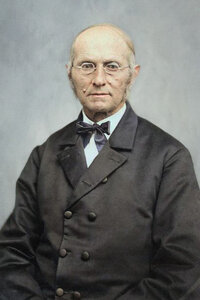
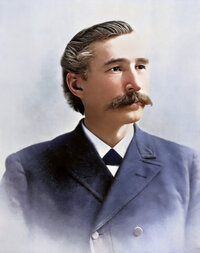
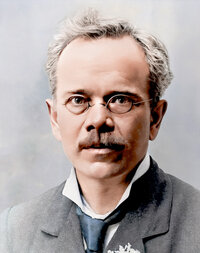
1792–1872
Summary
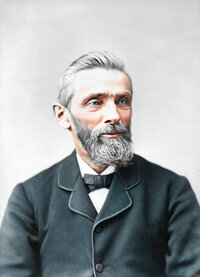
Joseph Bates was a New England sea captain, temperance pioneer, and abolitionist who left the ocean for the pulpit, embraced the Millerite advent message in the early 1840s, and—after the Great Disappointment—became the man through whom the seventh-day Sabbath entered Sabbatarian Adventism. He spent his fortune to spread the advent hope, risked his life preaching against slavery on Maryland’s Eastern Shore in early 1844, and lived to see the small Sabbath-keeping company in 1846 grow into the organized Seventh-day Adventist Church. Ellen White first met him in New Bedford in 1846 and called him “a true Christian gentleman, courteous and kind” (Testimonies for the Church, vol. 1, p. 79, par. 2; refcode 1T 79.2).
Early Life and Going to Sea (1792–1807)
Bates wrote in his autobiography: “After the war, my father married and settled in Rochester, an adjoining town, in Plymouth county, where I was born, July 8, 1792. In the early part of 1793 we moved to New Bedford, some seven miles distant, where my father entered into commercial business” (The Autobiography of Elder Joseph Bates, p. 18, par. 1; refcode AJB 18.1). The family home was on what is today the eastern (Fairhaven) side of the river: “During the war with England, in 1812, the town of New Bedford was divided, and the eastern part was called Fairhaven. This has ever been my place of residence, until I moved my family to Michigan, in May, 1858” (The Autobiography of Elder Joseph Bates, p. 18, par. 2; refcode AJB 18.2).
Dick records that the elder Bates “had been a captain in the Revolutionary War, serving the full seven years of that long struggle so filled with hardships” (Founders of the Message, p. 105, par. 1; refcode FOME 105.1). Of his own boyhood, Joseph Bates wrote, “In my school-boy days my most ardent desire was to become a sailor” (The Autobiography of Elder Joseph Bates, p. 18, par. 3; refcode AJB 18.3). In June 1807, at age fourteen, he sailed from New Bedford as cabin boy on the ship Fanny, bound for London with a cargo of wheat (The Autobiography of Elder Joseph Bates, pp. 18–19; refcodes AJB 18.4–AJB 19.3).
Marriage, Captivity, and Conversion (1812–1828)
Bates was at sea when the War of 1812 began. His ship was intercepted on the way home: “They proved to be two Danish privateers, who captured and took us to Copenhagen, where ship and cargo were finally condemned, in accordance with Bonaparte’s decrees, because of our intercourse with the English” (The Autobiography of Elder Joseph Bates, p. 33, par. 1; refcode AJB 33.1). Later he was confined on the “Crown Princen, formerly a Danish 74-gun ship, a few miles below Chatham dock yard, and seventy miles from London” (The Autobiography of Elder Joseph Bates, p. 56, par. 2; refcode AJB 56.2) and held until the war ended.
He returned to Fairhaven and, on February 15, 1818, married Prudence Nye, “a very patient and faithful wife, and a godly influence on her family” (Lest We Forget, ch. 14, p. 32, ¶ 2). Six weeks later he was back at sea.
The turning point in Bates’s spiritual life came on a voyage in 1824 when, without his knowledge, Prudy placed a small pocket New Testament on the top of his trunk of novels and romances. Reaching for something to read, he opened the Testament instead, found a poem in the front leaf “which arrested his attention, and his novel and romance reading ceased from that hour” (Lest We Forget, ch. 14, p. 32, ¶ 2). Back home, he wrote of the Christian church in Fairhaven, “with which I had united” (The Autobiography of Elder Joseph Bates, p. 233, par. 1; refcode AJB 233.1).
Bates had told Prudy at their engagement that he would leave the sea once he had gained a “competency”—and when she asked the figure, he replied, “Ten thousand dollars” (The Autobiography of Elder Joseph Bates, p. 231, par. 1; refcode AJB 231.1). By the time of his retirement he had gone past it: Spalding records that Bates “made his modest fortune, twelve thousand dollars, and retired” (Footprints of the Pioneers, p. 42, par. 2; refcode FOPI 42.2). The voyage of 1828 was the last: “It was 1828 when Joseph Bates, home from a voyage to South America, left the sea, twenty-one years from the time when he first sailed as cabin boy” (Footprints of the Pioneers, p. 42, par. 3; refcode FOPI 42.3).
Social Reformer: Temperance and Abolition (1827–1839)
The same day Bates was baptized in 1827, he asked the minister who baptized him to help organize a temperance society. Failing with him, he turned to the Congregationalist pastor and “the principal men of the place”—and that day, “the “Fairhaven Temperance Society” was organized” (The Autobiography of Elder Joseph Bates, p. 205, par. 2; refcode AJB 205.2). Dick records that this was “what was to his knowledge, the first organization of this type in the world” (Founders of the Message, p. 121, par. 1; refcode FOME 121.1).
The slavery question reached Bates more slowly. “The subject was new to me, having had but little knowledge of it while following the sea” (The Autobiography of Elder Joseph Bates, p. 232, par. 4; refcode AJB 232.4). His decision came after several years of watching: “I then began to feel the importance of taking a decided stand on the side of the oppressed” (The Autobiography of Elder Joseph Bates, p. 236, par. 1; refcode AJB 236.1). After his temperance work had already cost him many friends, he reasoned that he could not be a consistent Christian on the oppressor’s side, and concluded, “Hence my only alternative was to plead for the slave, and thus I decided” (The Autobiography of Elder Joseph Bates, p. 236, par. 1; refcode AJB 236.1). About forty citizens of Fairhaven met and “organized the Fairhaven Antislavery Society. This drew down the wrath of a certain class of our neighbors, who also- called opposition meetings, in which they passed resolutions denouncing us in very severe terms” (The Autobiography of Elder Joseph Bates, p. 236, par. 2; refcode AJB 236.2). Bates added, “Threats were often made that our meetings would be broken up, etc., but fortunately we were left to go onward” (The Autobiography of Elder Joseph Bates, p. 236, par. 2; refcode AJB 236.2).
Bates supported William Lloyd Garrison even as a Boston mob nearly lynched him in 1835. He wrote that Garrison was “editor of an antislavery paper, called ‘The Liberator,’ published in Boston, Mass.,” and that he “was heralded in many of the periodicals of that time (1835), as a most notorious abolitionist” (The Autobiography of Elder Joseph Bates, p. 237, par. 2; refcode AJB 237.2). When a Boston mob seized Garrison they “pursued him to a carpenter’s shop, where he had fled from them, and brought him forth to the assembled multitude in the street, and placed a rope around his neck, to put an end to his life” (The Autobiography of Elder Joseph Bates, p. 237, par. 2; refcode AJB 237.2).
The Millerite Movement (1839–1844)
Bates first heard William Miller in March 1841, when Miller began a course of lectures at the Washington Street meeting-house in Fairhaven. Bates recalls: “In March, 1841, Bro. Miller commenced a course of lectures in the Washington-street meeting-house, in Fairhaven, Mass. I thought if he could be obtained to lecture on the second coming of Christ, to my friends and neighbors, I would willingly give my seat in the meeting-house to others, if the house should be crowded” (The Autobiography of Elder Joseph Bates, p. 253, par. 2; refcode AJB 253.2). One lecture changed his mind: “But after hearing his first lecture, I felt that I could not be denied the privilege of hearing the whole course, for his preaching was deeply interesting, and very far in advance of his written lectures” (The Autobiography of Elder Joseph Bates, p. 254, par. 1; refcode AJB 254.1).
The crowds were silent and rapt: “The house was so crowded that a great portion could not be seated, and yet all was quiet and still as night” (The Autobiography of Elder Joseph Bates, p. 254, par. 2; refcode AJB 254.2). From that point Bates was an active Millerite preacher: “Bates, a converted sea captain, spent his fortune promoting the Millerite message” (Messenger of the Lord, p. 144, par. 5; refcode MOL 144.5).
Selling His Property and the Maryland Mission (1843–1844)
Froom records that “opposition to the advent message by members of his Fairhaven Christian Church led him to withdraw from its membership. In 1843 he sold his home, and most of his other real estate, and prepared to go where needed to herald the second coming of Christ. He had a burden to go down to the slaveholding States of the South, where other lecturers had been driven out by hostile inhabitants” (The Prophetic Faith of Our Fathers, vol. 4, p. 547, par. 3; refcode PFF4 547.3).
Bates set out from Fairhaven with H. S. Gurney, “blacksmith of Fairhaven, Massachusetts” (Ellen White: Woman of Vision, p. 42, par. 3; refcode WV 42.3) and a “singing blacksmith and preacher’s helper” (The Prophetic Faith of Our Fathers, vol. 4, p. 1021, par. 2; refcode PFF4 1021.2). Their route took them through Philadelphia, where they joined Miller’s crowded meetings, and on to Maryland: “We reached the city of Annapolis, Maryland, by the way of Washington, and crossed the Chesapeake Bay through the ice to the central part of Kent Island, on which I had been cast away some twenty-seven winters before. At the tavern we found the people assembled for town meeting. The trustees of two meeting-houses who were present, were unwilling to open their doors for us, and intimated the danger of preaching the doctrine of Christ’s coming among the slaves” (The Autobiography of Elder Joseph Bates, p. 277, par. 2; refcode AJB 277.2).
From Kent Island they walked thirty miles to Centerville: “On leaving Kent Island we passed along on the east side of the Chesapeake Bay, called the Eastern Shore of Maryland, to the county town of Centerville, about thirty miles distant, where we had sent an appointment to hold meetings. We chose to walk, that we might have a better opportunity to converse with the slaves and others, and furnish them with tracts which we had with us” (The Autobiography of Elder Joseph Bates, p. 280, par. 1; refcode AJB 280.1). Two years later, after the Great Disappointment, Bates would sit down “with a single York shilling, the remnant of his fortune, in his pocket” (Footprints of the Pioneers, p. 46, par. 1; refcode FOPI 46.1) to write the tract that would carry the Sabbath message to James and Ellen White.
Embracing the Sabbath (1845)
The seventh-day Sabbath had taken root among a small Adventist group in New Hampshire. Froom records: “Methodist Rachel Oakes began the observance of the seventh-day Sabbath and joined the Seventh Day Baptists. She then brought the Sabbath to Washington, New Hampshire, center of a devout Adventist group, where it was accepted by two clergymen. The first was the Methodist-Adventist circuit rider, Frederick Wheeler, in the spring of 1844. He, in turn, brought it in August of that year to Free-will Baptist-Adventist Thomas M. Preble” (The Prophetic Faith of Our Fathers, vol. 4, p. 942, par. 1; refcode PFF4 942.1).
Loughborough records Bates’s response: “Elder Joseph Bates, of Fairhaven, Mass., had his attention thus arrested, and he accepted the Sabbath in 1845” (The Great Second Advent Movement, p. 250, par. 3; refcode GSAM 250.3). The next year Bates wrote his own tract: “the forty-eight-page tract, The Seventh Day Sabbath, A Perpetual Sign, was brought forth in August, 1846” (The Prophetic Faith of Our Fathers, vol. 4, p. 956, par. 3; refcode PFF4 956.3). Froom adds the key consequence: “this in turn led James and Ellen White to accept the Sabbath, both men engaging thereafter in teaching the Sabbath to the advent believers” (The Prophetic Faith of Our Fathers, vol. 4, p. 947, par. 1; refcode PFF4 947.1).
“A True Christian Gentleman” — Bates and Ellen White
Ellen White’s own account of meeting Bates in 1846 sets the tone for everything she ever wrote about him:
While on a visit to New Bedford, Mass., in 1846, I became acquainted with Elder Joseph Bates. He had early embraced the advent faith, and was an active laborer in the cause. I found him to be a true Christian gentleman, courteous and kind.
(Life Sketches of Ellen G. White, p. 95, par. 1; refcode LS 95.1)
She first preached in his presence soon after, and his reaction is preserved in her testimony. Bates, who said openly, “I am a doubting Thomas. I do not believe in visions. But if I could believe that the testimony the sister has related tonight was indeed the voice of God to us, I should be the happiest man alive” (Testimonies for the Church, vol. 1, p. 79, par. 2; refcode 1T 79.2). His scepticism gave way at a Topsham, Maine, conference soon after, when she was given a vision of other worlds: “After I came out of vision, I related what I had seen. Elder B. then asked if I had studied astronomy. I told him I had no recollection of ever looking into an astronomy” (Testimonies for the Church, vol. 1, p. 79, par. 3; refcode 1T 79.3).
Bates was the first publisher of her visions: Nichol writes, “Joseph Bates was the first publisher of this vision, which he brought out on a single sheet of paper, called a broadside” (Ellen G. White and Her Critics, p. 291, par. 4; refcode EGWC 291.4). The broadside, “To the Little Remnant Scattered Abroad,” appeared on “April 6, 1846” (Messenger of the Lord, p. 557, par. 2; refcode MOL 557.2).
At the Sabbath conference held in “Albert Belden’s house, at Rocky Hill, Conn., commencing April 20, 1848” (The Great Second Advent Movement, p. 224, par. 3; refcode GSAM 224.3), Bates was the principal expositor of the commandments, as Ellen White recalls: “The Conference was held at Rocky Hill, in the large, unfinished chamber of Brother Belden’s house. The brethren came in until we numbered about fifty; but these were not all fully in the truth. Our meeting was interesting. Brother Bates presented the commandments in a clear light, and their importance was urged home by powerful testimonies” (Testimonies for the Church, vol. 1, p. 85, par. 1; refcode 1T 85.1).
Health Reform and Final Years (1858–1872)
Bates anticipated by years the health-reform principles the Adventist Church would later adopt: “Mr. Bates was the first leader to adopt health reform. At a time when some of the ministering brethren had pork in their cellars, or were receiving hams for their services as gospel ministers, Joseph Bates had ceased eating flesh foods, butter, grease, cheese, pies, and rich cakes. It speaks well for Mr. Bates that although he firmly believed in this reform, he did not press his ideas upon his brethren, but in the interests of harmony allowed every man to follow his own conviction in the matter” (Founders of the Message, p. 148, par. 2; refcode FOME 148.2).
In May 1858 he moved his family from Fairhaven to Michigan (The Autobiography of Elder Joseph Bates, p. 18, par. 2; refcode AJB 18.2) and continued to preach into his eightieth year. Dick records his death: “He died in his eightieth year on March 19, 1872, at Battle Creek. Although in his last hours he suffered pain such as few men pass through, during it all he showed in a marked way the superiority of a faith in Christ over bodily suffering and the certainty of death in the near future” (Founders of the Message, p. 151, par. 2; refcode FOME 151.2). He was buried beside Prudence at Monterey.